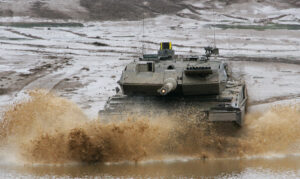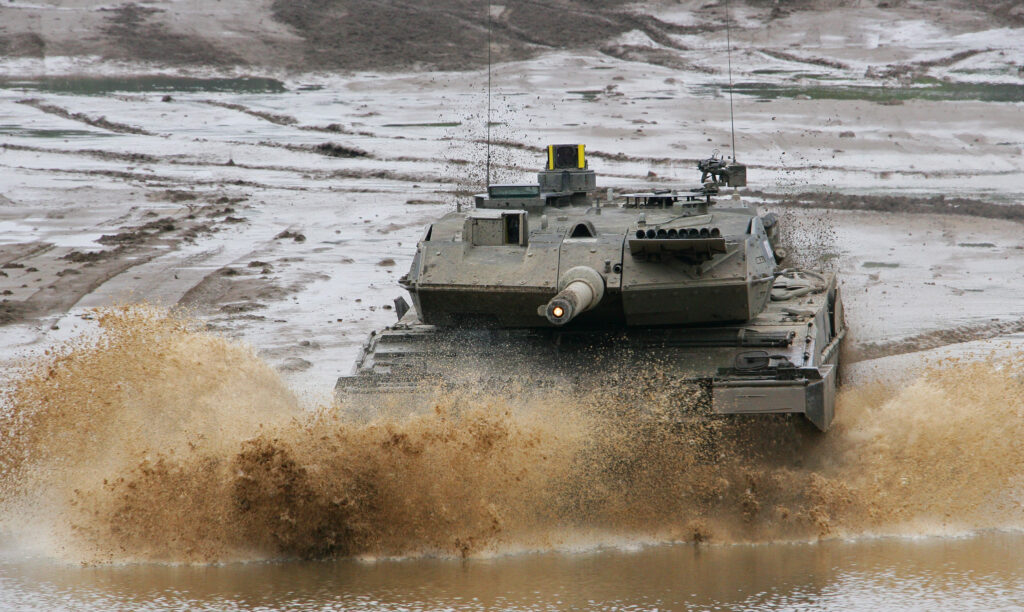
Germany is undertaking the most dramatic military transformation in its modern history, pledging to build what Chancellor Friedrich Merz has repeatedly described as “the strongest conventional army in Europe” as NATO allies move to shoulder a larger share of the continent’s defense burden.
The effort represents a decisive break from Germany’s decades-long postwar culture of military restraint and reflects a broader shift underway across Europe as leaders confront continued threats from Russia while preparing for a future in which the United States may expect allies to assume greater responsibility for their own defense.
Speaking to Fox News Digital, German Ambassador to the United States Jens Hanefeld made clear that Berlin sees the moment as a historic turning point.
“Germany is stepping up — we heard the call,” Hanefeld said, pointing to Russia’s invasion of Ukraine as the event that shattered many of Europe’s long-held security assumptions.
From Military Restraint to Rearmament
For generations, Germany largely avoided projecting military power, relying heavily on NATO and American security guarantees while maintaining comparatively modest armed forces.
That era appears to be ending.
Under Merz, Berlin has embraced what Germans call the Zeitenwende — a historic turning point in national security policy that is rapidly moving from political rhetoric to structural reality.
The chancellor has repeatedly argued that Germany must become Europe’s dominant conventional military power, a goal that would have been politically unthinkable only a few years ago.
The strategic logic is straightforward. German leaders increasingly believe Europe must be capable of defending itself against a resurgent Russia while reducing its dependence on the American security umbrella.
At the same time, the effort directly addresses long-standing complaints from President Donald Trump, who spent years criticizing NATO members for failing to carry their share of the alliance’s defense burden.
Building a Much Larger Army
The scale of Germany’s ambitions is staggering.
The Bundeswehr currently consists of roughly 182,000 active-duty personnel. To satisfy evolving NATO requirements and support Germany’s new strategic role, Berlin has established a target force of approximately 460,000 personnel.
That figure includes 260,000 active-duty troops—an increase of roughly 80,000 soldiers—and an additional 200,000 reservists.
Defense officials acknowledge that reaching those numbers will require the largest recruitment effort Germany has undertaken since the Cold War.
Rather than immediately restoring full conscription, the government has adopted what officials describe as a “voluntary-first” service model.
New recruits are being offered flexible enlistment contracts beginning at six months, along with starting pay of approximately €2,600 per month before taxes, making military service more attractive to younger Germans who might otherwise enter the private workforce.
Germany Revives Conscription Infrastructure
Even as Berlin avoids formally reinstating a draft, it is quietly rebuilding much of the infrastructure needed to support one.
Every German citizen turning 18 now receives an official government letter containing a QR code linking to a military readiness questionnaire.
Recipients must provide information regarding their health, physical fitness, education, and willingness to serve.
For men, participation is mandatory. For women, it remains voluntary.
The distinction stems from Germany’s Basic Law, which permits compulsory military service only for men.
Officials say all 18-year-old men will eventually undergo medical and physical evaluations, creating a comprehensive database of citizens who could potentially be called upon if Europe’s security situation deteriorates.
Early results suggest roughly 72% of eligible young men are completing the surveys, while about 28% are ignoring them.
To manage the process, Germany is rebuilding large military recruitment and career centers modeled in part on Scandinavian systems, replacing facilities that were shuttered after conscription was suspended more than a decade ago.
Massive Spending Surge
Building Europe’s strongest army requires more than recruits.
It requires money—an extraordinary amount of it.
For years, Germany routinely failed to meet NATO’s baseline defense spending target of 2% of gross domestic product, drawing criticism from both Republican and Democratic administrations in Washington.
Now Berlin is moving in the opposite direction.
To finance the buildup, Germany’s parliament approved major changes to the country’s constitutional “debt brake,” a strict fiscal mechanism designed to limit government borrowing.
Defense spending was effectively exempted from those restrictions, allowing the government to pursue dramatically higher military expenditures.
Germany has earmarked approximately €500 billion, or roughly $545 billion, for defense and related security investments.
Ambassador Hanefeld also confirmed that Germany is seeking to reach defense spending levels equal to 5% of GDP, potentially years ahead of the timeline originally envisioned by NATO planners.
A Windfall for American Defense Companies
A substantial portion of Germany’s military spending is flowing directly into the United States.
According to Hanefeld, Germany has already signed more than 380 contracts worth over $33 billion with American defense firms.
Those purchases include F-35 stealth fighters, Patriot air defense systems, heavy-lift transport helicopters, advanced ammunition, and other military equipment.
German officials have described the spending as both a military necessity and a strategic investment in the transatlantic alliance.
At the same time, Germany’s domestic defense industry is experiencing unprecedented growth.
Companies such as Rheinmetall are expanding production of armored vehicles, ammunition, military electronics, satellite communications systems, and emerging AI-enabled technologies while supplying both the Bundeswehr and Ukraine.
Germany Moves Forces Toward Russia’s Border
The military buildup is not limited to procurement and recruiting.
Germany is already deploying additional combat power to NATO’s eastern frontier.
Berlin is establishing a permanent brigade of approximately 5,000 troops in Lithuania, placing German forces much closer to Russia than at any point in recent decades.
The deployment is intended to demonstrate that Germany’s military ambitions extend beyond spending announcements and procurement contracts.
German leaders increasingly view forward deployment as essential to deterring future aggression against NATO territory.
Not Everyone Is On Board
Despite broad support among Germany’s political establishment, the transformation remains controversial.
Germany’s postwar identity has been deeply shaped by anti-militarism, and many citizens remain uneasy about the speed and scale of the military buildup.
Student groups, civil liberties advocates, and anti-war activists have organized demonstrations in dozens of cities, arguing that military readiness questionnaires and other government initiatives represent an erosion of personal freedoms.
Critics warn that the country may be drifting toward a de facto return of conscription under a different name.
Supporters counter that Europe faces a far more dangerous security environment than it did even five years ago and that Germany can no longer afford to rely primarily on American military protection.
A New Role for Germany
Whether Germany ultimately succeeds in building Europe’s strongest conventional army remains to be seen.
What is already clear is that the political debate has fundamentally changed.
For decades, Germany’s role was to serve as Europe’s economic engine while the United States remained its primary military protector.
Today, Berlin is positioning itself to become the conventional tip of Europe’s spear.
The shift answers years of American demands for greater burden-sharing, responds to ongoing threats from Moscow, and signals that Europe’s largest economy is preparing to play a very different role in the continent’s future security architecture.
READ NEXT: Marjorie Taylor Greene Teases New Career Venture