






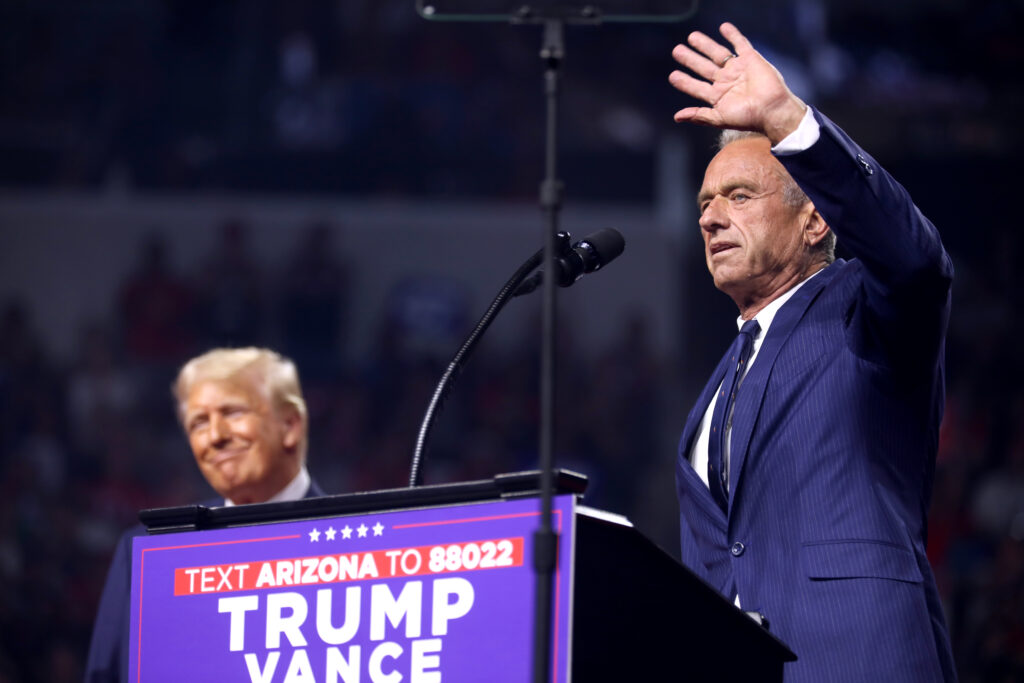
When President Trump announced his pick for secretary of Health and Human Services (HHS), many were surprised by the choice of Robert F. Kennedy Jr. It didn’t take long for partisan attacks to roll in, with detractors labeling RFK Jr. as “anti-vaccine.” These accusations, though repeated often, are demonstrably false and serve to obscure Kennedy’s true position: not an opposition to vaccines but a commitment to ensuring their safety and accountability. Kennedy is advocating for the kind of basic oversight and liability that pharmaceutical products typically receive. Let’s unpack the inaccuracies surrounding these claims and dive deeper into Kennedy’s actual stance, as well as the broader context of vaccine regulation.
Not Anti-Vax
Democrats and their media allies have worked tirelessly to paint RFK Jr. as an anti-vaccine conspiracy theorist. They do this despite knowing better. Robert F. Kennedy Jr. has repeatedly clarified his stance: he is not against vaccines; he is against unsafe vaccines. In fact, RFK Jr. and every member of his family have been vaccinated against diseases like Measles, Polio and even COVID-19. Kennedy has consistently called for more rigorous testing of vaccines, just as is done for any other pharmaceutical product submitted to the FDA. His position centers around transparency, accountability and basic safety standards—not a rejection of vaccines.
To put it plainly, Kennedy believes that vaccines should undergo the same testing standards and clinical trials that other drugs must face. He also demands that vaccine manufacturers bear responsibility for any adverse effects caused by their products, just as other pharmaceutical companies are required to do. His position is one of consumer rights and corporate responsibility, not anti-science paranoia. Yet, detractors conveniently ignore this nuance in favor of a caricature that suits their political narrative.
Pediatric Vaccines and Exemptions from Testing
One of the most striking aspects of Kennedy’s critique involves pediatric vaccines, which are exempt from the stringent safety testing protocols applied to other drugs. Historically, pediatric vaccines have been granted special treatment under the guise of public health urgency. In the mid-20th century, vaccines were developed and deployed quickly to combat deadly outbreaks, a context in which expedited processes made sense. However, the special regulatory treatment has persisted beyond these emergencies, leading to today’s patchwork approach to vaccine testing.
Typically, most pharmaceuticals go through a process that involves several stages of clinical trials—including randomized, double-blind studies to gauge safety and efficacy before FDA approval. Pediatric vaccines, however, are often fast-tracked and bypass some of these standard clinical trial phases. The justification has historically been the assumption of an overwhelmingly positive risk-benefit ratio for the public. Yet, this assumption does not negate the need for rigorous safety oversight, especially when the recipients are children.
Kennedy’s concern is simple: If vaccines are safe and effective, they should have no issue passing the same scrutiny applied to any other drug. His advocacy is not against the product itself but against the exemption from rigorous testing, an exemption that treats vaccine safety as a foregone conclusion rather than a matter for scientific verification.
Immunity from Liability: A Regulatory Anomaly
Perhaps the most controversial issue that RFK Jr. has raised is the legal immunity vaccine manufacturers enjoy from liability. In 1986, Congress passed the National Childhood Vaccine Injury Act (NCVIA), which effectively shielded vaccine makers from liability lawsuits. The law was initially passed in response to pharmaceutical companies’ threats to stop producing vaccines, as they were facing a surge in litigation that they argued made vaccine production unprofitable.
The NCVIA created the Vaccine Injury Compensation Program (VICP), a government-managed fund to compensate individuals who suffered adverse reactions to vaccines. While proponents argue that this system ensures a steady supply of vaccines, critics like RFK Jr. argue that it has also fostered an environment where pharmaceutical companies lack sufficient incentive to rigorously ensure the safety of their products. After all, without liability, the cost of mistakes isn’t borne by the manufacturer—it’s borne by the public.
For RFK Jr., this immunity creates a moral hazard. If vaccine manufacturers are not financially liable for injuries caused by their products, then the ordinary checks and balances that the market provides are effectively suspended. The incentives to prioritize safety, already precarious in a for-profit healthcare system, are diminished further. Kennedy has advocated for the elimination of this legal immunity, urging that vaccine manufacturers be held accountable, just as any other pharmaceutical company would be.
Conclusion
The narrative that Robert F. Kennedy Jr. is anti-vaccine is an intentional misrepresentation. His stance is far more nuanced and deeply rooted in the principles of consumer safety and corporate accountability. He demands that vaccines undergo rigorous testing and that manufacturers bear responsibility for the safety of their products—requirements that are neither unreasonable nor radical. They are, in fact, common sense.
As Secretary of HHS under the Trump administration, Kennedy would focus on ensuring that public health policy balances both efficacy and safety without shielding corporations from accountability. His appointment represents a rare opportunity to bring transparency to vaccine regulation, driven by a genuine desire to protect public health rather than corporate interests. This is not anti-vaccine; this is pro-safety, pro-accountability and, ultimately, pro-public health.
It’s time to set the record straight and recognize RFK Jr. for what he is: not a radical skeptic, but a tireless advocate for safe medical practices and accountability who will make a great HHS secretary…
Sponsored by the John Milton Freedom Foundation, a nonprofit dedicated to helping independent journalists overcome formidable challenges in today’s media landscape and bring crucial stories to you.
READ NEXT: Court Ruling On Draconian Ban Will Leave You Speechless!


















Never mind the truth, this is politics.
Vaccines have skated by without safety studies since the 1986 vaccine indemnity that Reagan signed. This was just one of the black marks on his administration.