

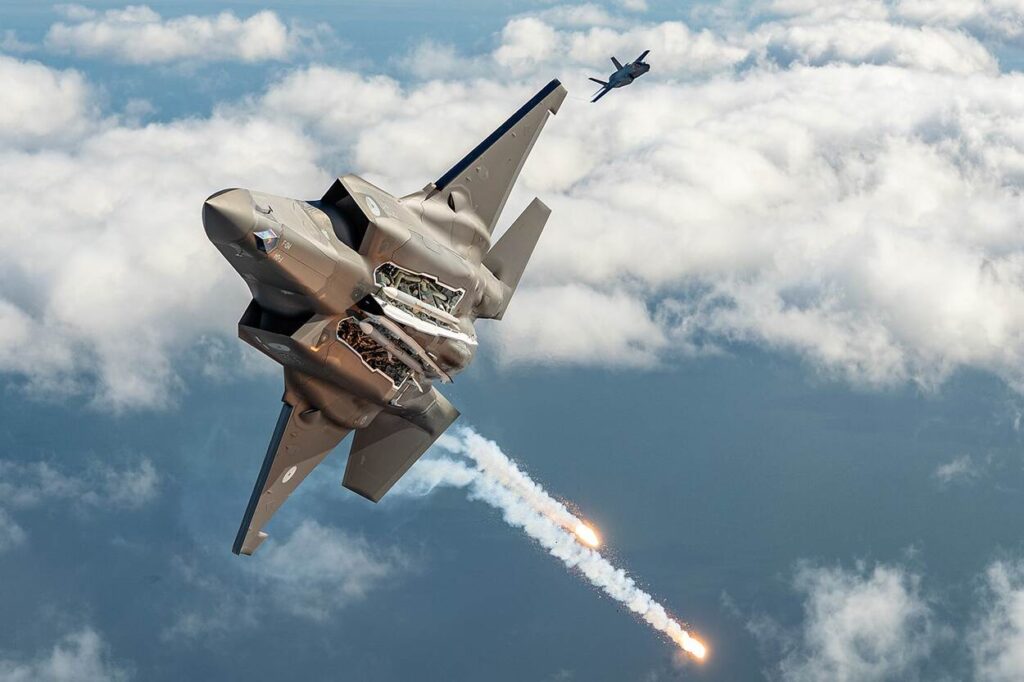
The United States is reportedly discussing a significant expansion of NATO’s nuclear-sharing arrangements that could eventually place nuclear-capable aircraft in Eastern European countries such as Poland and the Baltic states.
According to a report from the Financial Times, U.S. officials have signaled openness to expanding NATO’s nuclear posture beyond the nations that currently participate in the alliance’s nuclear-sharing program. While discussions remain ongoing through NATO channels and no agreement appears imminent, the talks underscore growing concerns about Russia’s military posture and the long-term future of European security.
Officials in Poland and the Baltic nations of Estonia, Latvia, and Lithuania have reportedly expressed interest in hosting nuclear-capable aircraft. That interest has been fueled largely by Russia’s invasion of Ukraine and repeated warnings from Russian President Vladimir Putin regarding Moscow’s nuclear arsenal.
Polish leaders have previously urged Washington to deploy additional nuclear assets on Polish territory as a deterrent against future Russian aggression. (RELATED: Trump Deploys 5,000 Troops To Poland Amid NATO Backlash)
As Defense News reported, the discussions centered on the potential forward deployment of dual-capable aircraft — military jets capable of conducting conventional combat missions while also carrying nuclear weapons:
Countries at the eastern flank of NATO, particularly Poland and the Baltic States, were the most vocally interested in hosting U.S. dual-capable aircraft, the Financial Times reported its sources as saying.
Poland has publicly courted nuclear bombs being deployed in its country to deter Russia, with former president Duda explicitly inviting such a deployment from the U.S. This has since been walked back somewhat by the new government, but the conversation remains active and urgent in Warsaw.
Poland has also signed up for France’s “forward deterrence” scheme, which promises to expand the French nuclear umbrella over the Eastern European country and may see the temporary deployment of French nuclear-capable jets to Poland down the line.
According to the Financial Times, the current U.S. nuclear sharing discussions are being held through NATO channels.
The discussions come as NATO adjusts to a rapidly evolving security landscape. With the United States increasingly shifting strategic attention elsewhere and reducing parts of its conventional military presence in Europe, governments across the continent are ramping up defense spending and reassessing long-term security plans.
According to sources cited by the Financial Times, the push to expand U.S. nuclear-sharing arrangements is largely aimed at calming growing concerns among European allies that Washington may become a less reliable security guarantor in the future. (RELATED: Pentagon Shift Raises Questions About America’s NATO Strategy)
How NATO Nuclear Sharing Works
NATO’s nuclear-sharing arrangement dates back to the Cold War.
Under the program, U.S. nuclear weapons remain under American custody and control during peacetime. However, allied air forces train to deliver those weapons if authorized by Washington during a military conflict.
The arrangement is designed to strengthen deterrence while allowing allies to participate in NATO’s nuclear mission without developing independent nuclear arsenals.
Currently, six NATO countries participate in the nuclear-sharing framework:
- Germany
- Italy
- Netherlands
- Belgium
- Turkey
- United Kingdom
Expanding the arrangement farther east would represent one of the most significant changes to NATO’s nuclear posture since the end of the Cold War.
Growing Concerns About Russia
The discussions come as NATO continues adapting to the security environment created by Russia’s war in Ukraine.
The alliance has steadily increased troop deployments, missile defenses, and military infrastructure along its eastern flank. At the same time, the Trump administration has pushed European allies to assume a greater share of their own defense responsibilities while the United States devotes increasing attention to challenges in Asia and elsewhere. (RELATED: America’s Not Ready For 21st Century Warfare)
NATO Secretary General Mark Rutte recently emphasized that although the United States may shift more strategic focus toward other regions, NATO’s deterrence posture in Europe must remain strong.
Any move to extend nuclear-sharing arrangements into Eastern Europe would likely provoke a sharp response from Moscow and could further escalate tensions between Russia and the alliance.
For now, officials stress that discussions remain preliminary. Even so, the possibility of placing nuclear-capable aircraft closer to Russia’s borders would represent an extraordinary shift in NATO strategy and one of the most consequential defense decisions facing the alliance in years.
READ NEXT: Governor’s ‘Still On The Ballot’ Remark Fuels Speculation





















It’s not Russia, It’s ISLAM!