



Alex Cooper, the host of the wildly popular Call Her Daddy podcast, has recently found herself at the center of controversy after revealing details about her decision-making process for hosting high-profile political figures. In an interview at the New York Times’ DealBook Summit this week, Cooper contradicted previous claims that both candidates had equal opportunities to appear on her show. She said that the Trump campaign had reached out to her team, but she ultimately decided to host Vice President Kamala Harris instead, presenting it as an “either or” choice for the first time.
“We had a Zoom call with Trump’s team,” Cooper revealed. “I wasn’t on it.” She did not elaborate on why she was absent from that discussion or what exactly was discussed during the call. Cooper said she ultimately opted to host Vice President Kamala Harris, leading to a conversation that many saw as an attempt to reach young, female voters ahead of the 2020 election.
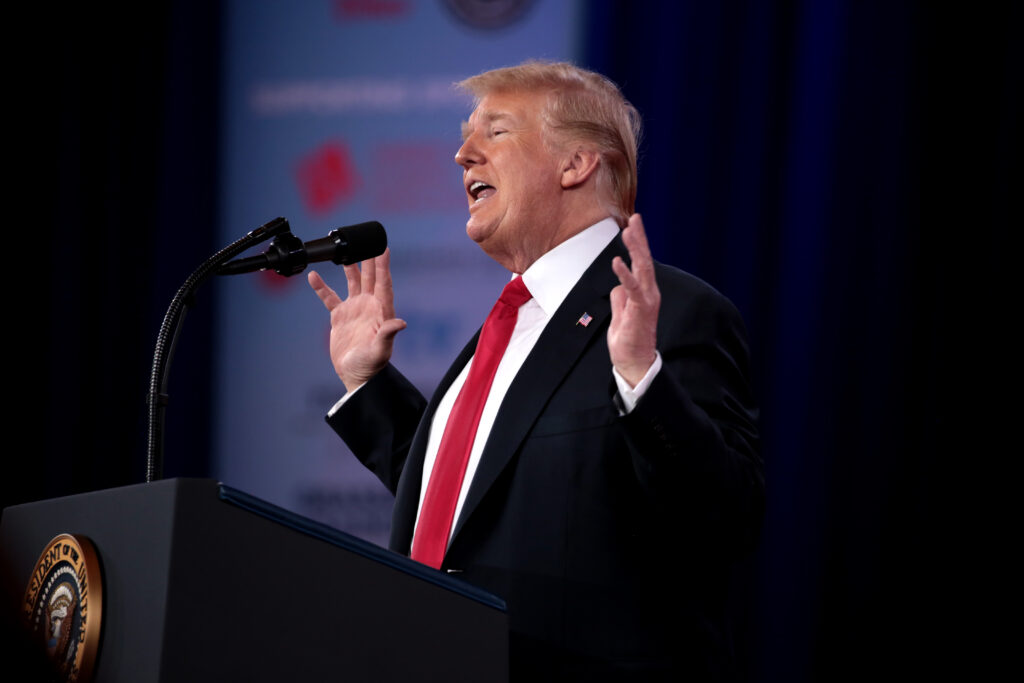
In an October interview with Harris herself, Cooper had explicitly stated her openness to hosting Trump, should he be willing to discuss women’s rights. “I want to be so clear — since this isn’t a one-sided conversation, we reached out to former President Donald Trump to come on the show. If he also wants to have a meaningful, in-depth conversation about women’s rights in this country, then he is welcome on Call Her Daddy anytime,” Cooper said at the time.
It’s unclear whether the Trump campaign or Alex Cooper’s team made the final call, but some readers may have a hard time believing that Trump was unwilling to discuss abortion on Cooper’s podcast — especially as Democrats consistently misrepresented his policies on the issue, and it being one of three priorities that voters trusted Harris on more than they trusted him on.
Cooper’s interview with Kamala Harris has also been met with skepticism. The interview was widely condemned for being a softball conversation, one that seemed intentionally crafted to make the then-candidate appear more relatable and palatable to young women. Critics argued that Cooper didn’t press Harris on some of the more difficult or controversial aspects of her political career, choosing instead to steer the conversation in a way that avoided any tough questions.
For instance, the interview covered topics like Harris’ upbringing, her path to politics, and her role as the first woman of color to serve as vice president, but it largely avoided any in-depth discussion of her policy positions or political track record. Many observers felt that the conversation was designed more as a public relations exercise than a genuine, hard-hitting interview.
She also casted doubts on reports of the campaign’s replica of the Call Her Daddy studio costing $100,000, insisting that her “much nicer” studio in Los Angeles didn’t cost six figures, and she didn’t understand how “cardboard walls” could be that expensive.
While Cooper knew she’d receive backlash for the interview, she says she has no regrets about it, highlighting the importance of “women’s rights” and admitting she believed the majority of bad press would die down within two weeks of publication.