




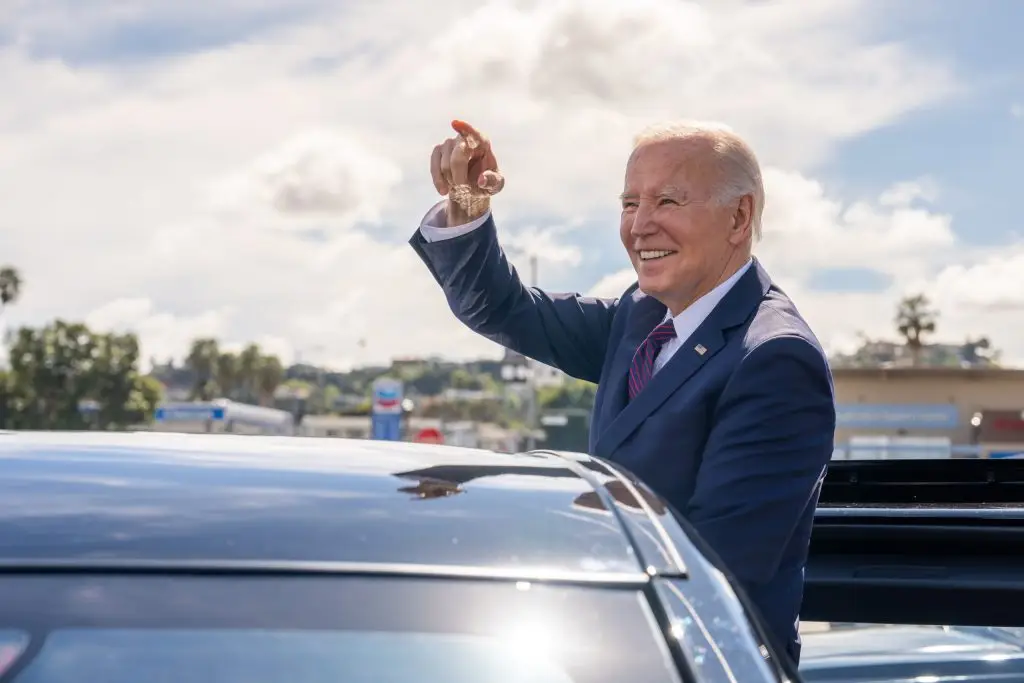
Grieving families of Marines killed in the August 2021 suicide bombing have revealed unsettling details about the President’s behavior during the dignified transfer of remains. According to the Daily Mail, the families were made to wait for hours—partly due to Biden’s delay in attending the ceremony—while they learned that the President was reportedly napping on his plane.
The tragic deaths of 13 U.S. service members, including 11 Marines, a soldier, and a sailor, occurred outside the Abbey Gate of the Hamid Karzai International Airport in Kabul on August 26, 2021, during the chaotic and deadly conclusion of the U.S. withdrawal from Afghanistan. The bombing, claimed by ISIS-K, not only killed the service members but also deeply impacted their families, who were left with questions about both the administration’s decision-making and the President’s conduct in the aftermath.
One of the most poignant and disturbing allegations comes from Roice McCollum, the sister of Marine Lance Corporal Rylee McCollum, who died in the bombing. She described the ordeal of waiting for Biden to arrive at the dignified transfer of remains, which she said was delayed for hours because the President was reportedly resting.
“We sat in that office for what seemed like an eternity waiting on the doddering old fool,” said Darin Hoover, father of Staff Sgt. Taylor Hoover, another Marine who died in the bombing. Hoover, along with other family members, was left in limbo as they awaited the arrival of the President, who was supposed to receive the fallen soldiers’ remains with the appropriate solemnity and respect.
The incident is particularly distressing in light of the high-profile nature of the transfer, which traditionally is a moment of reverence and closure for grieving families. While Biden’s actions during this period have already drawn significant scrutiny—especially his repeated checking of his watch during the transfer—the news that he allegedly kept the families waiting because he was napping has intensified criticism.
A spokesperson for the White House has predictably denied the claims made by the families, calling the allegation “untrue.” However, the families’ statements align with a broader narrative that has emerged about Biden’s handling of the Afghanistan withdrawal and his overall presidency.
While Biden’s generals have defended the decision to proceed with the chaotic troop withdrawal, other sources indicate that the President was less engaged than he should have been. At the time, Rep. Adam Smith, a Democratic member of Congress and Chair of the House Armed Services Committee, claimed that he could not even reach Biden to voice his objections to the withdrawal strategy, adding to the perception that the President was detached from the decision-making process.
The chaotic nature of the U.S. exit from Afghanistan has been widely criticized on multiple fronts. The scenes of desperate Afghan civilians clinging to U.S. military planes, trying to escape the Taliban takeover, went viral, causing a public relations nightmare for the Biden administration. The speed with which the Taliban regained control of the country led to questions about the intelligence and military assessments that were made in the months leading up to the pullout.
According to the Daily Mail, over 65 individuals with known ties to terrorist organizations were allowed to enter the U.S. amid the chaos of the evacuation, further deepening concerns about the administration’s management of the situation.
This has led to a widening rift between the administration and those who had hoped for a more responsible and strategic withdrawal. Military experts, intelligence officials, and even former allies of Biden have expressed dissatisfaction with his leadership during the crisis. Meanwhile, the families of the fallen service members are left with not only the grief of losing loved ones but also a lingering sense of betrayal over how their deaths were handled.
The families’ criticism of Biden extends beyond his behavior during the dignified transfer. For many, the larger question is one of accountability. Who truly made the decisions behind the chaotic withdrawal, especially if Biden was not fully engaged in the process? This is a question that has become even more urgent in light of reports suggesting that Biden’s aides increasingly took over responsibilities for him as his leadership capabilities came into question.
In recent weeks, reports have emerged that Biden’s staff took a more hands-on role in managing his public appearances, policy decisions, and strategic communications. The Wall Street Journal reported that Biden’s aides had been increasingly tasked with overseeing his public engagements, with the President’s public appearances often framed and curated by his team to avoid damaging missteps.
For the families of the fallen Marines, the lack of leadership and consideration shown by President Biden during the transfer of remains is just one piece of a larger tragedy. For Darin Hoover and others, the painful reality is that they did not feel that their children’s sacrifices were respected by the highest office in the land.
“Who really made the final decision to go through with the withdrawal?” Hoover asked in an emotional exchange. “If the President wasn’t answering his phone, or if he wasn’t taking advice from anyone, then who was really in charge?”
Biden’s actions, or lack thereof, during this period have created an indelible stain on his presidency, particularly among those who are directly affected by the consequences of the Afghanistan withdrawal. As more details emerge, it seems that the Afghanistan disaster will remain a deeply painful chapter in both U.S. military history and the legacy of the Biden administration.
READ NEXT: Officer Details Marines’ Chaotic Final Days in Afghanistan















I don’t know if Biden was napping, but I definitely believe his handlers are lying about the delay.