

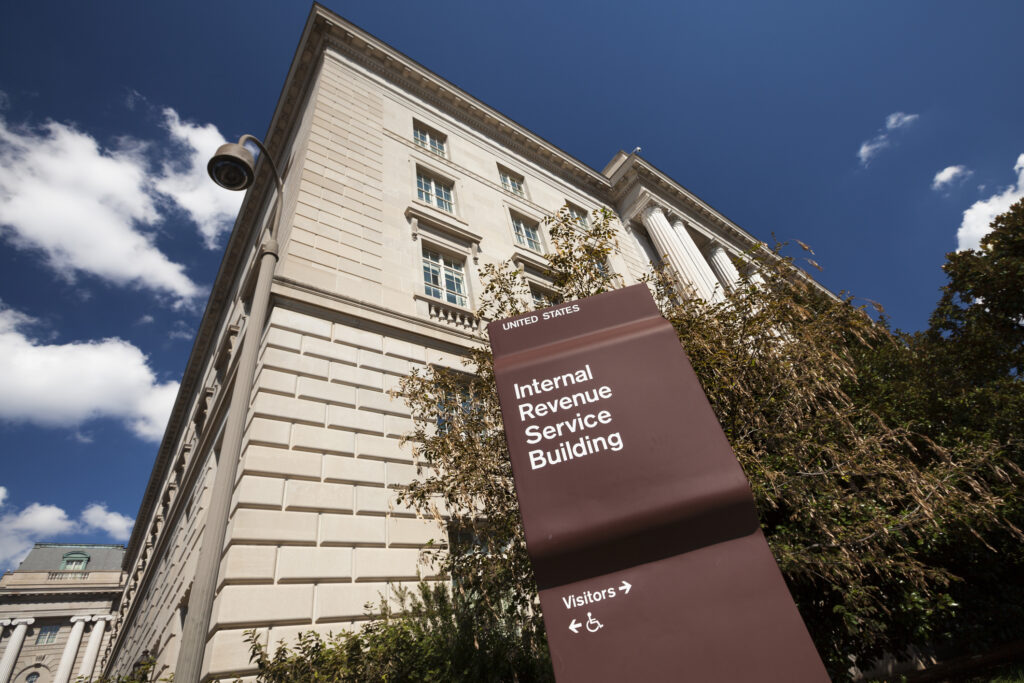
Republican lawmakers successfully rescinded $20 billion in supplemental funding from the Internal Revenue Service (IRS) as part of the December 2024 stopgap spending bill. This measure, recently signed into law by President Joe Biden, is an effort to scale back the scope of the IRS, which they have long accused of being weaponized against taxpayers and corporations.
The move comes on the heels of prior legislative action aimed at undoing the $80 billion allocated to the IRS in 2022 through the Inflation Reduction Act (IRA). The additional funding was intended to enhance the IRS’s enforcement capabilities, including hiring up to 87,000 new agents. Republican lawmakers have been fiercely critical of the spending, arguing that it would lead to an expansion of the IRS’s power and an increase in audits, particularly targeting small businesses and middle-class Americans.
John Kartch, vice president of communications at Americans for Tax Reform, praised the decision as a significant victory. “This is $20 billion we should never spend,” Kartch told the Daily Caller News Foundation (DCNF). “By kicking it out, it means the Trump administration is never going to spend it.”
Republican resistance to the IRA’s funding provisions for the IRS has been consistent, with multiple rescissions and proposals aimed at rolling back the funds allocated to the agency. In June 2023, Republicans succeeded in clawing back nearly $1.4 billion of the $80 billion approved by Democrats in the Fiscal Responsibility Act.
In March 2023, Treasury Secretary Janet Yellen acknowledged in testimony to the House Ways and Means Committee that more than 90% of the audits conducted with the IRA’s supplemental funds would focus on individuals making less than $400,000 annually, which further fueled Republican claims that the IRS expansion would harm ordinary taxpayers.
With these cuts, Republicans have effectively reduced the IRS’s ability to implement the full scope of its planned enforcement measures under the IRA, significantly scaling back its efforts to audit the American people. Without the supplemental funding, the IRS will be forced to scale back its operations.
In the long run, Republicans hope that continued pressure on the IRS will force the agency to focus on more “efficient” forms of enforcement without the need for vast expansions of personnel or resources. For now, however, the debate over the agency’s future remains a key point of division between the parties.
This month, Trump nominated Billy Long, a former Republican congressman from Missouri, to head the IRS in a potential second term. Long, if confirmed, would likely pursue further reforms to reduce the size of the IRS and limit its scope of operations.
READ NEXT: IRS Employees Owe Millions In Back Taxes



















Send funds back to taxpayers OK MUST