President Donald Trump threatened Friday to impose new tariffs on Canada, accusing Ottawa of allowing wildfire smoke to drift into the United States through what he described as “grossly negligent” forest management and “willful negligence.”
In a post on Truth Social, Trump argued that smoke from Canada’s record wildfire season has repeatedly blanketed parts of the northern United States, disrupting daily life, and creating health concerns for millions of Americans.
“We will not continue to accept this,” Trump wrote, adding that his administration is examining trade measures against Canada unless the situation improves.
Trump cites cross-border smoke
Trump said Canadian officials have failed to take adequate steps to prevent or contain wildfires that have sent thick smoke across the border this summer.
The president claimed Canada had been “grossly negligent” in its forest management practices and suggested tariffs could be used as leverage to encourage stronger wildfire prevention efforts.
He did not specify what products would be targeted or provide a timeline for any potential trade action.
Smoke has affected multiple U.S. states
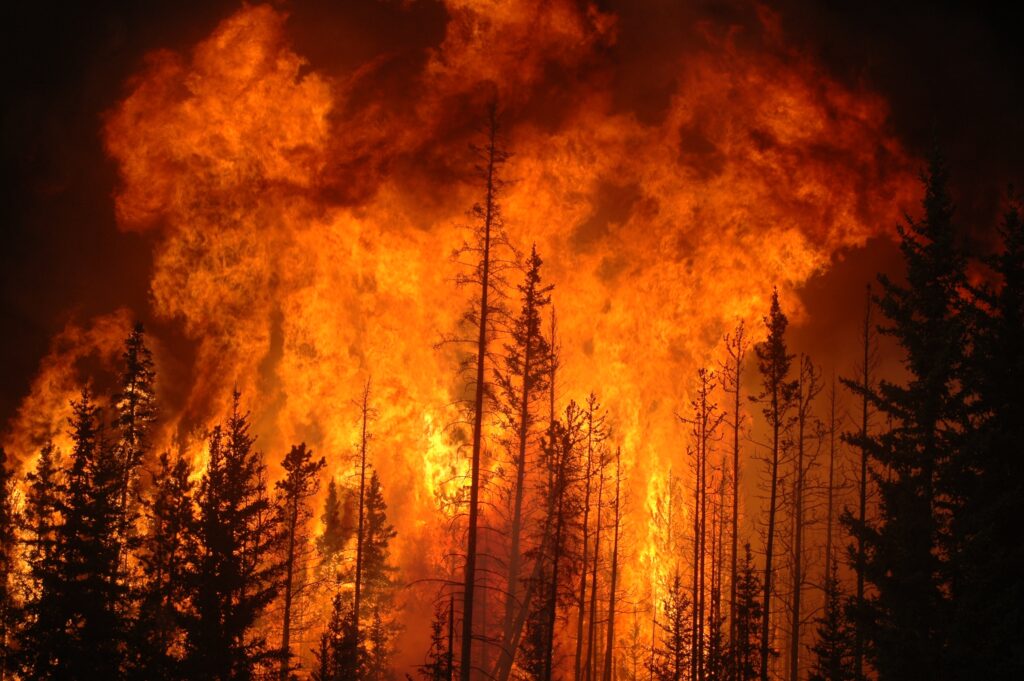
Driven by hundreds of active wildfires across Canada and northern Minnesota, dense smoke plumes have periodically pushed south, causing hazardous, record-breaking air quality alerts across large portions of the Midwest, Great Lakes, and Northeast.
Swaths of the Northeast and the Great Lakes regions (including the New York City skyline) saw significant orange haze and reduced visibility due to the fires on Friday.
Breathing NYC's smoky air is equal to puffing 10 whole cigarettes, expert warns https://t.co/7znoARIY8o pic.twitter.com/LgPF30i78a
— New York Post (@nypost) July 16, 2026
Health officials have issued numerous air quality alerts urging children, older adults, and people with respiratory conditions to limit time outdoors when smoke concentrations spike.
Canada has experienced another severe wildfire season, with thousands of fires burning across several provinces and forcing evacuations in multiple communities.
Canada has not responded
Canadian officials had not immediately responded to Trump’s tariff threat.
Wildfire experts generally attribute the increasing size and intensity of Canadian fire seasons to a combination of drought, increasing global temperatures, lightning strikes and forest conditions. Fire suppression efforts are also influenced by terrain, weather, and the availability of firefighting resources.
Trade tensions could widen
The latest threat adds another point of friction to the U.S.-Canada relationship, which has already faced strain over tariffs, trade policy, and border security during Trump’s second term.
Whether the administration has legal authority to impose tariffs specifically in response to wildfire smoke remains unclear. The White House has not released additional details explaining the legal basis for the proposed action or how such tariffs would be structured.
For now, Trump’s comments represent a warning rather than a formal policy announcement, leaving open the possibility of further negotiations between Washington and Ottawa.
READ NEXT: Trump Drops Bombshell Announcement On Lindsey Graham’s Family