



A catastrophic midair collision between an American Airlines regional jet and a U.S. Army Black Hawk helicopter sent both aircraft plunging into the icy Potomac River near Reagan National Airport on Wednesday night. The tragedy, which unfolded just minutes—possibly seconds—before the jet was set to land, has intensified scrutiny on the state of U.S. aviation safety, an issue already under increasing criticism.
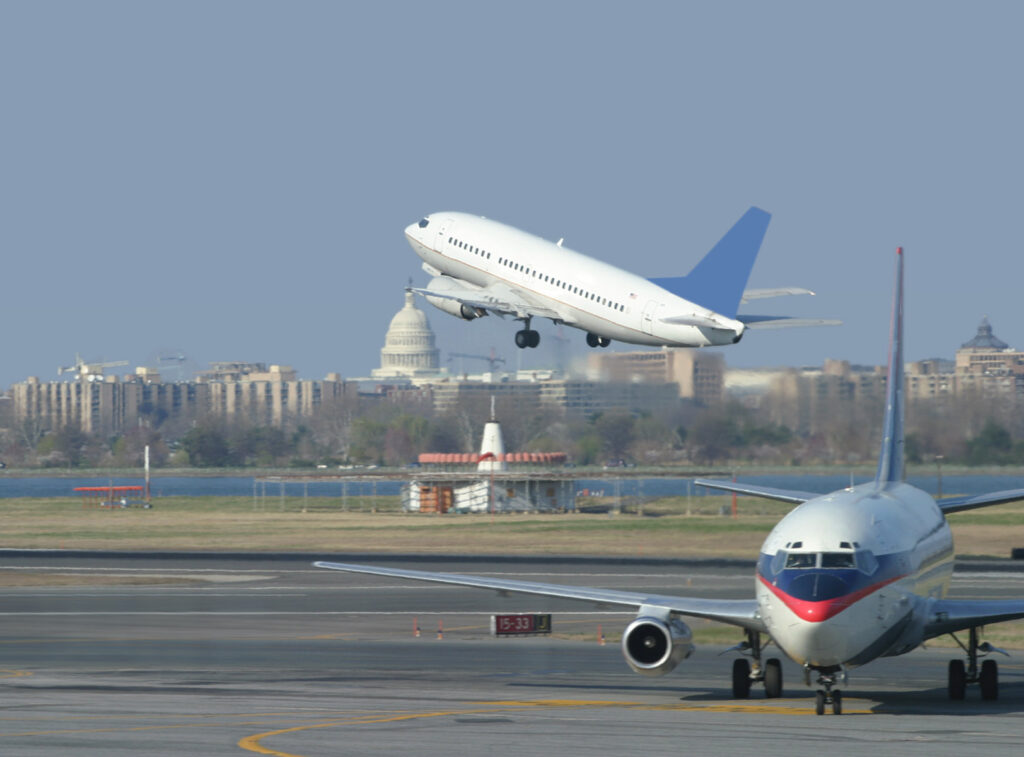
The American Airlines Bombardier CRJ700, arriving from Wichita, Kansas, was on its final approach to Runway 33 when it collided with a Sikorsky H-60 Black Hawk military helicopter. Despite clear conditions and both aircraft being in communication with Air Traffic Control (ATC), the crash occurred—an alarming failure in situational awareness or communication.
Authorities confirmed that all 64 passengers and four crew members aboard the CRJ700, as well as the four Army service members on the Black Hawk, are presumed dead. Among the victims were top U.S. and Russian figure skaters returning from a training camp in Kansas, adding to the heartbreak of an already devastating event.
🚨 #BREAKING: First clear photo of American Airlines flight 5342 to DC
— Nick Sortor (@nicksortor) January 30, 2025
Oh my God… pic.twitter.com/1apjIgV2gV
This disaster underscores longstanding concerns about aviation safety in the U.S. Reports of near-miss incidents have surged in recent years, driven by staffing shortages, outdated systems and lapses in oversight. A 2023 New York Times investigation revealed that potentially catastrophic incidents occur “multiple times a week,” highlighting dangerous gaps in the safety net meant to protect air travelers.
A major factor in these risks is the severe shortage of air traffic controllers, an issue industry experts have repeatedly warned could lead to disaster. FAA records have documented an increasing number of mistakes by overworked controllers, particularly at high-traffic airports, contributing to near-collisions that could have ended in tragedy.
Despite these red flags, federal regulators and airline executives continue to insist that U.S. air travel remains the safest in the world. The FAA frequently points to its stringent safety measures, including pilot training, ATC oversight and automated warning systems. Yet Wednesday’s collision raises urgent questions about whether these measures are sufficient.
Transportation Secretary Sean Duffy called the collision “absolutely preventable,” emphasizing the need for immediate action to strengthen air traffic management and ensure no such tragedy happens again.
Transportation Secretary Sean Duffy:
— Charlie Kirk (@charliekirk11) January 30, 2025
"To back up what the president said, what I've seen so far, do I think this was preventable, absolutely." pic.twitter.com/bR6gbpl0wM
President Trump, reacting to the crash, expressed his condolences while questioning the circumstances of the collision in a social media post: “The helicopter was going straight at the airplane for an extended period of time. It is a CLEAR NIGHT, the lights on the plane were blazing, why didn’t the helicopter go up or down, or turn? Why didn’t the control tower tell the helicopter what to do instead of asking if they saw the plane?” He concluded: “This is a bad situation that looks like it should have been prevented. NOT GOOD!!!”
Even before this deadly incident, the growing number of near-misses suggested that safety systems were showing dangerous cracks. Now, with the worst having happened, the pressure on aviation authorities to take decisive action has never been greater.
READ NEXT: This Scam Just Made The Case For One Of Trump’s New Groundbreaking Proposals
















Hopefully it’s not DEI related, I have a friend who went into the faa right after Reagan fired the striking controllers. He said that in order for him( young white male) to be accepted at the school he needed to 94 or higher on the exam , while women and minorities only had to get 80. He said a large portion of those ended up quitting or flunking out because it was too hard for them. Knowing how dei works , they may have lowered the standards even more.
I wish President Trump would let the NTSB determine if it was preventable, instead of interjecting his uneducated opinion. That just puts up walls that shouldn’t be there at this moment.
Washington air collision end Jan 25
The entire event is strange:
Admittedly, the passenger jet’s approach is an unusual one: Not straight and on Instrument Landing, but in left turn curve (~30′) immediately before landing, but executed on perfect sight conditions.
The helicopter flying in not fully straight line, clearly crossing the jet’s landing path – and whoever was at the controls would have seen the jet coming ahead, slightly on left side AND leaning sidewise (see lights) for the curve. Thus, the chopper pilot would have known about the jet’s turning course.
A plane on landing approach goes at low speed and reduced maneuverability. The jet pilot “could” have avoided the chopper (which he saw, too) by leveling his plane and going straight – BUT HE WOULD CERTAINLY EXPECT THE CHOPPER PILOT TO LEAVE HIS PATH AND GO, MOST LIKELY, TOWARDS BEHIND THE JET, i.e. TO HIS OWN LEFT ! (alternative: change rotor blade angle for ascent – but not recommendable because of proximity to jet).
BUT INSTEAD, THE CHOPPER TURNED RIGHT (~10-15’) THE MINUTE BEFORE COLLISION!!! WHY!!!
What caused an additional danger was the lacking TOWER COMMAND: The “Do you see CRJ?” was useless – OF COURSE, HE SAW IT!
INSTEAD: “Pat25 – TURN TO PORT, BEHIND JET!” – CORRECTION: THEY SAID THAT, TOO! (other report). But chopper pilot disobeyed order!
So, WHY he did NOT do the most sensible – or, if it was a training flight: Where the flight Instructor had left his brain is beyond any imagination!
PS: Witness report of the AA jet “banking to the right – up to 90′ – is a bit …. well, let’s say, would only be possible, if jet pilots had LAST MOMENT(!) realized the chopper going to hit them – AND RIPPED THEIR PLANE ROUND TO THE RIGHT TO SWERVE PAST IT! – TOO LATE – BUT THEY NEVER EXPECTED THAT APPROACH! [if they had turned further left, with the plane already left leaning(!), immediate banking would have been most likely – Ripping the plane over, up and right (with full throttle!) could get increased air effect – but would have to be handled with GREAT SENSIVITY! or could cause banking and crash.
However, the breaking of the jet’s body in two indicates that it was hit before the fall – So, this report is not fully clear. I assume the jet was hit and cut sideways!
D. J. Boost
(ex NATO airspace controller)
Automate FAA ATC
Use 3D models
Hologram map model of airspace
Use AI