






Germany’s AfD Ban Disturbing Historical Precedent
Germany has long prided itself on its commitment to democracy, yet the recent efforts to ban the Alternative for Germany (AfD) party expose an authoritarian impulse within its political establishment. Just as the Nazi Party systematically dismantled opposition in the early 1930s under the guise of protecting the state, modern Germany’s ruling elite seeks to outlaw its most formidable opposition party—not because of violent insurrection, but because it has become too popular. The echoes of history are unmistakable: When a political class resorts to legal mechanisms to suppress its rivals rather than defeat them in open debate, democracy ceases to function.
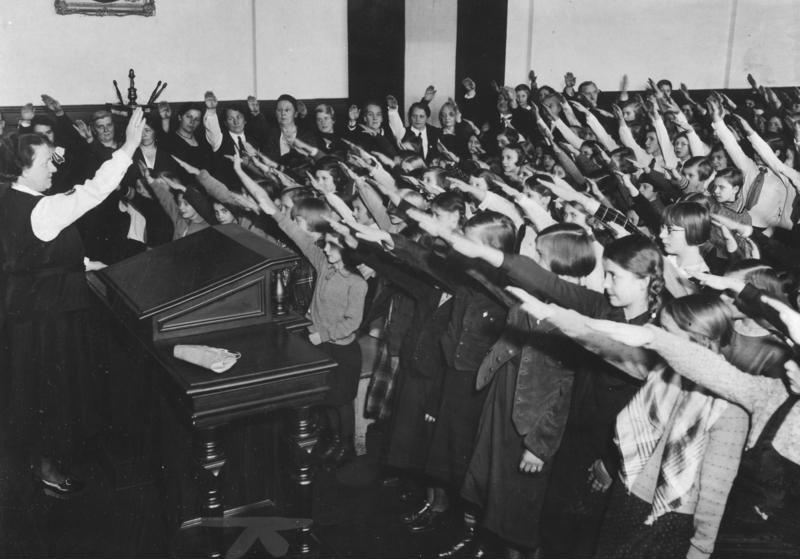
In 1933, the Nazi Party leveraged legal instruments such as the Reichstag Fire Decree and the Enabling Act to ban opposition parties, consolidating power under the pretext of defending democracy from internal threats. Today, the German government is utilizing Article 21 of the Basic Law—which allows for banning parties deemed to “undermine democracy”—as the modern equivalent of these laws. The claim is that AfD is a danger to democratic values, yet the party is currently the second-largest political force in Germany.
The timing is crucial. The Nazi Party banned opposition after it secured enough power to dominate elections; Germany’s establishment, fearing an AfD breakthrough in upcoming elections, seeks to preemptively remove its rising competitor under similarly vague legal justifications. When the political class weaponizes state institutions against opposition, it signals that political survival—not democratic integrity—is the priority.
The Weimar Republic, like modern Germany, was home to a range of radical parties, both communist and nationalist. Rather than outcompete them in the public sphere, Hitler’s government declared all opposition inherently dangerous—a tactic eerily similar to how the AfD is being portrayed today. Mainstream German politicians and media have coordinated a campaign of moral panic, warning that AfD’s growing influence is a threat to democracy itself. But what makes a party with millions of voters a “threat” to democracy? The real danger is a ruling elite deciding that a significant portion of its electorate must be silenced.
The rhetoric used against AfD mirrors the Nazi suppression of the Social Democrats (SPD) and Communists (KPD). Then, it was accusations of Bolshevik subversion; now, it is accusations of right-wing extremism. Yet, the core logic remains unchanged: define the opposition as an existential danger and eliminate it, rather than engage in political debate.

Just as Joseph Goebbels’ propaganda machine framed opposition as a national security threat, Germany’s modern media establishment plays a similar role in amplifying fear about AfD. Instead of allowing voters to determine the legitimacy of the party at the ballot box, the government and legacy media have preemptively declared AfD beyond the boundaries of acceptable discourse. This is political gatekeeping at its most blatant.
A recent example is Elon Musk’s endorsement of AfD’s leader, which led to swift backlash from German authorities. Musk allowed an AfD leader to host a Space on X, prompting Germany to urge the EU to censor and punish Musk for allegedly violating the Digital Services Act (DSA). The message is clear: even providing a platform for opposition voices is now considered a crime in the eyes of the ruling elite. This is not a defense of democracy—it is the hallmark of authoritarian regimes terrified of losing control of the narrative.
If the AfD were polling at 5%, there would be no discussion of banning it. The reality is that the party is surging because it speaks to concerns the political establishment refuses to address—immigration, national sovereignty, economic decline and the failures of the EU. Rather than adjust policies to reflect voter sentiment, Germany’s ruling class prefers to remove political choices entirely.
The argument for banning AfD is not rooted in the rule of law, but in electoral fear. The Nazi Party ensured its own electoral victories by banning all alternatives; today’s German elites seek to do the same under a democratic façade. If successful, this precedent will erode political pluralism, normalize state suppression of dissent, and undermine faith in the electoral process.
Germany’s modern leaders claim they are banning AfD to protect democracy, but history shows that this justification has been used before—to disastrous ends. When a government decides it can outlaw opposition parties because their views are “unacceptable,” it embarks on a dangerous trajectory toward authoritarianism.
The Nazis did not come to power through immediate dictatorship—they first ensured that competing voices were silenced. Today, Germany’s political elite is playing the same game, just with subtler tools. The question Germans must ask is simple: if a ruling coalition can ban the second-largest party today, what’s stopping them from banning another tomorrow?
Sponsored by the John Milton Freedom Foundation, a nonprofit dedicated to helping independent journalists overcome formidable challenges in today’s media landscape and bring crucial stories to you.
READ NEXT: Trump’s Fight To Slay These Swamp Creatures Just Got More Complicated
























Bad Optics real bad
Oh, golly gee, you don’t imagine this might be applied to the COVID-19 suppression of alternative medications. Banning all discussion of them rather than debate them in public?
Worth noting: This is EXACTLY how Democrats in California have done it.
Sounds so much like the Democratic Party here in America. Make everybody fed, managed, controlled like the communist country. Thank God for President Trump!
These “Anti-Right-Wing” paroles and “fear”-spreading are an utter stupid -BUT DANGEROUS- matter, if we look at the reality:
There is talk of “Right wing” and “close to Nazis” – WHILE WE, DAILY, SUPPORT ‘BANDERA’ ADMIRERS IN UKRAINE!
In case you have not caught that: Stepan Badera was Hitler’s Chief-Collaborator and AA General in Ukraine – a mass murderer.
This so maligned Alternative for Germany (AfD) is nowhere near that right-wing lot – and no more conservative than the CDU/CSU.