





The Case Against Federal Worker Unions
“The process of collective bargaining, as usually understood, cannot be transplanted into the public service.” – Franklin D. Roosevelt
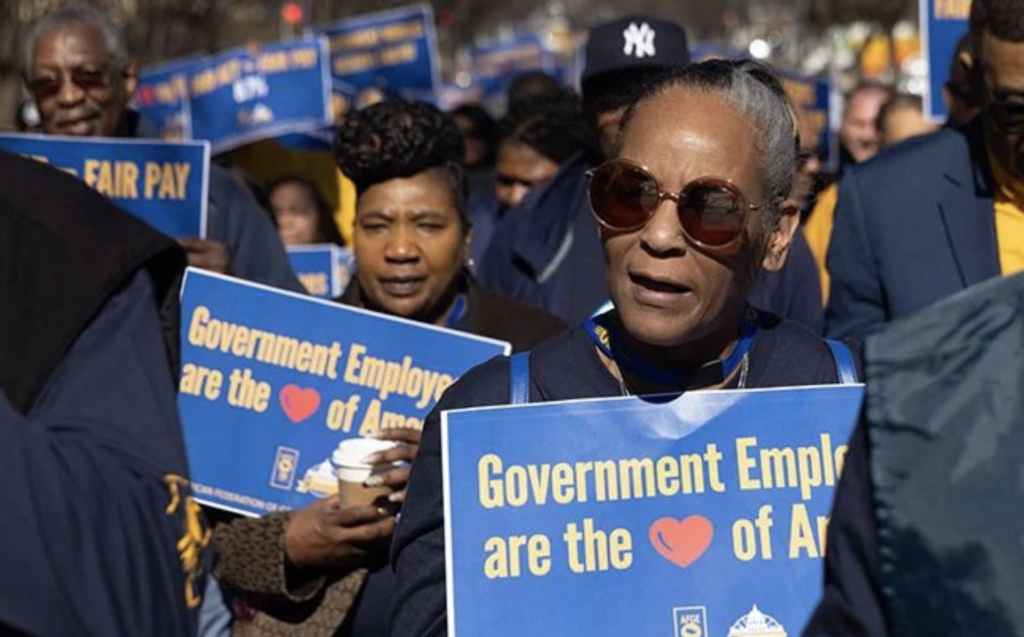
Unions have long been the sacred cows of the left, viewed as the vanguard of the working man against the excesses of corporate greed. However, the equation changes when the employer is not a private entity but the federal government—an institution meant to serve the people, not itself. The unionization of federal workers does not create an adversarial relationship between employer and labor but rather pits bureaucrats against taxpayers, eroding efficiency, accountability and the very integrity of public service.
Government Inefficiency and the Cost to Taxpayers
Unlike in the private sector, where unionized employees negotiate with profit-driven businesses, federal worker unions bargain against the American taxpayer. This arrangement is fundamentally unsound. Unlike a corporation, the federal government has no natural economic constraints—no bottom line to protect, no market forces to discipline inefficiency. It can simply demand more revenue from taxpayers or accumulate more debt.
Union-backed work rules often lead to bloated budgets, excessive staffing and rigid job classifications that prevent government agencies from adapting to changing needs. Managers struggle to discipline or fire underperforming employees, often needing years of legal battles to remove a single incompetent worker. The result? A culture of complacency and entitlement where mediocrity is protected and excellence is stifled.
Take the Department of Veterans Affairs, for example. Over the years, union protections have enabled a system where employees who falsified records and endangered veterans’ health remained on payroll while taxpayers footed the bill. How does this serve the public good? It doesn’t—it serves the entrenched bureaucracy at the expense of accountability.
A Conflict of Interest: Unions vs. Public Service
The core function of government is to serve the people, but public-sector unions create an inherent conflict of interest. Federal employees are meant to be impartial public servants, yet unions transform them into a powerful special interest group with one primary goal: securing more benefits, higher wages and ironclad job protections—often at the expense of the public they are supposed to serve.
Public-sector unions have become a key political player, overwhelmingly backing Democrats with millions in campaign contributions. This isn’t bargaining in good faith; it’s an institutionalized kickback scheme where unions help elect the politicians who will, in turn, reward them with sweetheart contracts and bigger budgets. The interests of the taxpayer—who foots the bill for these cushy deals—are nowhere to be found.
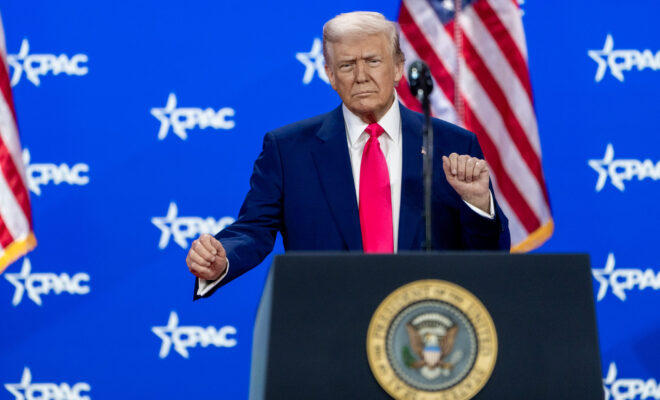
Nowhere is this more evident than in their desperate attempts to prevent President Trump’s return to the White House and his mission to make the government leaner and more efficient. With his DOGE (Department of Government Efficiency) team, headed by Elon Musk, poised to revolutionize federal agencies with innovative reforms, federal unions are working overtime to obstruct these efforts. Instead of embracing efficiency and streamlining bureaucracy, these unions dig in their heels, determined to preserve their power, even if it means sabotaging necessary reforms. Their resistance is not about protecting workers—it’s about protecting the entrenched administrative state.
Morale, Merit and the Decline of Excellence
One of the great myths peddled by union defenders is that collective bargaining improves worker morale. The reality is that federal worker unions foster a culture of entitlement rather than excellence. When job security is based on seniority rather than performance, and when promotions are dictated by tenure rather than merit, the incentive to excel disappears. Why work harder when mediocrity is just as lucrative?
The private sector thrives on meritocracy—productive employees rise, inefficient ones are dismissed. Federal unions destroy this principle. Consider the case of the public school system, where union protections have made it nearly impossible to remove incompetent teachers. The result? A stagnant, underperforming system where excellence is suffocated by bureaucracy. The same principle applies to federal agencies, where unions shield underperformers and obstruct necessary reforms.
The Economic Burden and Fiscal Consequences
Federal unions are not just bad for efficiency and accountability; they are bad for the economy. Union-driven wage hikes and benefit increases for federal workers mean higher taxes or deeper debt. At a time when America’s national debt is soaring past $30 trillion, the last thing taxpayers need is an entrenched bureaucratic class demanding ever-higher compensation at their expense.
Moreover, public-sector unions push for lucrative pension plans that create massive unfunded liabilities. States like Illinois and California, where public-sector unions wield enormous power, are drowning in pension debt, forcing tax increases and service cuts. The same pattern is playing out at the federal level, with government worker pensions increasingly crowding out other spending priorities.
The Case for a Union-Free Federal Workforce
There is a reason that even liberal icons like FDR opposed public-sector unions: they undermine democratic governance. When unions gain the power to dictate government policy, elected officials become mere puppets, unable to enact reforms or rein in costs without facing fierce resistance from bureaucratic interest groups.
Even Democratic leaders have acknowledged the problem. President Franklin D. Roosevelt explicitly opposed public-sector unions, stating: “The process of collective bargaining, as usually understood, cannot be transplanted into the public service.” More recently, former Democratic Massachusetts Governor Deval Patrick sought to curb union power in municipal negotiations to reduce taxpayer costs. The Democratic-controlled Massachusetts House of Representatives also voted to limit collective bargaining rights to improve fiscal sustainability. These actions reveal a fundamental truth: even some Democrats recognize that public-sector unions can become a self-serving entity, prioritizing their own interests over efficient governance.
Public-sector unions represent an existential threat to responsible governance. They transform bureaucrats into a privileged class that siphons taxpayer dollars while delivering subpar service. They distort democracy, ensuring that their own interests are prioritized over the interests of the American people. And they entrench inefficiency, making it nearly impossible to remove incompetence or reward merit.
A government that cannot reform itself, that cannot dismiss underperformers, that cannot prioritize the interests of its citizens over the demands of a privileged few, is a government on the road to stagnation and decline. Federal workers should not have unions—because public service should be about serving the public, not serving the bureaucracy.
Sponsored by the John Milton Freedom Foundation, a nonprofit dedicated to helping independent journalists overcome formidable challenges in today’s media landscape and bring crucial stories to you.
READ NEXT: Donald Trump Will HUMILIATE The Democrats If He Pulls This Off




















Automate
Use AI
Shut down jobs
Cut link to worksite
Send email warning
Reduce benefits
End perks
This debate is a long time coming. If the government is the watchdog of all things fair in the public square, what makes them any less fair for government employees? There should not be any unions in government for that very reason.
And why are we wondering that everything that government touches fails!
About time.
When I was in ATC I was forced to join PATCO and we all know what happened there. Thank God, I had left and gone to a different part of the FAA prior to that strike happening. Even then I was basically forced into another union to protect me against any adverse action. I got reassinged into another section which was not Union Protected but higly dicrimiatory. The FAA Regional Management was pro military due to the manager being a BG in the Air National Guard, and he was replacing civilian pilots with military pilots, even if they were only rotor wing and had to learn fixed wing on the fly. They were promoted over other highly rated and much more senior employees due to this. Government work is highly subjective and evaluation are based on how well you are liked and fit into the group. It collects nincompoops and malcontents that sluff their work off on others.
The elimination of Public Service Unions is long overdue. I hope some control industries will be control will also be incorporated to compensate for unusualy low wages and benefits. States an Counties are guilty of the same inequity. I am all for the various promises President Trump has made and addressing.
Never should have happened.
We need to end all public unions now
Unions discouraged real work productivity too. The unions are well aware of those who don’t do their job and get paid as the hardworking employees. An employee who works harder and or faster is discouraged or face retribution by the employer and employees and unions. Merit based jobs produce the best of the best worker and gets rid of the lazy ones and unions shouldn’t be allowed to interfere in merit based jobs or hiring. And certainly lazy employees shouldn’t get the same pay as the hardworking employee. Proof of work productivity too is a must. In order to get the best pay and too many lazy employees need to get fired and go home so they can be lazy at home. Dressing for the job is a must instead of looking like a pile of dirty laundry.