







A national secret is not always stolen with a spy’s whisper. Increasingly, it dies in silence—archived, encrypted, intercepted, and stored, awaiting the day mathematics no longer protects it. That day may arrive sooner than we think. The advent of quantum computing, a technology that manipulates the strange rules of subatomic physics, threatens to break the cryptographic backbone of our digital world. And unless we act with urgency and foresight, it will.
To say quantum computing will render current encryption methods obsolete is not alarmism. It is physics. Our existing public-key cryptography—from RSA to elliptic curve systems—relies on the practical impossibility of solving certain mathematical problems, like factoring large numbers. A classical computer might spend billions of years on such a task. A quantum computer, once mature, could do it in days. The implications are vast and catastrophic. Bank records. Military communications. Intellectual property. Voter databases. All, in theory, decryptable.
The real menace lies not in the future alone but in the present strategy of our adversaries: harvest now, decrypt later. Foreign intelligence services need not understand encrypted American communications today. They need only to store them, betting that quantum computing will do tomorrow what silicon cannot do today. Once decrypted, old secrets become new weapons. Think of trade negotiations, defense planning, even confidential political communications—dormant files that could, with the right quantum key, spring to life with geopolitical consequences.
Hence the urgency of what technologists call Post-Quantum Cryptography (PQC): encryption methods designed to resist quantum attacks. These are not speculative projects. They are real, available, and the subject of years of rigorous research led by the National Institute of Standards and Technology (NIST). In August 2024, NIST released three final PQC standards—FIPS 203, 204, and 205—built on the best algorithms known to withstand quantum attack vectors.
But release is not mandate. Standards are only as good as their implementation, and implementation is only as reliable as the incentives or requirements behind it. Left to market whims and voluntary compliance, PQC will arrive late, inconsistently, and unevenly. Some sectors—particularly regulated ones like finance and healthcare—may act quickly. Others, less exposed or less resourced, may defer until it is too late. Fragmentation is failure. In security, a single weak link becomes the point of entry.
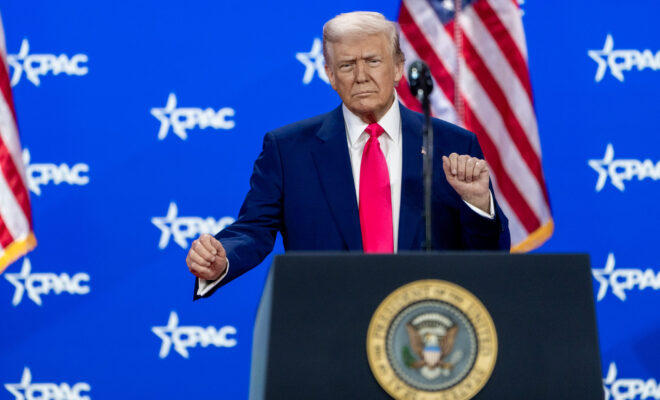
Mandating the adoption of PQC standards is thus a matter not merely of prudence but of national necessity. It must come from the top. And in this respect, the stage was astutely set not by a blue-ribbon committee but by the 45th and now 47th President of the United States, Donald J. Trump.
In December 2018, President Trump signed the National Quantum Initiative Act, a legislative achievement that deserves more recognition than it has received. The Act authorized $1.25 billion for quantum research over five years and, crucially, tasked NIST with developing post-quantum standards in collaboration with the private sector. It was, in effect, a regulatory scaffolding built before the storm. That scaffolding has now borne fruit.
To those unfamiliar with Trump-era policy, this might seem incongruous. Yet it was perfectly consonant with the administration’s broader priorities: defending American sovereignty, restoring technological leadership, and protecting economic infrastructure from foreign predation. Quantum computing is not merely a scientific curiosity. It is a national security arms race. And President Trump, who presided over Space Force’s creation and the decoupling from China, understood the stakes.
Now, in his second term, President Trump must go further. He must direct the Department of Government Efficiency—under the leadership of Elon Musk—to coordinate a full federal migration to PQC, and to ensure that regulated industries follow suit. Mandates, not memos. Deadlines, not suggestions.
The time for debate is over. The algorithms are ready. The standards exist. What remains is the political will to make them universal.
Skeptics will raise objections. Is quantum computing really that close? Are we not years—decades, even—from such capabilities? Perhaps. But cryptographic transitions take time. A full migration across critical infrastructure may require ten to twenty years. Some experts believe cryptographically relevant quantum machines could emerge in less than a decade. These timelines, like trains, are moving toward one another. Delay ensures collision.
Others will worry about cost. But the cost of failure—of a quantum breach that exposes decades of private correspondence, defense contracts, and classified materials—would be incalculable. PQC adoption is not an expense; it is an insurance policy on civilization itself. What price would we place on our nuclear command-and-control systems remaining inviolate?
We should also anticipate the objection from libertarian quarters: why mandate at all? Why not let the market decide? The answer is simple: collective risk. The Internet is not a siloed network of private fiefdoms. It is a web of interdependencies. If one hospital, one bank, one energy provider fails to upgrade, they can compromise others. It is the tragedy of the unpatched.
This is why central coordination is required. Not forever. Not in every domain. But now, in this pivotal transition, it is indispensable.
There is precedent. The federal government has long mandated security standards for critical infrastructure. It requires banks to meet certain capital requirements, airplanes to follow precise maintenance protocols, and pharmaceutical companies to submit to exacting safety tests. Post-Quantum Cryptography is no different. It protects not bodies but bytes—though in today’s world, the two are often indistinguishable.
If America fails to lead here, others will fill the void. China has already declared quantum supremacy a strategic goal. Its tech giants and national labs are investing billions into quantum R&D. Russia and Iran are not far behind. Leadership in PQC not only secures American systems; it sets global norms. Mandates in Washington ripple into standards abroad.
This is not a matter for partisanship. It is a matter of temporal hygiene—of cleaning the pipes before the flood arrives. President Trump’s legacy in quantum security is real and foundational. Now is the time to build upon it.
Mandate the migration. Secure the future. Let the enemies of America find, at the end of their quantum key, not secrets but silence.
Sponsored by the John Milton Freedom Foundation, a nonprofit dedicated to helping independent journalists overcome formidable challenges in today’s media landscape and bring crucial stories to you.




















Or Rerun more Signalgates right??