






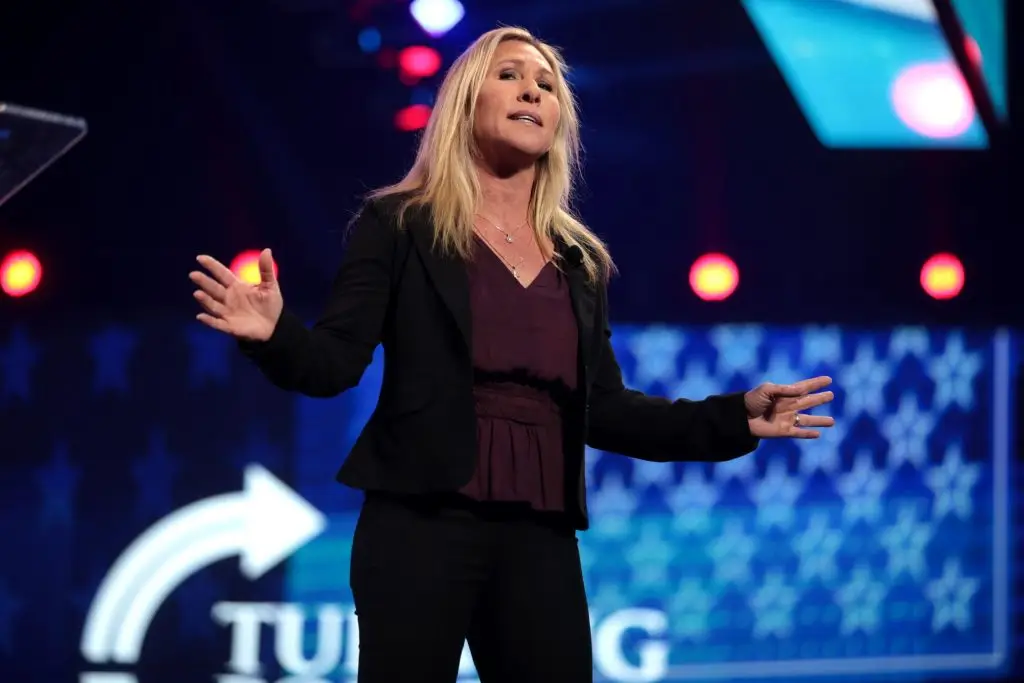
Rep. Marjorie Taylor Greene, R-Ga., one of the most outspoken allies of former President Donald Trump and a prominent figure in the MAGA movement, announced Friday night that she will not run for U.S. Senate in 2026 — a decision that reshapes the Republican field in a critical battleground state.
In a lengthy and scathing statement posted to social media, Greene confirmed she will not challenge Democratic Sen. Jon Ossoff, despite her reported expressed interest, and having long been speculated as a potential frontrunner in the race. The three-term congresswoman didn’t hold back, taking direct aim not only at Ossoff but at the U.S. Senate itself — and at her own party’s leadership.
“Someone once said, ‘The Senate is where good ideas go to die.’ They were right. That’s why I’m not running,” Greene wrote. “The Senate doesn’t work. It’s designed to obstruct the will of the people and protect the Uniparty’s grip on power.”
Greene’s decision came just days after Georgia Gov. Brian Kemp, the GOP establishment’s top recruit for the race, also declined to run for Senate, leaving Republicans scrambling to field a strong challenger to Ossoff, who is up for re-election in what’s expected to be one of the most expensive and closely watched Senate races of the 2026 cycle. It had previously been reported that she was considering the run on the condition of him not running.
While insisting she could easily defeat Ossoff — calling him a “silver-spoon progressive who’s never held a real job” — Greene said she had no interest in joining a Senate body she views as dysfunctional and beholden to special interests.
“Beating Jon Ossoff? That would be easy,” she declared. “But I won’t fight for a team that refuses to win, that protects its weakest players, and that undermines the very people it’s supposed to serve.”
Greene accused GOP elites of failing their base, singling out “consultants and rich donors” as the real power behind party decisions. She slammed Republicans who “see Trump as a speed bump” and said she is tired of a party that “refuses to deliver” for its voters.
Notably, Greene didn’t rule out a bid for Georgia governor in 2026, a race that will be wide open due to Kemp being term-limited. Earlier this year, she hinted publicly at considering a gubernatorial campaign — a move that would keep her in the spotlight and give her a direct power to influence state policy.
“I’m effective, fearless, and relentless — not because I serve the Republican Party, but because I serve the American people,” Greene said in her statement, leaving open the possibility of a future run.
With Greene and Kemp out, other Georgia Republicans are quickly stepping up. Rep. Buddy Carter has already launched his campaign. Other names reportedly eyeing the race include Reps. Mike Collins and Rich McCormick, Insurance Commissioner John King, Agriculture Commissioner Tyler Harper, Secretary of State Brad Raffensperger, and State Sen. Greg Dolezal.
Republican strategists in the state anticipate a crowded and potentially bruising primary, especially given the ideological rift between the Trump-aligned base and the more traditional wing of the party.
Sen. Ossoff, who narrowly won his seat in Georgia’s 2021 runoff elections, is seen as one of the most vulnerable Senate Democrats in 2026. National Republicans view flipping Georgia as crucial to expanding their slim Senate majority, which currently stands at 53-47.
Ossoff’s campaign has already begun fundraising and messaging around a tough re-election battle, but Greene’s exit removes what would have been one of the most polarizing — and high-profile — challenges he could have faced.
Greene concluded her announcement with a stark message to Republican leadership: change course or face consequences.
“To the elite retreaters, the consultants, and the establishment: consider this your warning,” she wrote.
For now, Greene remains in the House — but her national platform and loyal base suggest she’s not finished shaping the future of the Republican Party.
Greene’s decision also came on the heels of reported doubts expressed by President Donald Trump about her viability as a Senate candidate — a factor some political observers believe played a significant role in her opting out. According to multiple sources familiar with Trump’s thinking, the former president had grown skeptical that Greene could win a statewide race in Georgia, citing concerns that she would likely win the primary, but struggle in the general, alienating moderate and suburban voters critical to victory. While Greene did not mention Trump’s reservations in her statement, many believe that her decision may have had more to do with preserving her political capital — and staying in the president’s good graces — than with the dysfunction of the Senate itself.
Kemp also reportedly met with Trump to discuss the race, and declared he wouldn’t run shortly after the fact, suggesting that Trump and his allies may have a preferred candidate.
READ NEXT: Marjorie Taylor Greene Mulls 2026 Senate Run






















We can only hope that someone, anyone, will beat Ossoff.