


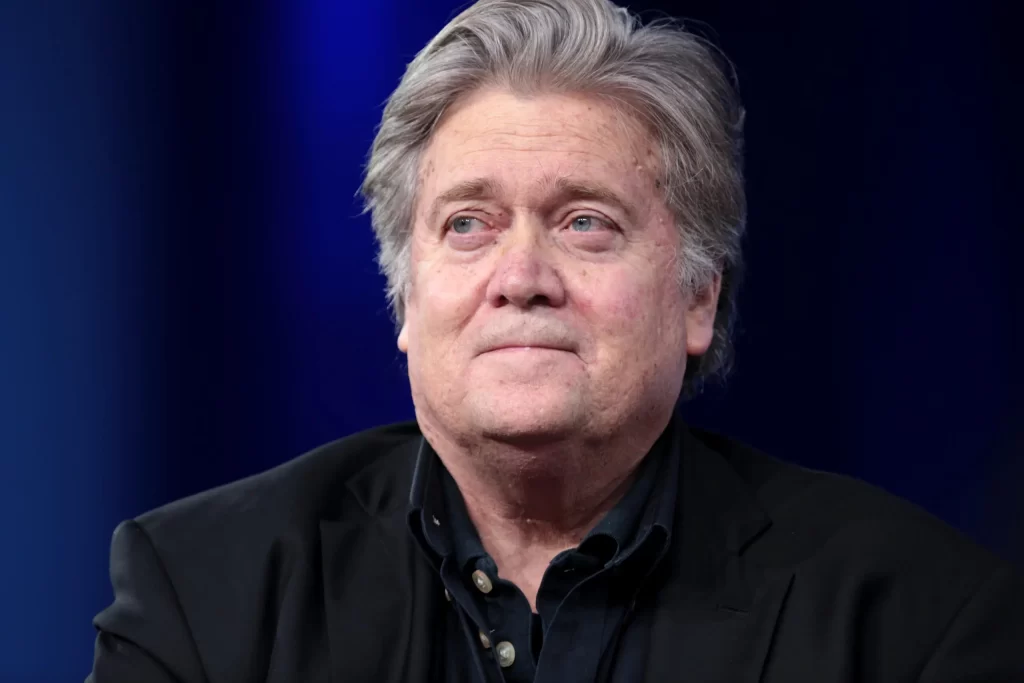
Nearly five years after being removed from Spotify over “incendiary” remarks, Steve Bannon’s “WarRoom” podcast has made a controversial return to the platform, signaling what may be a watershed moment in the battle over political speech, digital censorship, and the evolving populist movement in the U.S. and abroad. With Spotify’s staggering reach of 268 million global subscribers, Bannon’s reappearance marks the rehabilitation—if not resurgence—of one of the most significant voices in American politics.
Bannon, who served as Donald Trump’s campaign CEO and White House chief strategist, built a formidable media presence during his years in the political wilderness. His podcast thrived despite deplatforming by YouTube, Facebook, and X (formerly Twitter), largely due to unwavering support from Trump’s base and his consistent criticism of establishment power structures, including the very tech giants that silenced him.
“We haven’t changed our tone or style at all,” Bannon told The New York Post. “If anything, we’re more hard-hitting than ever.” Broadcasting four hours a day, six days a week from a basement studio in Washington, D.C., WarRoom blends capital market insights, grassroots political strategy, and nationalist messaging into what Bannon calls “receipts-driven” programming aimed squarely at a working-class and middle-class audience.
Bannon’s show was originally suspended in November 2020 after a controversial statement suggesting the metaphorical beheading of federal officials like Dr. Anthony Fauci and FBI Director Christopher Wray. Bannon maintains his words were figurative, referencing Tudor England and Thomas More’s execution. Spotify now says the decision to reinstate him followed “constructive dialogue” with his team.
But beyond the domestic culture war, Bannon is thinking globally. With Spotify available in over 180 countries, he sees an opportunity to export MAGA-style populism. “At least an hour [of programming] we try to give over to just the international populist nationalist sovereignty movement,” he said, citing Hungary, Poland, and Romania as focal points. While “MGGA” — Make the Globe Great Again — may lack the snappy branding of Trump’s slogan, the intent is unmistakable.
Bannon’s reemergence isn’t limited to right-wing circles. He’s appeared on California Gov. Gavin Newsom’s podcast and Real Time with Bill Maher, positioning himself as a populist bridge figure willing to confront political opponents head-on. “I can give a punch and I can take a punch,” Bannon says. “The MAGA movement prides itself in being resilient.”
Still, his reacceptance by a platform like Spotify doesn’t mean he’s forgotten the danger of centralized digital power. “Big Tech is the most dangerous thing in the country,” Bannon warns. “It’s oligarchy power, and we have to go after them.” He is adamant about breaking up tech titans like Amazon, Google, Facebook, and even Elon Musk’s X, which he claims is no safe haven for free speech. “Mention getting rid of H-1B work visas on there, and you’ll see how suppressed you become.”
In fact, Bannon saves some of his harshest words for Musk himself, calling him a “parasitic illegal immigrant” and an “apostate of the left.” Though he acknowledges Twitter’s transformation under Musk as a “sea change,” he remains skeptical: “Elon Musk could flip in a second. That’s where the danger is.”
From Wall Street banker to Hollywood producer, White House insider to exiled populist broadcaster, Bannon’s trajectory reflects the volatility of American politics in the Trump era. What’s clear is that he sees WarRoom not just as a podcast, but as the beating heart of a global ideological movement.
READ NEXT: MAGA Civil War Between Bannon And Musk?