



WASHINGTON — In a sharp break from decades of precedent, the Internal Revenue Service said Monday that churches and houses of worship may now endorse political candidates from the pulpit without violating federal nonprofit rules.
The agency disclosed the shift in a legal filing tied to a lawsuit brought by two Texas churches and a Christian broadcasting group. The IRS stated that religious speech during worship services — delivered through customary channels of communication — no longer triggers enforcement under the Johnson Amendment, the 1954 law barring tax-exempt groups from partisan political activity.
“Communications from a house of worship to its congregation in connection with religious services through its usual channels of communication on matters of faith do not run afoul of the Johnson Amendment as properly interpreted,” the IRS wrote in the court document, likening such speech to “a family discussion concerning candidates.”
Scope Narrowed to Religious Institutions
Rather than expand the exemption to all nonprofits, as plaintiffs originally requested, the IRS chose to limit the ruling to religious entities only.
That distinction, legal experts say, formalizes what had become common practice — churches engaging in political messaging with little risk of enforcement.
“It basically tells churches of all denominations and sects that you’re free to support candidates from the pulpit,” said Lloyd Hitoshi Mayer, a law professor at the University of Notre Dame. “It also says to all candidates and parties, ‘Hey, time to recruit some churches.’”
Historic Shift in Church-State Boundaries
The decision marks the clearest challenge yet to the traditional interpretation of church-state separation — a principle long reinforced by the Johnson Amendment, which was championed by then-Sen. Lyndon B. Johnson in 1954.
While the IRS has historically hesitated to punish pastors for political endorsements made during worship, this is the agency’s first official statement declaring such speech permissible under federal law.
Critics of the Johnson Amendment have long argued that it chills free speech more than it upholds political neutrality. Its boundaries are often described as unnecessarily vague, and the prohibition on political campaign activity has led to self-censorship among church leaders — many of whom avoid discussing issues that intersect with their faith for fear of triggering an IRS investigation or audit.
Joint Request to Bar Enforcement
The IRS and plaintiffs jointly asked a federal judge to issue an order blocking enforcement of the political speech ban — at least for the religious organizations involved in the case — not just under the Trump administration, but going forward.
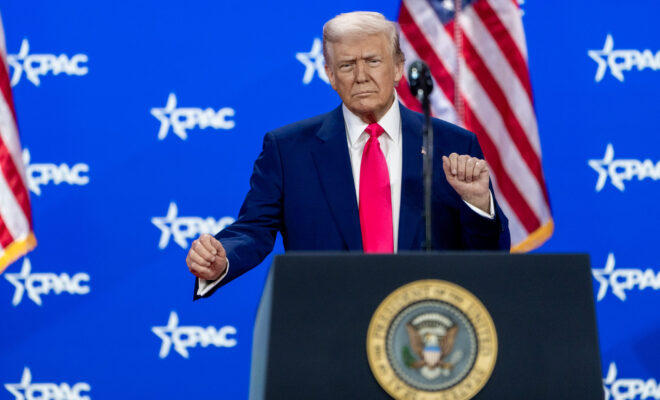
President Donald Trump has repeatedly pushed for repeal of the Johnson Amendment, a priority echoed by GOP lawmakers and conservative legal advocates.
Digital Reach Raises Broader Implications
Some scholars caution that the ruling’s impact may not stop at Sunday sermons.
“It’s not going to be limited to just their membership,” said Ellen P. Aprill, professor emeritus at Loyola Law School. “Even Las Vegas doesn’t stay in Las Vegas these days. Everybody has a web page.”
She warned that sermons endorsing candidates could be widely disseminated online, potentially giving religious institutions new political clout beyond their immediate congregations.
Legislation in Motion
The IRS’s move comes as Congress weighs the Free Speech Fairness Act, sponsored by Sen. James Lankford (R-Okla.) and Rep. Mark Harris (R-N.C.).
The bill would formally amend Section 501(c)(3) of the Internal Revenue Code, allowing tax-exempt groups — including churches — to make political statements during the normal course of their activities, as long as those statements incur only incidental costs.
Exciting victory for free speech! The IRS must never infringe on the First Amendment rights of American pastors to speak freely.
— Rep. Mark Harris (@RepMarkHarrisNC) July 8, 2025
It's time for Congress to make this win PERMANENT with my Free Speech Fairness Act. Let's ensure free speech is guaranteed for all! pic.twitter.com/HCBYdFw1IG
The legislation has gained support from groups such as the Family Research Council, Alliance Defending Freedom, and Americans for Tax Reform.
The IRS declined comment Monday night. Attorneys for the plaintiffs also did not respond to requests for comment.
READ NEXT: ICE Officers Targeted In Deadly Plot — Team Trump Promises Justice