



The recent announcements by several G7 nations, notably France, the United Kingdom, Canada, and Australia, that they will recognize Palestine as a sovereign state mark a significant geopolitical moment. Until very recently, the idea that even one, much less four, members of the G7 would take this step was unthinkable. Their longstanding policy of non-recognition was rooted in a commitment to the Oslo Accords, signed in 1993 and 1995, which created the Palestinian Authority as an interim administration and emphasized that a Palestinian state should emerge only through direct bilateral negotiations with Israel, not unilateral action. That this barrier has now been crossed reveals a troubling contradiction in the application of international law and diplomatic principles. These same nations refuse to recognize Taiwan, a self-governing, prosperous democracy that clearly meets the established legal criteria for statehood. By contrast, Palestine does not presently meet those criteria, and yet it is being ushered into recognition largely as a political rebuke of Israel. This double standard is as untenable as it is transparent.
International law offers a clear starting point for evaluating claims of statehood. The Montevideo Convention of 1933, a touchstone for such determinations, requires four attributes: a defined territory, a permanent population, an effective government, and the capacity to conduct foreign relations. These are not mere suggestions; they are the distilled essence of what it means to be a state.
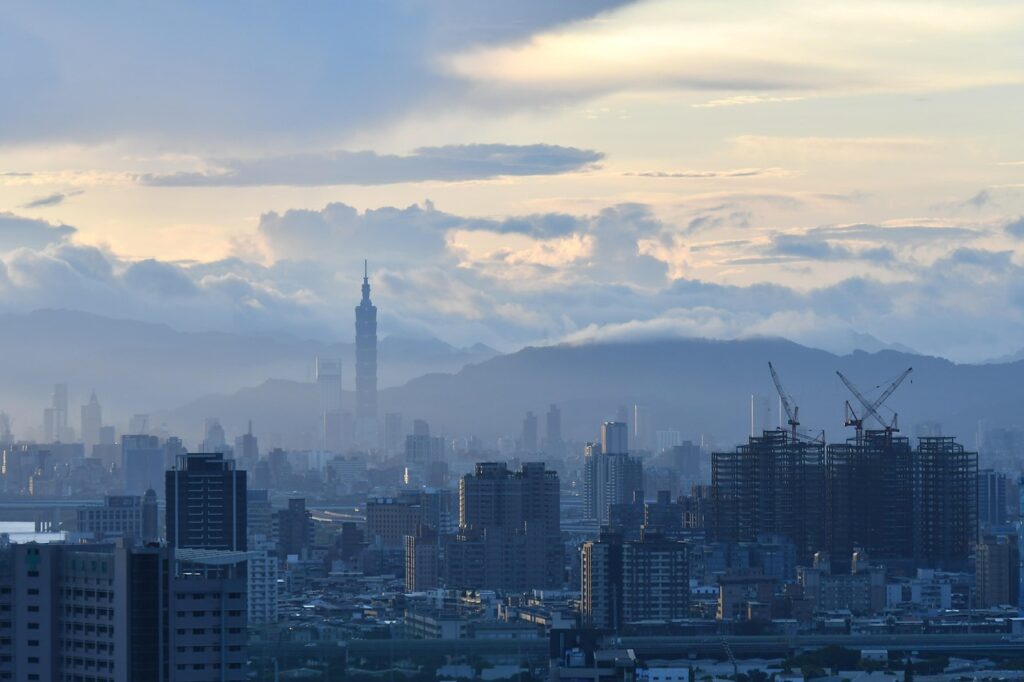
Taiwan fulfills all four requirements with clarity. It has a well-defined and stable territory, a permanent population of over 23 million, a fully functional democratic government, and robust capacity for international relations. Indeed, it trades extensively, maintains diplomatic missions around the globe, participates in international organizations, and upholds the rule of law internally. The absence of formal recognition by most states is not a reflection of Taiwan’s deficiencies but of China’s coercive diplomacy. The People’s Republic of China uses its economic and political power to punish any nation that formally acknowledges Taiwan, a reality that G7 members freely admit when pressed. The irony, as I noted in a previous op-ed titled, ‘The Unfinished War: Why the US Retains Legal Control Over Taiwan’ is that the US claim to Taiwan is far better than China’s.
— @amuse (@amuse) February 21, 2025
Palestine’s case is different. It has a small but permanent population of roughly 3 million in the West Bank and 2 million in Gaza, but its territory is fragmented and subject to foreign military occupation. The Palestinian Authority governs parts of the West Bank under heavy restrictions, while Gaza is under the control of Hamas, a separate and hostile faction. There is no single unified government exercising effective control over all claimed territory. Borders are disputed and largely not in Palestinian hands. Its capacity for foreign relations exists in form, but often without the substance of sovereign control. In short, Palestine falls short of Montevideo’s standards in ways Taiwan simply does not.
One might ask: if the criteria are so clear, why the disparity in recognition? The answer lies not in legal analysis, but in political calculus. Taiwan’s recognition is withheld out of fear of China’s retaliation. The G7 nations value their trade relationships, investment flows, and geopolitical stability with Beijing too much to risk the consequences of open recognition. With Palestine, the calculation is different. Recognition is a relatively cost-free way to express frustration with Israel’s policies, especially in the wake of military conflicts that generate sympathy for the Palestinian cause. It is a political signal more than a legal judgment.
The problem is that this inversion of logic, rewarding what is absent and punishing what is present, undermines the credibility of international recognition itself. Recognizing what is not yet there, namely a Palestinian state with unified governance and defined borders, does not make it real. Failing to recognize what plainly exists, namely Taiwan, does not make it vanish. If the G7 believes it is appropriate to recognize Palestine in order to punish Israel for its actions, then by its own precedent it would be even more appropriate to recognize Taiwan in order to punish China for its far graver record of abuses, including systematic repression of Uyghurs and other Turkic Muslims in Xinjiang through mass arbitrary detention, forced labor, torture, cultural erasure, and forced sterilization; suppression of Tibetans and Inner Mongolians through cultural assimilation, arbitrary detentions, and restrictions on language and religion; and persecution of religious groups such as Falun Gong practitioners and Christians, including detentions, bans on worship, and credible allegations of organ harvesting. The selective application of principles corrodes trust in the institutions and rules that govern the international order.
Some may counter that Palestine’s incomplete sovereignty is the fault of occupation, not of any inherent incapacity, and that recognition is a necessary step toward securing full statehood. Yet this logic collapses when held against the refusal to recognize Taiwan. Taiwan is not under foreign occupation. Its government is not divided between rival factions. It is, in fact, the kind of stable, self-governing democracy that Western leaders claim to champion. If recognition were truly about encouraging good governance and self-determination, Taiwan would be first in line.
The inconsistency is especially stark when measured against the values the G7 purport to uphold. These nations speak of a rules-based international order, of sovereignty, democracy, and the rights of peoples to determine their own destinies. Taiwan embodies these ideals in practice, not in theory. It has held free and fair elections for decades, maintains an independent judiciary, protects individual rights, and contributes meaningfully to the global economy. It is also a responsible security partner in one of the most strategically sensitive regions of the world.
Palestine, by contrast, remains in a state-building phase, hampered by internal division and external constraints. Recognizing it now may feel morally satisfying to those frustrated with Israel, but it does nothing to resolve the governance issues that have plagued Palestinian politics for years. Indeed, premature recognition risks entrenching a divided status quo, granting diplomatic legitimacy to a fractured polity without securing the unity and sovereignty that true statehood demands.
History sharpens this contrast. Taiwan was a founding member of the United Nations and held China’s seat on the Security Council until 1971. It lost that seat not because it ceased to be a functioning state, but because the international community shifted recognition to the Beijing government for strategic reasons. In effect, Taiwan was recognized, then unrecognized, without any change in its actual governance or territorial control. Palestine, on the other hand, has never enjoyed such full-fledged statehood. Its recognition by over 140 countries came largely in the wake of its 1988 declaration of independence, a symbolic act that did not alter the realities on the ground.
The numbers alone are telling: Palestine is recognized by 147 UN member states, Taiwan by just 11. Yet recognition is not proof of legitimacy; it is often the product of political alignment. Many of Palestine’s recognitions come from countries aligned with the Non-Aligned Movement, the Arab League, or states seeking to signal opposition to Israel and the US. Taiwan’s allies are few, but it maintains deep, substantive relationships with the world’s major economies through unofficial channels.
In the end, the G7’s divergent treatment of Palestine and Taiwan reveals a hierarchy of principles in which law and fact give way to expedience and sentiment. This is not to argue against Palestinian self-determination or the eventual realization of a two-state solution. Rather, it is to insist on consistency. If the Montevideo criteria mean anything, they should be applied impartially. If democracy, sovereignty, and self-rule are to be honored, they should be honored where they are already achieved, not only where they are hoped for.
The G7’s posture on this matter is more than an academic inconsistency; it is a diplomatic failing. It signals to the world that recognition can be withheld from a deserving democracy for fear of offending a powerful autocracy, and granted to a fragmented entity as a form of protest against an ally. This is a recipe for cynicism about the very idea of statehood.
It is time for these nations to confront their own inconsistency. Recognizing Taiwan would not erase the complexities of its relationship with China, but it would affirm the principles they claim to uphold. Continuing to recognize Palestine without parallel recognition of Taiwan sends the opposite message: that principle is negotiable, and that the truth of a state’s existence is less important than the political winds of the moment.
If you enjoy my work, please consider subscribing: https://x.com/amuse.
Sponsored by the John Milton Freedom Foundation, a nonprofit dedicated to helping independent journalists overcome formidable challenges in today’s media landscape and bring crucial stories to you.
READ NEXT: Trump Just Made A Great Power Move — But What Comes Next Is Critical
Sponsored
















The ‘palestinians’ were given a golden opportunity to establish a functional state by Israel but no, they threw that chance away by ceding their ‘government to a terrorist organization so now we – the world community wants to give them yet another chance at self governance. Never mind that their stated reason for existence is STILL the annihilation of Israel.
Any Country refusing to recognize Taiwan as the Sovereign Nation of the Republic of China, are unapologetic Communist sympathizers and should not to be trusted, nor should they be protected by or receive aid from the United States of America! Taiwan is one of America’s most loyal allies and if the USA, refused to stand firmly with them as a Sovereign nation; would be totally unacceptable.