



Via TWZ by Howard Altman and Tyler Rogoway
Easy to access and employ, weaponized drones pose a rapidly increasing threat to combat helicopters around the globe.
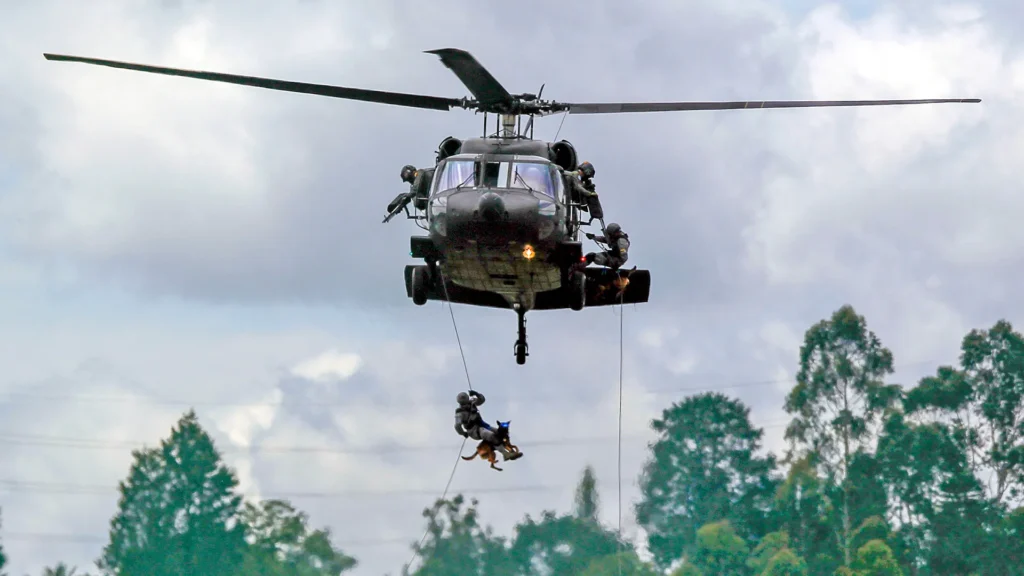
The deadly downing of a Colombian National Police (CNP) UH-60 Black Hawk helicopter by a drone on Thursday is the latest sign of the growing vulnerability of rotary-wing aircraft to these attacks. While apparently the first such incident in the Western Hemisphere, the tactic was developed by Ukraine to strike Russian helicopters and has reportedly spread to Asia as well. The downing comes as militaries are rethinking the utility of helicopters due to myriad threats, including drones, which is a danger we have been warning about for years.
The CNP helicopter was hit by a drone while “providing security to officers engaged in manual coca crop eradication efforts,” Antioquia Governor Andres Julian Rendon stated on X. “We have activated the hospital network and are closely monitoring this news, which is so painful for democracy and sad for our Forces. In that area, FARC dissidents and the Gulf Clan are operating.”
Video emerging from the scene shows the helicopters slowly approaching a landing zone. From the angle where the video was taken, the helicopter’s landing and the attack are obscured, but the sound of an explosion is heard and blackish gray smoke is seen wafting up.
Another video, reportedly taken by the attackers, shows a different view of the aftermath of the strike. None of these videos, however, clearly depicts the method of attack.
At least 12 people aboard the helicopter were killed. Colombian President Gustavo Petro blamed the helicopter attack, along with a car bomb strike on a Colombian military base, on dissident factions of the now-defunct FARC guerrilla group that have rejected a 2016 peace agreement to end a prolonged internal conflict that has left more than 450,000 dead in the country.
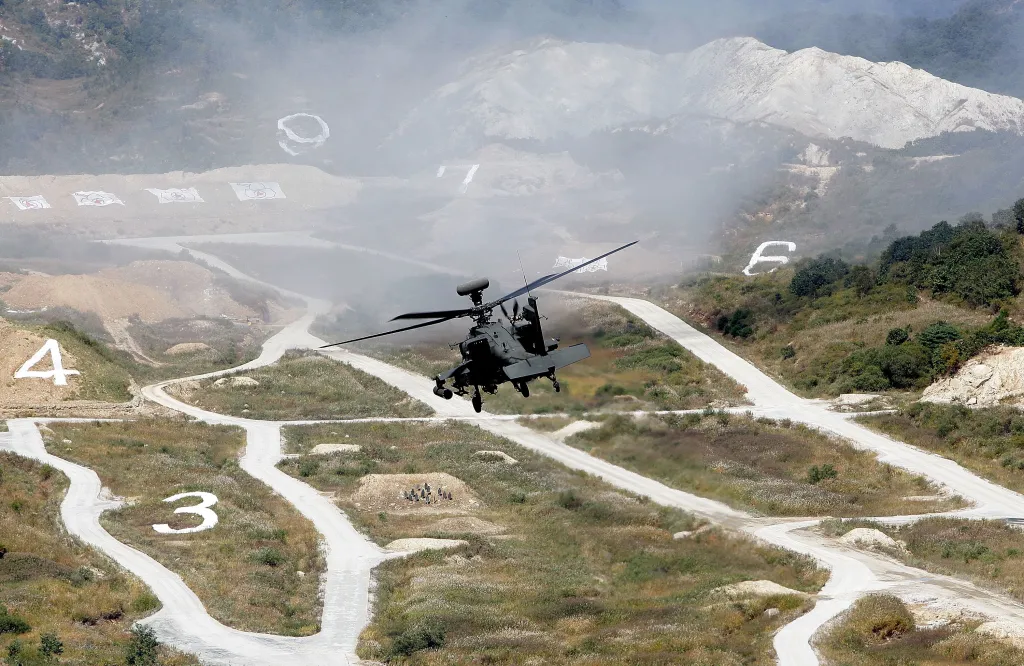
This incident highlights several disturbing developments, especially regarding the vulnerability of helicopters to drone attacks. That concern directly led to South Korea cancelling a multi-billion-dollar deal to buy 36 AH-64E Apache Guardian attack helicopters.
Yu Yong-weon, a member of South Korea’s National Assembly belonging to the People Power Party, told The Korea Times that the vulnerability of helicopters to proliferated air defenses and loitering munitions/drones that have been showcased to the world in Ukraine spurred the decision.
“Drones and smart systems are redefining the modern battlefield,” Yu explained. “Rather than clinging to expensive legacy platforms, we must invest in capabilities that reflect the future of warfare.”
We previously predicted that drone attacks on helicopters would become a major problem. The danger is rising due to the widespread proliferation of weaponized drones across the world. This is in addition to all the other growing threats that put helicopters, especially those approaching contested landing zones, in the crosshairs.
As we noted in a previous story: Beyond traditional ground-based air defenses, which are becoming far more capable and deeply integrated/networked at an accelerating rate, helicopters have to now contend with FPV drones and loitering SAMs, as well as loitering interceptor drones, that can be used against rotary wing aircraft, as well. Countermeasures to some of these threats really have not caught up. The threat posed by drones, in general, has also vastly reinvigorated proliferation of short-range air defenses for counter-UAS needs, but many of these systems can also engage helicopters. Then there is the aerial threat, with fighter and support aircraft becoming more capable of spotting low and slow flying helicopters thanks to advanced sensors. The distances involved with future wars alone could relegate even the most advanced traditional helicopters into support roles. All this creates an increasingly complex and unpredictable operational reality for military helicopters, even in low-to-medium threat environments.
Read in its entirety at twz.com.
READ NEXT: Election Bombshell — New Governor Ready To Act [WATCH]