




Treaty Under Pressure
Russian President Vladimir Putin has proposed a one-year extension of the New Strategic Arms Reduction Treaty, or New START Treaty, with the United States — the last remaining arms control agreement limiting the strategic nuclear arsenals of the world’s two largest nuclear powers.
The treaty, which caps deployed strategic warheads and delivery systems for both countries, is currently set to expire on Feb. 5, 2026. Without a new agreement, the U.S. and Russia would be left without any legally binding limits on their nuclear forces for the first time in decades.
Kremlin Message: Stability — With Conditions
Putin framed the extension as necessary to prevent a new arms race and preserve strategic stability. He emphasized predictability in nuclear deterrence as a shared interest, calling on the U.S. to maintain compliance with the treaty’s limits if Russia does the same.
However, the offer comes with strings attached. Moscow warned that U.S. actions in missile defense — such as the deployment of interceptors or strategic modernization programs — could jeopardize the balance of deterrence. The Russian government has tied the viability of the extension to Washington’s behavior going forward.
ZeroHedge continues:
During a meeting with permanent members of the Russian Security Council, Putin said he was ready to extend by one year the last arms control treaty between Washington and Moscow, Reuters reports. This would allow time to negotiate its further extension, likely by another five years. This would be “if the US reciprocates, to prevent a new arms race,” Putin stipulated.
He painted a dire picture of strategic security in the world. “Unfortunately, it continues to degrade, which is caused by the combined impact of a number of factors, including negative ones, provoking the aggravation of existing and the emergence of new strategic risks,” Putin said.
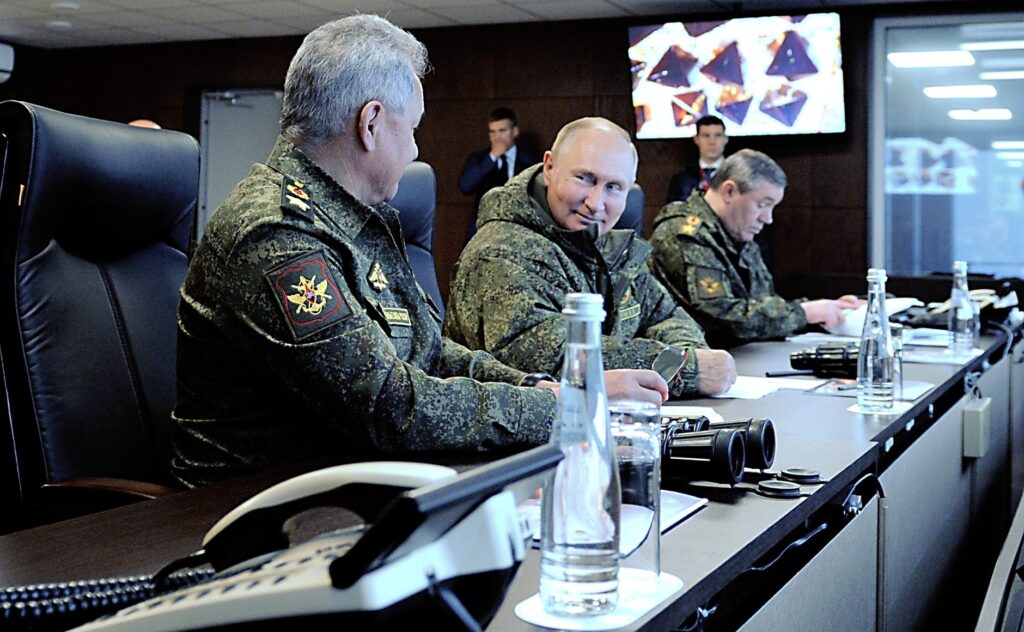
He described that central to the problem is that multiple Cold War era arms agreements had steadily eroded and then been dropped between the US and Russia, while only New START remains.
“Step by step, the system of Soviet-American and Russian-American agreements on control over nuclear missiles and strategic defensive weapons was almost completely dismantled,” the Russian leader said.
As of now, the Trump administration has not issued a formal response.
Unsettled Ground: What Comes After?
The extension proposal leaves more questions than answers. There’s no agreement on what would follow the one-year period — whether a successor treaty would be negotiated, what shape it might take, or how verification and inspection mechanisms (some of which are currently suspended) would be handled.
There’s also ambiguity around Russia’s demands post-extension. While the Kremlin appears open to talks, it has not publicly backed off from its broader strategic goals or conditions.
Strategic Stakes: Why It Matters
Avoiding an Arms Race
Extending New START would help prevent a rapid escalation in strategic weapons deployments. Without it, both sides could begin “uploading” warheads onto existing launch systems or accelerating development of new platforms.
More broadly, the treaty provides visibility and predictability. Its absence would create an environment where worst-case assumptions dominate — a classic recipe for arms races.
Diplomatic Posturing
Putin’s offer is also a calculated diplomatic signal. By proposing a limited extension, Russia is positioning itself as willing to engage on arms control — even amid deep tensions over Ukraine, NATO, and broader East-West competition.
That signaling serves multiple purposes: it aims to ease international pressure, cast Russia as the more responsible actor, and put the onus on Washington to either reciprocate or explain why it won’t.
U.S. Domestic Politics
Any move by the U.S. to negotiate or accept an extension would land in the middle of a polarized domestic climate. Skeptics will no doubt raise concerns about Russian compliance, the potential impact on U.S. missile defense, and the optics of cooperating with Moscow while the war in Ukraine continues.
President Trump’s rhetoric during his return to the White House and afterward adds another layer of complexity. He has long pledged to de-escalate the war in Ukraine — so far without good-faith engagement from the Kremlin — while presenting a more transactional approach to global security that could shape future U.S. policy on arms control.
Experts Warn of Tactical Delay, Not Breakthrough
National security analysts are split on Putin’s proposal. Some see a slim chance for renewed engagement, but most warn it is nothing more than a tactic to buy time, rewrite the narrative, and tilt negotiations — not a real shift away from Russia’s expansionist ambitions.
Since the start of the war in Ukraine, Russia has repeatedly used the prospect of talks to buy time. The playbook is familiar: signal openness to dialogue while refusing to budge on core demands — recognition of territorial gains, security guarantees limiting Ukraine’s alliances, or demilitarization terms Kyiv cannot accept.
In this context, the proposed New START extension may be more about optics than substance.
Leverage and Narrative Control
With uncertainty around U.S. politics — Putin may be using the treaty extension as diplomatic currency. The message: Russia is open to stability if the U.S. plays by certain rules.
This tactic shifts pressure back to Washington. By appearing reasonable and restrained, Moscow can attempt to divide international opinion, soften criticism in diplomatic circles, and weaken the narrative that Russia is acting as a rogue state.
At the same time, it allows the Kremlin to rebuild its forces amid the meat grinder in eastern Ukraine and recalibrate strategy — managing a prolonged standoff with the West while keeping escalation risks under control.
The Clock Is Ticking
Unless both sides move quickly, the New START treaty will expire with nothing to replace it. That would mark the end of an era of nuclear arms control — and open the door to a more volatile, less predictable strategic environment.
Whether Putin’s offer amounts to more than another move in a geopolitical chess match remains to be seen. But with the treaty’s expiration fast approaching, Washington will soon have to decide: engage, ignore, or redefine the rules entirely.
READ NEXT: Shock Lawsuit Targets Powerful Senator’s Immediate Family




















Putin is not to be trusted. Any offer he makes has ulterior motives. Beware of his intentions! This is an evil man living in the past and desperate to rebuild the OLD Soviet Union at any cost. His offer puts the United States (and western Europe) in grave danger. Thank God for America’s leadership and pray for a knowledgeable response. God bless America!