

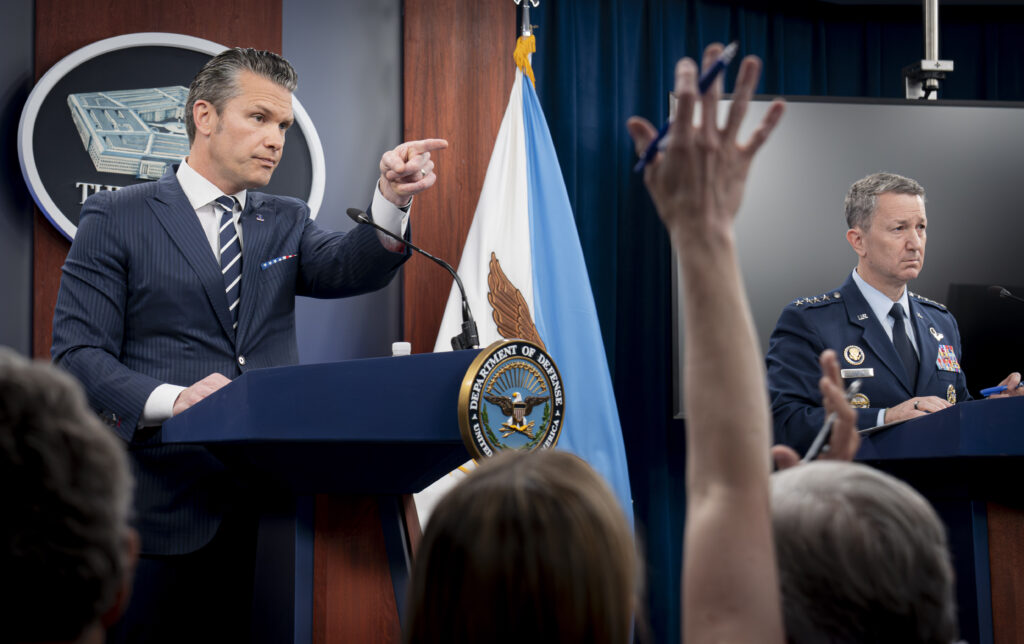
For decades, the Pentagon has been treated less like the nation’s nerve center of war and more like a bustling public square where journalists wandered the corridors freely. Since the 1960s, accredited reporters have been granted an extraordinary privilege: unescorted access to the Department of Defense’s headquarters. They could roam hallways, knock on doors, and cultivate sources in ways unimaginable in any other allied democracy. This culture of openness was justified in the name of transparency, but in reality it created a gaping security vulnerability. Secretary Pete Hegseth’s new rules, announced this year, begin to close the gap. Yet they do not go far enough. The Pentagon should end press access entirely.
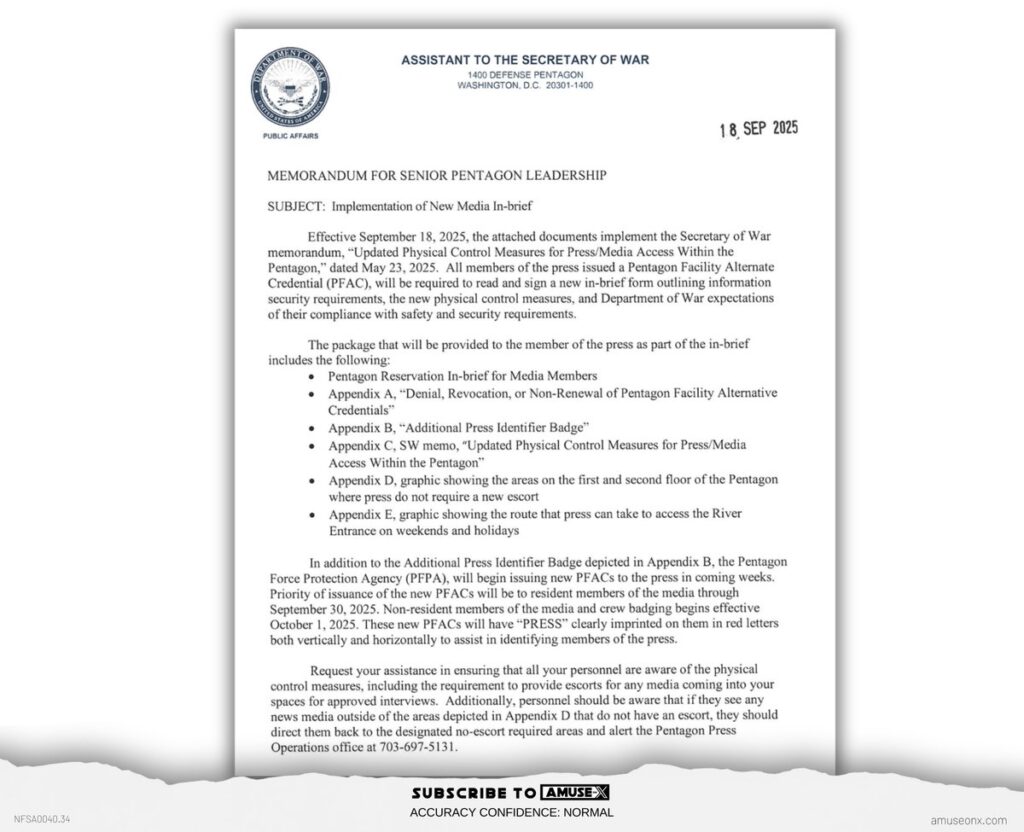
What exactly has changed under Hegseth’s leadership? For the first time in generations, the press is no longer free to wander the Pentagon unescorted. Reporters are confined to designated spaces such as the briefing room, press bullpen, cafeteria, and courtyard. To enter other parts of the building, they must be escorted by a Department of War official. Additionally, journalists are now required to sign a pledge not to obtain or publish information unless it has been authorized for release by the proper officials. This policy is meant to close the loophole through which reporters could gather sensitive material simply by observing, overhearing, or coaxing insiders into conversation. Those who defy the pledge risk losing their credentials.

Critics call this censorship. They accuse Hegseth of imposing prior restraint, of gagging the press in violation of the First Amendment. But this mischaracterizes what has occurred. The Pentagon’s new rules do not prevent journalists from publishing stories obtained outside the building. They do not impose legal penalties on newspapers for printing classified documents. They simply establish conditions for physical access to the most sensitive military facility in the world. Freedom of speech does not entail the right to roam a war department unsupervised. No reasonable person believes a journalist has the right to wander into the Situation Room at the White House. Why should the Pentagon, which houses the Joint Chiefs of Staff and thousands of planners and analysts, be treated differently?
Indeed, the very openness of the Pentagon has already had grave consequences. Consider the case of Asif William Rahman, a CIA analyst turned traitor who exploited this porous culture to devastating effect. Rahman, operating within the Pentagon, passed along classified assessments about Israel’s planned retaliatory strikes on Iran. His leaks included satellite imagery, drone routes, and munitions movements. He did not need to smuggle anything out of the building or arrange clandestine meetings in shadowy alleys. Instead, he shared information directly with members of the press inside the Pentagon, confident that the media could legally accept these secrets with impunity. When such transactions occur, only the leaker faces punishment if caught. The journalists bear no legal liability, and the damage to national security is irreversible.
To grasp how abnormal this arrangement is, one need only look to our closest allies in the Five Eyes alliance. In Canada, journalists cannot wander the Department of National Defence headquarters without escort. There are no permanent press offices inside the building. In Australia, the Russell Offices in Canberra are tightly controlled. Reporters may enter only for scheduled press conferences or authorized interviews, always accompanied by officials. New Zealand is even stricter. Its Ministry of Defence and Defence Force headquarters in Wellington are secure buildings, and media visits must be arranged in advance. No reporter has an office there. Britain, too, bars unescorted access to the Ministry of Defence in Whitehall. By comparison, America’s long-standing practice of handing out Pentagon building passes looks reckless. We were the outlier, not the standard bearer of democratic openness. Our allies have said so for years, because American permissiveness puts them at risk as well. British and Canadian officials have long warned that uncontrolled corridor access in Washington complicates information sharing, raises counterintelligence risk, and can jeopardize joint operations, since a single casual disclosure by a US official can expose allied sources, methods, and troop movements. Australian and New Zealand defense officials voice the same concern, our openness does not only endanger Americans, it also endangers their service members and assets. When partners must assume that anything said in Pentagon hallways could reach print by nightfall, they hold back, which weakens coalitions and degrades deterrence.
How did we get here? The story begins during the Vietnam War, when the Pentagon formalized a resident press corps. Reporters received building passes and set up shop in the Pentagon press room. They were expected to stay out of classified areas, wear badges, and submit to bag searches on exit. But within those limits, they had extraordinary freedom. They could bump into generals in the cafeteria, loiter near offices, and observe patterns of comings and goings. Many scoops were born not from press briefings but from casual hallway encounters. Journalists themselves admit they cultivated sources by physically roaming the building. For decades, they described being able to “walk freely” through the Pentagon, an experience unique among defense ministries worldwide.
This openness was defended as essential to accountability. And indeed, it allowed the press to break stories about mismanagement, cost overruns, and even scandals. But the costs far outweighed the benefits. The Pentagon is not a city hall or a courthouse. It is the command hub for the world’s most powerful military. Allowing unsupervised access by outsiders created a structural vulnerability that adversaries could and did exploit. If one accepts the premise that even a single leak of operational plans could endanger lives or compromise missions, then the Pentagon’s laissez faire approach appears indefensible.
Opponents of Hegseth’s reforms invoke the First Amendment. They argue that restricting press access amounts to prior restraint. This is false. Prior restraint refers to government prohibiting publication in advance, such as a court order barring a newspaper from printing a story. The Pentagon’s new rules do no such thing. They regulate physical access to a secure facility. The press remains free to publish stories obtained elsewhere, even if based on leaks. Hegseth’s policy is not censorship. It is security.
But here is the problem: it still leaves the door ajar. Reporters remain in the building, albeit confined to certain zones. They can still interact with officials, overhear conversations, and notice sensitive documents. They are still treated as semi-insiders, when in fact they should be outsiders. The lesson of Rahman’s betrayal is clear: so long as the media is allowed inside, would-be traitors have a ready channel for passing secrets. The only way to shut it down is to eliminate press access entirely.
Imagine for a moment if Israel allowed reporters to roam the Kirya in Tel Aviv, its military headquarters. Or if the British permitted journalists to wander Whitehall unescorted. The idea is absurd. Yet for decades, the United States embraced precisely this model. It is a model that served the media well but endangered the republic. To say the least, it is past time to bring American practice in line with that of our allies.
Some will object that eliminating press access would damage transparency. They will say the public has a right to know what the Pentagon is doing. This is true, but transparency can be preserved in other ways. Press conferences can be held regularly. Officials can conduct interviews. Reporters can file Freedom of Information Act requests. The public can learn about military policy without having journalists physically embedded in the Pentagon itself. Technology also makes access less relevant. Briefings can be livestreamed, documents posted online, questions fielded remotely. In the modern era, there is no need to grant reporters a pass to loiter in the most sensitive military building in the world.
In the end, the issue comes down to risk. What is gained by allowing journalists inside the Pentagon? At best, some marginal convenience in reporting. What is lost? The integrity of military planning, the security of classified information, and potentially the lives of service members. The balance is not close. Secretary Hegseth deserves credit for tightening the rules. He has done more than any of his predecessors to restore sanity. But even his policy leaves us vulnerable. The only rational step is to eliminate press access altogether. The Pentagon must finally shut its doors.
If you enjoy my work, please consider subscribing: https://x.com/amuse.
Sponsored by the John Milton Freedom Foundation, a nonprofit dedicated to helping independent journalists overcome formidable challenges in today’s media landscape and bring crucial stories to you.
READ NEXT: Adversary Dangles New Deal Before Trump — With A Catch
















Pentagon Press screening ideas:
Issue ID pass
Core Processing Center
Door acess scanners>
CCTV array
ID badge pass.
for ALL Media on site
Give ‘en hell, Pete !
LOL – the press doesn’t run the Pentagon. Israel runs the Pentagon…and the press.
Congratulations Sec Hegseth. Actually “What goes on in the Pentagon should almost 100% stay in the Pentagon.” Come to the White House or DOD News Briefings and ask appropriate questions!