

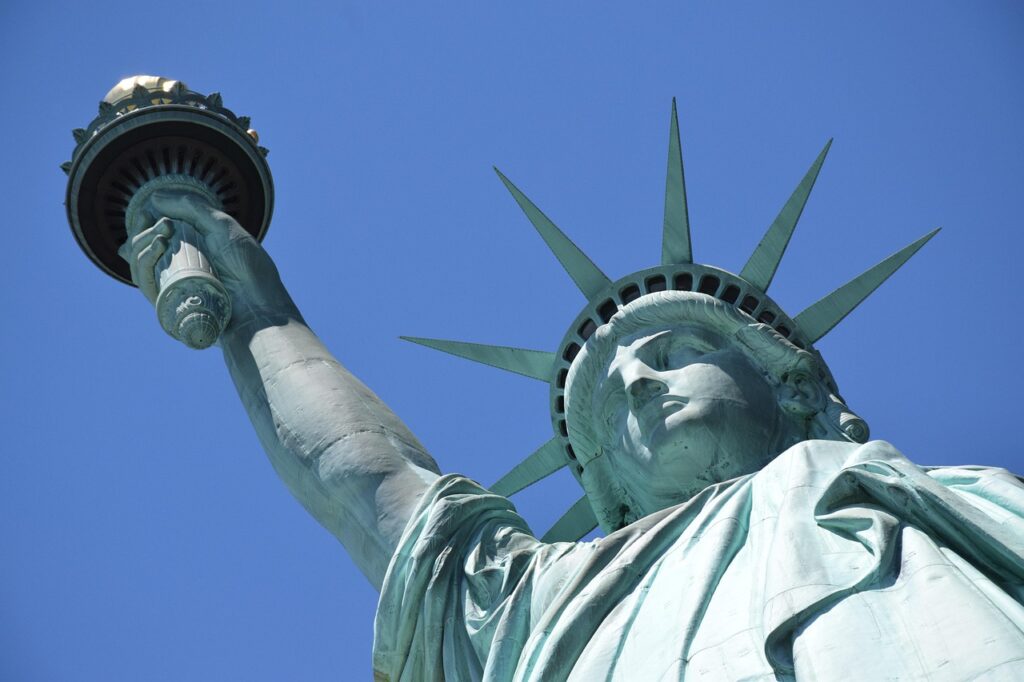
The practical question is simple, when people say America in the singular, what do they mean. They mean the United States. The answer is not a judgment about geography, it is a judgment about usage. Language is a tool, and the tool works by convention. The conventions here are remarkably stable. Across newsrooms, diplomatic cables, airports, and coffee shops, America names the country whose official title ends with America, and Americans are its citizens. One can object that the landmasses from the Arctic to Patagonia are the Americas, that point is correct in the plural. Yet in modern English, and in most international contexts that pivot on English or translations from it, America in the singular is settled shorthand for the United States.
Two thoughts often cross a reader’s mind at this point. First, is this merely parochial, a habit of U.S. speakers foisted on the rest of the world. Second, does this usage wrong those who live elsewhere in the Americas. The first concern dissolves under scrutiny, the second rests on a category mistake. On the first, the evidence is global. French speakers routinely say un Américain when they mean a person from the United States, even though a more literal term exists. German speakers say Amerikaner more often than any circumlocution. Italian, Russian, and Arabic follow the same path in everyday discourse. International media adopt the same default because audiences understand it. On the second, no Canadian, Brazilian, or Mexican needs, in daily life, the unmodified label American to express identity. Their own demonyms carry the pride, the history, and the legal meaning that matter. The continental sense of American is real, but it is a specialized sense, useful in academic, political, or rhetorical discussion. It is not the live sense on a boarding pass, a business contract, or a press release.
The historical path matters because it explains why this norm feels so natural. Before independence, English speakers used American to mark settlers in the British colonies, a clean way to distinguish them from people in Britain. The word attached to a community before it attached to a constitution. When those colonies formed the United States of America, the inherited label remained the efficient description of the people and, soon enough, a convenient name for the country. The pattern fits a broader rule, demonyms in English usually come from the distinctive noun in a country’s formal name. People from the People’s Republic of China are Chinese, not Republicans. Citizens of the United Mexican States are Mexicans, not United Statesians of Mexico. The United Kingdom yields British or Britons because Britain is the unique verbal handle that separates the country from any other kingdom. For the United States of America, the distinctive noun is America. The demonym American follows the same rule.
Clarity then carried the day. As English consolidated its terms for the continents after World War II, schools and atlases converged on North America and South America, with the plural the Americas for the pair. This tidy partition left America, the singular, to do different work. It did not create the national usage, it protected it from confusion. Ask a contemporary reader what American literature studies, they will not answer literature from the entire Western Hemisphere. Ask what the American economy refers to, they will not say the sum of Canada, Mexico, the Caribbean, Central America, and South America. The singular points to one country because speakers prize crisp communication. The plural, the Americas, does the continental job. Language found a stable equilibrium that favors clarity.
Pragmatics, the study of how context shapes meaning, gives a further reason to accept this equilibrium. Words do not have single eternal meanings, they have ranges of use. The live range for America in today’s public square is the country. That is why style guides that care about preventing misunderstanding treat American as the standard demonym for U.S. citizens while acknowledging that, in rare contexts, American can mean hemispheric. That is also why university syllabi, diplomatic notes, and trade agreements use the Americas for the continents. It minimizes ambiguity. In speech, listeners do not stop to parse continent or country. They hear the speaker’s likely intention and update it if needed. The default intention is national.
Consider also the negative test, attempts to force a different English label have failed. Proposals like United Statesian or USian surface from time to time. They remain curiosities. They lack a natural rhythm. They raise new questions. USian of what. United Statesian of which United States, since Mexico and Brazil have formal names with United States too. The whole point of a demonym is to save breath and prevent confusion. These inventions do neither. English has already supplied the efficient term, American. The market of speech accepted the product and retired the alternatives.
What about fairness. No one is deprived by this convention. Canadians are Canadian, and many like it that way. Brazilians are Brazilian, and they hold the name with patriotic force. Mexicans are Mexican, not Americans in ordinary talk. The point generalizes. No one outside the U.S. asks to be called American without a qualifier because the unqualified term would erase specificity. Canadians do sometimes identify as North American, just as Argentines identify as South American or Latin American when region is the topic. These regional labels do not compete with American in English, they complement it. The only setting where a continental American identity presses forward is a specialized conversation about the hemisphere, and even there, the plural, the Americas, is the precise tool in English.
Once we focus on the logic of naming, the alleged impropriety of calling the U.S. America dissolves. Names are successful when they guide recognition. If a person from Poland says I met an American, every listener knows the country. If a physician writes American patient on a chart in London, the nurse understands what to expect for insurance forms and vaccinations. If a reporter writes American response in a NATO story, readers do not ask whether the sentence speaks of Chile, Canada, and Belize. These are not cases of arrogance, they are cases of efficient reference. If you replaced American with a different invention, each sentence would grow longer or vaguer. That is not progress.
There is a second logical point. The United States is the only country with America in its official name. The definite description is unique, which makes America a natural short name in countless contexts. In international sport, the uniforms say USA because that is the code, but in headlines the quick paraphrase is America wins or American sprinter takes gold. In diplomacy, governments speak of American interests because those interests are distinctive to the country with that name. In economics, markets speak of American equities and American firms. In literature, syllabi speak of American novels. The phrase does real work because it picks out a single nation in one word.
Objections from other languages do not break this case. Spanish has estadounidense for U.S. national, a precise term within Spanish. That is fine for Spanish. English has its own system. French, German, and Portuguese, despite having their own alternatives, overwhelmingly use their equivalents of American for a person from the U.S. in conversation. The reason is simple, ordinary speakers prefer the path of least resistance. They choose what others understand first. Complaints that the usage is imperial are not arguments about meaning, they are arguments about politics. Meaning is settled by use. Politics can chase it, but it does not decide it.
The analogy with other non literal names helps. The Netherlands gives Dutch, not Netherlander, in English. Great Britain and the United Kingdom overlap but do not coincide, yet most of the time British does the trick in normal speech. Greece and Hellenic Republic name the same country, and Greek is the demonym that works. Ivory Coast prefers Côte d’Ivoire in formal venues, but English still uses Ivory Coast in many settings because the purpose is recognition, not metaphysical precision. America for the United States is a member of this family of practical names. The world is full of them. They keep communication agile.
There is a concern that giving an inch to the continental meaning will cause confusion. That worry mistakes how context functions. Speakers signal the continental sense with clear modifiers. They say the Americas when they mean both continents taken together. They say Latin America when they mean the cultural and linguistic region that excludes the US and Canada and includes parts of the Caribbean. They say North American when the topic is geography of Canada, the US, and Mexico. No careful writer would use America to mean an entire hemisphere without a clarifier, because that is not the present norm in English. If a writer does, editors fix it. If a speaker does, listeners ask a follow up. The norm polices itself because clarity is valuable.
America is the name of a continent not a country.
— GabGar (@gfgm223) September 29, 2025
If the debate persists, it does so on 𝕏 and in comment threads, places where people test boundaries and trade rhetorical jabs. That should not mislead us about actual practice. Airline menus say American breakfast to refer to a style that originates in the US. University departments offer American politics and American history, and they do not mean courses that sweep from Nunavut to Tierra del Fuego. The Library of Congress, embassy plaques, product labels, and press briefings all treat American as a national label. These are exacting domains. They have to be. If the usage were confusing, they would change it. They have not.
One last point about pedagogy. It is true that children in parts of Latin America learn that América is a single continent in their schoolbooks. From that starting point, there is a principled reason within Spanish to avoid calling US citizens americanos. That does not transfer to English. When bilingual speakers switch into English, they know that American shifts to the national meaning unless context dictates otherwise. They adjust without confusion because they are competent in both systems. The existence of two coherent systems does not undermine either system. It shows that language is conventional and community specific. In the English speaking and internationally coordinated world, the convention that matters is the national one.
So the steelman is straightforward. The country’s name contains America, the demonym American predates the constitution, the postwar settlement of continental terms reserves the plural to the hemispheric sense, global media and ordinary speakers maintain the national sense, and rival coinages failed. That body of facts is large enough and stable enough to ground a confident conclusion. When an English speaker says America, they mean the United States. When they say American, they mean a citizen of the United States. Exceptions exist, they come with signals that are easy to spot. No identity outside the US depends on the unmodified label American, and no everyday conversation outside political theory needs it. If we care about clarity, we should keep the rule in place.
Those who protest are not villains. They often want to honor a different tradition of teaching or to poke at US influence. Those are understandable motives. They are not reasons to revise a working convention that simplifies our common life. The hemispheres will continue to be the Americas in geography, and the nation will continue to be America in ordinary speech. That settlement does not insult anyone. It reduces friction. It lets us speak about trade, culture, or security without turning a sentence into a seminar on cartography.
In short, the linguistic reality has been decided by use, not by decree. America means the United States in the singular. Americans are the citizens of the United States. The Americas names the pair of continents. Let the plural do continental work, let the singular do national work, and let conversation move forward without needless squabbles about a term whose meaning, in practice, is already clear.
If you enjoy my work, please share my work and subscribe: https://x.com/amuse.
Sponsored by the John Milton Freedom Foundation, a nonprofit dedicated to helping independent journalists overcome formidable challenges in today’s media landscape and bring crucial stories to you.
READ NEXT: Trump Shocked With Legal Bombshell



















Been doing so since Vietnam War era to date IE protests then
However, when we say the rights of USA CITIZEN are for “American Citizens” rather than exclusively for USA CITIZENS, it’s no wonder that citizens from South America think that applies to them! Language MATTERS!
awesome article. should be disseminated to all schools. do it.
to KLNassie’s comment: In that case I’d say those that think it applies to them also, have not been educated in the “normal” language of their naive country. Interesting article.
How does the use of “America” and “United States” affect the often cited 1776 as the birthday of “The United States of America”?