






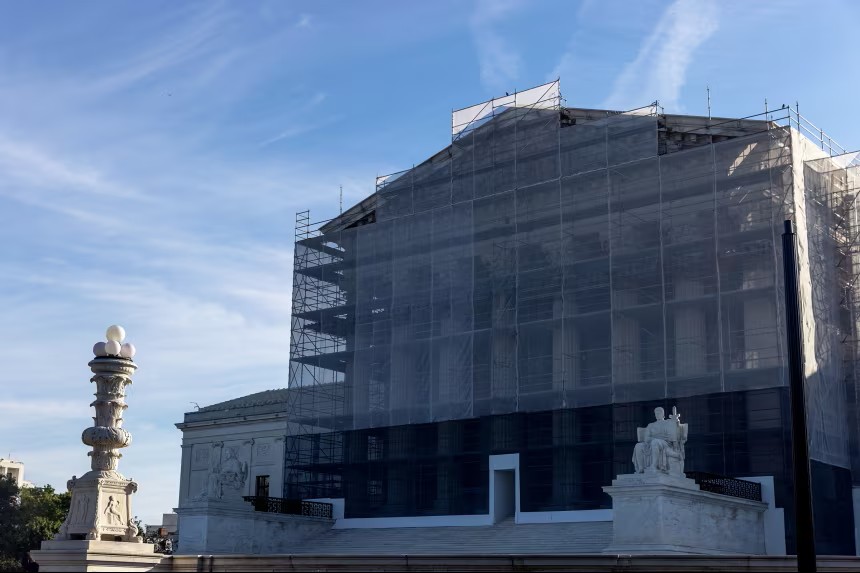
The U.S. Supreme Court has agreed to review a pivotal gun rights case that could reshape how the federal government applies firearm bans to individuals who use drugs, particularly marijuana, which is now legal in many states but remains illegal under federal law.
By Brandon Curtis for Concealed Nation
At the center of the case is Ali Danial Hemani, a dual U.S.-Pakistani citizen, who was indicted in 2023 after federal agents discovered a 9mm pistol, marijuana, and cocaine at his family home. Prosecutors claimed that Hemani’s habitual marijuana use disqualified him from legal firearm ownership under a federal law that prohibits drug users from possessing guns.
Hemani’s defense argues that the law is outdated and inconsistent with modern firearm rights, particularly in light of a 2022 Supreme Court ruling that expanded Second Amendment protections. His attorneys emphasize that nearly half of U.S. states have legalized recreational marijuana, creating a legal gray area for gun owners.
A federal district court dismissed the charge against Hemani, citing the Supreme Court’s 2022 Bruen decision, which required firearm restrictions to align with historical traditions. The case now moves to the high court, where justices are expected to hear arguments in 2025 and issue a ruling by June.
The Justice Department under the Trump administration is appealing that dismissal, arguing that habitual illegal drug users present a serious risk when armed, particularly in confrontations with law enforcement. The DOJ points to historical laws that restricted firearm access for individuals under the influence, though not necessarily for habitual users outside of intoxication.
In an unusual twist, the DOJ also linked Hemani to foreign political interests, alleging connections to the Iranian Revolutionary Guard Corps and suggesting possible threats to national security. Hemani’s legal team dismissed these claims as irrelevant to the core constitutional issue.
This case arrives at a time when gun rights and federal firearm laws are under intense scrutiny. Earlier this year, the Supreme Court upheld restrictions on firearm ownership for individuals under domestic violence restraining orders. And later this term, the Court is set to hear another major case on whether states can prevent citizens from carrying guns on private property without explicit permission.
Gun Ownership and Marijuana Use: A Legal Crossroads
The outcome of the Hemani case could have significant consequences for millions of Americans who use marijuana legally under state law but risk federal prosecution if they own firearms. With an increasing number of states legalizing cannabis, the clash between state and federal law is becoming harder to ignore.
Many gun owners are watching closely, as the court’s decision could set a precedent affecting not just drug users, but also how firearm prohibitions are measured against the Constitution’s historical context.
Find the original article in its entirety at Concealed Nation.
READ NEXT: New Calls To Restore US Industrial Power Gain Momentum
Sponsored




















The case of whether or not a person that uses marijuana and posses a gun with many states having laws that have marijuana use being legal is not really the question in this case! the litigant was also in the possession of cocaine, a very illegal substance! This case should not have any effect on that of owning a gun and marijuana use, but that the litigant was in possession of cocaine and should definitely NOT be allowed to be in possession of a gun/firearm. I thought possession of hard drugs such as cocaine was a felony and restricts the person from possessing a firearm.
As to the ARTICLE, regarding cancelling Second Amendment rights to Marijuana user, you would have to include all bad habits, and that includes Democrats. And I’m serious, because alcohol and drugs, and some Party affiliation causes a person to distort their decision making. One example is that Islamic are likely to murder and bomb, Democrats are responsible for Political assassinations at a TEN time the rate of other Political beliefs.
THAT’S NOT AN OPINION, IT’S A VERIFIABLE FACT. Only those facts would never be accepted by those same people, because they feel that they have the Right to determine everyone’s beliefs.
Think ISLAM vs Christianity, just saying.
Actually marijuana users, (I am not one) are less likely to use one so I see no reason to restrict that. And many of our founding fathers used the stuff.