





It’s over…
The Department of Government Efficiency, which aimed to cut federal bloat and was spearheaded by Tesla boss Elon Musk during his time at the White House, has reportedly been shuttered by President Donald Trump’s administration.
“That doesn’t exist,” office of personnel management (OPM) director Scott Kupor told the outlet earlier this month, when he was asked about DOGE.
Kupor added DOGE was no longer a “centralized entity” — it’s more of an idea now, according to CNBC.
DOGE’s scrapping comes after it was started on President Trump’s first day back in the White House. earlier this year. The department’s goal, Musk said, was to significantly reduce the “tyranny of the bureaucracy” by eliminating a massive amount of government spending.
“If the deficit is not brought under control, America will go bankrupt,” Musk told Sean Hannity, during a joint interview alongside the president on Fox News in February.
Musk said DOGE was aiming to cut $1 trillion to $2 trillion in annual spending; ultimately the department cut around $150 billion by the time he exited in late May. His efforts with DOGE — as well as his teaming up with Trump — led to a number of incidents where Tesla cars were attacked and damaged across the country.
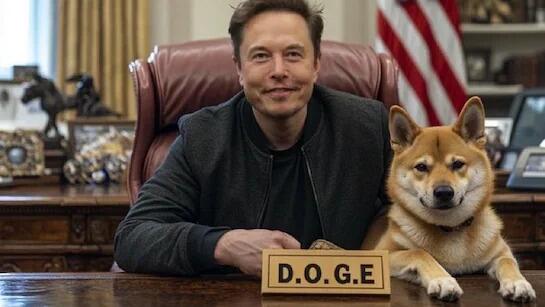
The fading away of DOGE is in sharp contrast to the government-wide effort over months to draw attention to it, with Trump, his advisers and cabinet secretaries posting about it on social media. Musk, who led DOGE initially, regularly touted its work on his X platform and at one point brandished a chainsaw to advertise his efforts to cut government jobs.
“This is the chainsaw for bureaucracy,” Musk said, holding the tool above his head at the Conservative Political Action Conference in National Harbor, Maryland, in February.
DOGE claimed to have slashed tens of billions of dollars in expenditures, but it was impossible for outside financial experts to verify that because the unit did not provide detailed public accounting of its work.
“President Trump was given a clear mandate to reduce waste, fraud and abuse across the federal government, and he continues to actively deliver on that commitment,” said White House spokeswoman Liz Huston in an email to Reuters.
Musk and Trump had been on reasonably friendly terms but their relationship began to unravel in June 2025 when Musk publicly criticized President Trump’s signature legislation, dubbed by Trump as the “big, beautiful bill.”
On June 3, Musk took to X (his own platform) to say:
“I’m sorry, but I just can’t stand it anymore. This massive, outrageous, pork-filled Congressional spending bill is a disgusting abomination. Shame on those who voted for it: you know you did wrong. You know it.”
In follow-on posts, Musk wrote “KILL the BILL” and questioned where Trump’s past criticisms of federal spending were now.
Trump responded publicly in the Oval Office and via his platform Truth Social, saying he was “very disappointed” in Musk and threatened to “terminate Elon’s government subsidies and contracts” for his companies.
At one point, Musk accused Trump of being “in the Epstein files” via a post on X (since deleted) saying something like:
“@realDonaldTrump is in the Epstein files. That is the real reason they have not been made public. Have a nice day, DJT!”
That allegation caused further escalation, with Trump refusing to reconcile immediately and saying Musk would face “very serious consequences” if he funded Democratic candidates.
By June 11, Musk posted on X:
“I regret some of my posts about President @realDonaldTrump last week. They went too far.”
In September, the two were seen together at a memorial event honoring political activist Charlie Kirk and Musk posted simply, “For Charlie.”
READ NEXT: House Refers Cory Mills Censure Resolution To Ethics Committee