



The prevailing media story about the U.S. military buildup in the Caribbean holds that Washington is escalating its war on narco traffickers. This story sounds plausible enough. It fits neatly within old frameworks and allows commentators to recycle familiar talking points about interdiction, cartels, and regional corruption. Yet the closer one looks, the less the narrative fits the facts. The scale and precision of the forces deployed by the Trump administration reveal a different strategic purpose. The aim is to enforce sanctions on Venezuela with real rigor and, in doing so, to deny Nicolás Maduro the only revenue stream that sustains his dictatorship. What is unfolding is a pressure campaign crafted to liberate Venezuela without firing a shot. If one doubts that such an approach could reshape the political landscape of an entrenched authoritarian state, it helps to examine both the nature of the deployment and the economic fragility of Maduro’s regime. Once those pieces are in view, the plan becomes strikingly clear.
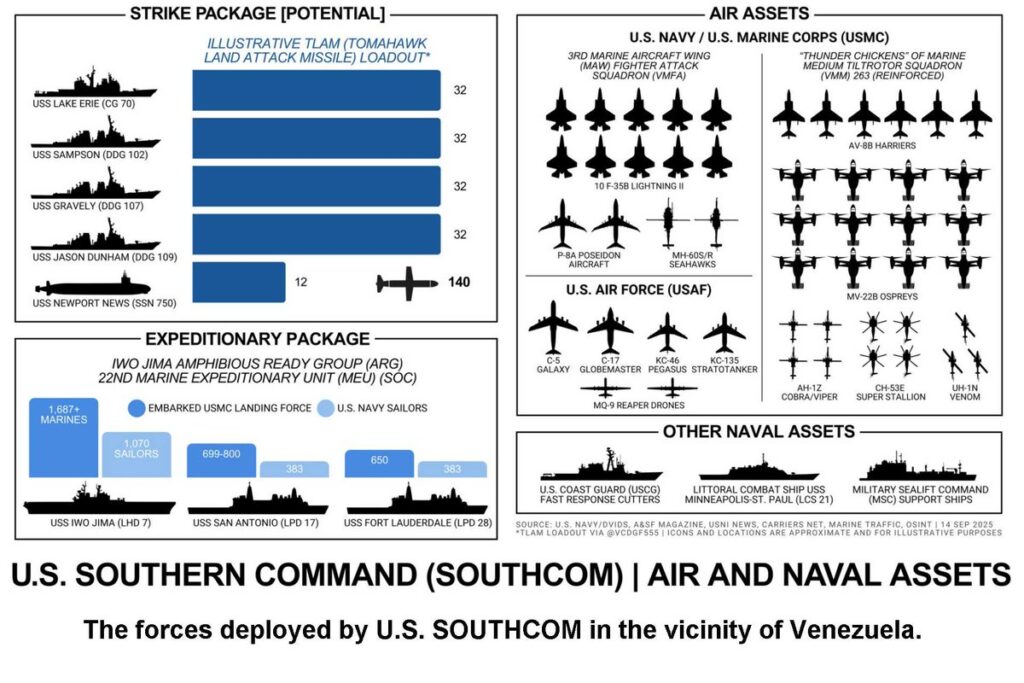
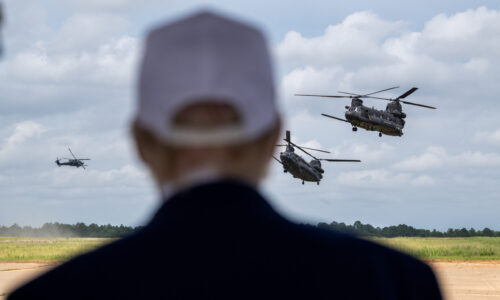
The deployment pattern is the place to start. A force designed to intercept small narco vessels looks one way, and a force designed to restrict a sovereign state’s exports looks another. Narco interdiction efforts usually emphasize speed and flexibility. They involve fast pursuit craft, helicopters, and limited surveillance assets to track go-fast boats. By contrast, the Caribbean force assembled by the administration is built around cutters, maritime patrol aircraft, long-range surveillance platforms, and U.S. Navy assets positioned directly over Venezuela’s known export routes. These routes run through the Caribbean Basin and form the arteries through which over 90% of Venezuela’s oil shipments pass on their way to offshore transfer zones. When one places naval power across those arteries, one is not conducting a symbolic drug patrol. One is closing the valves of a state’s revenue system.
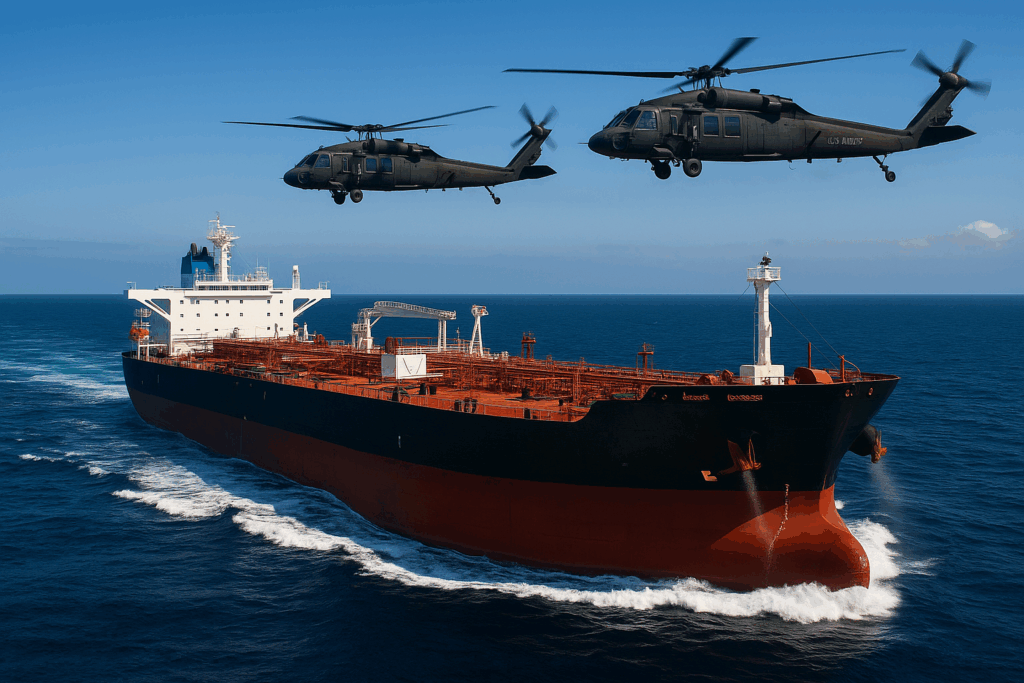
To see why this matters, it helps to recall how Venezuela exports oil in the current sanctions environment. The regime cannot sell openly to world markets, so it relies on an intricate system of dark fleet tankers, ship-to-ship transfers, altered documentation, and offshore blending operations. Imagine a river that has been blocked at its source. Smugglers will dig channels around the blockage. They will disguise the water, relabel it, and pass it along through intermediaries. But these channels work only as long as the sheriff stays out of the valley. If he places deputies along every gap in the rocks, the water stops flowing. The U.S. has now placed those deputies. Surveillance aircraft can track tankers even when transponders are off. Coast Guard and Navy vessels can board ships whose insurance, flag, or ownership structure raises red flags. Maritime patrols can watch known transfer points near Trinidad, Aruba, and Curaçao. Many of the tankers Maduro relies on already operate in legal gray zones. They change names and flags, spoof transponders, and use shell companies in opaque jurisdictions. These evasions are useful only when no one is watching. When U.S. forces station themselves directly across the sea lanes where these tankers must pass, the evasions collapse.
Consider the recent U.S. seizure of a sanctioned tanker off Venezuela’s coast. The media has mostly treated it as an isolated enforcement action, but in context, it reads as a signal. The administration has shown that it is willing to intercept sanctioned cargoes, disrupt shadow fleets, and expose the networks that have kept Maduro afloat. The tanker was not simply a rogue vessel. It represented the entire export model that Caracas has depended on for years. If further seizures follow, the model unravels quickly. The logic is straightforward. Without oil revenue, Maduro has no regime.
At this point, a skeptical reader might wonder whether a sanctions crackdown can really topple an entrenched strongman. After all, Maduro survived years of economic contraction, humanitarian crises, and domestic unrest. Yet this objection overlooks a critical detail. Venezuela is no longer buffered by substantial reserves or diversified revenue streams. It is a state held together by cash payments to elites and the military, and that cash comes almost entirely from oil exports. Once the flow stops, the timeline to regime desperation narrows to weeks.
The starting point is Venezuela’s lack of hard currency. Independent economists estimate that the regime holds well under $1B in accessible foreign reserves. This is not a cushion; it is a final lifeline. The government burns through $150M to $250M per week to cover imports, military payroll, and patronage networks. Oil exports are the only way to meet these expenses. If exports are halted, the shortfall appears immediately. Within three weeks, the government faces severe constraints on its ability to import food and fuel. After a month, the regime must choose between paying the military or paying for basic supplies. It cannot do both. When the military is not paid, its loyalty fractures. This is not speculation. Venezuelan commanders themselves have privately acknowledged for years that their allegiance is tied to shipments of imported goods, stipends, and perks that depend entirely on export revenues.
It is crucial to appreciate the dominance of oil in Venezuela’s economy. Even under sanctions, the country exports 450,000 to 700,000 barrels per day. That flow yields $20M to $35M per day, depending on discounts offered to Chinese refiners. One might think that narcotics, gold, or other illicit revenues could compensate, but these streams benefit individual elites rather than the state. They cannot sustain the government’s institutional needs. Without oil money, the bureaucracy, the security forces, and the state’s minimal social programs all begin to collapse. The timeline is rapid. Within 30 to 45 days, the government struggles to pay key personnel. Within 45 to 60 days, critical imports fall sharply. The power grid, already unstable, fails more frequently. Fuel shortages intensify, and hyperinflation pressures return.
Some argue that China or Iran will bail out the regime. This view mistakes the nature of those relationships. Beijing and Tehran buy Venezuelan crude because it is cheap and because they can use opaque financial channels to settle transactions. They do not subsidize the regime out of ideological commitment. If U.S. naval forces interdict tankers in the Caribbean, China and Iran cannot easily circumvent that blockade. They would have to send military escorts or challenge U.S. authority directly, steps neither government is willing to take for Maduro’s sake. Even if they were willing, emergency transfers of cash or goods would not approach the scale needed to sustain the state. Venezuela requires hundreds of millions of dollars per month. No external donor is prepared to provide that support.
Once these dynamics are placed together, the strategic logic of the administration becomes clearer. The goal is not a ground invasion or a prolonged conflict. The goal is to create a short, intense financial crisis within the regime that makes Maduro’s continued rule untenable. This is not merely theoretical. Modern authoritarian regimes often collapse when their ability to pay the military evaporates. Eastern European states in the late Cold War, African regimes facing commodity shocks, and Middle Eastern governments under sanctions have all experienced similar cascades. When the revenue disappears, the ruling coalition splits. Some factions turn on the leader. Others negotiate exits. In such moments, a path for a legitimate successor opens.
It is precisely this window that the administration intends to create. The idea is that by enforcing sanctions at sea, Washington can force Maduro to step down without needing to fire a shot. The rightful president can then return under conditions where the military, deprived of cash but eager for stability, is incentivized to cooperate rather than resist. This plan relies on tools the US already controls and avoids the risks associated with direct military intervention.
One might still wonder why the media framed the buildup as an anti-cartel mission. The answer lies in institutional inertia. Reporters are accustomed to viewing U.S. naval activity in the Caribbean through the lens of drug interdiction. When they see cutters and patrol aircraft, they assume a familiar mission. But strategic context matters. The positioning of forces along known oil export routes, the public messaging from US officials about enforcing sanctions, and the timing of tanker seizures all point in another direction. Once these facts are acknowledged, the narrative about counter narcotics looks like a convenient placeholder rather than a description of the real mission.
There is also a deeper lesson here about modern statecraft. Power is often exercised by controlling financial flows rather than by projecting brute force. When a regime’s survival depends entirely on revenue that crosses international waters, a maritime power can exert enormous leverage. This is especially true when the regime’s export system is already vulnerable. Venezuela’s aging tankers, decaying ports, and reliance on Iranian condensate make it uniquely susceptible to interdiction. The administration has identified these vulnerabilities and placed assets where they can be most effective.
The question then becomes how long Maduro can withstand a determined cutoff. The most likely answer is 6 to 12 weeks. This estimate reflects not only economic modeling but also the structure of the Venezuelan state. It is a regime that functions as a cash distribution machine. Once the machine stops, the regime loses cohesion. If US interdictions continue, the collapse becomes a matter of timing rather than possibility.
All of this helps to explain why the administration acted now. For years, sanctions were under-enforced. Tankers operated with impunity. Ship-to-ship transfers near Trinidad became routine. Chinese refiners treated Venezuelan crude as a discounted supply source rather than a risk. The regime built survival strategies around these patterns. By moving naval power directly into these zones, the administration has upended the regime’s assumptions. The tanker seizure marks the beginning of a new phase. It signals that Washington intends to make sanctions real.
One final point merits attention. Some critics will accuse the administration of pursuing regime change. But this misses the nature of the policy. The U.S. is not imposing a government on Venezuela. It is enforcing existing sanctions that reflect the illegitimacy of Maduro’s self-declared presidency. The aim is to restore the conditions under which the rightful president can return, not to install a puppet regime. Venezuelans themselves have sought Maduro’s departure for years. What they lacked was the external pressure needed to break the regime’s financial base. That pressure has now arrived.
The coming weeks will reveal how effective the strategy is. If the naval deployment continues and interdictions increase, Maduro faces a narrowing path. His options will shrink, his coalition will fracture, and the costs of staying in power will surpass the benefits. When that moment arrives, Venezuela will have a chance to reclaim its democracy. The administration’s decision to act reflects a sober understanding of both regional security and the moral stakes involved. Sometimes the most humane way to confront a dictatorship is not through war but through the steady, disciplined application of economic pressure.
If you enjoy my work, please subscribe: https://x.com/amuse.
Sponsored by the John Milton Freedom Foundation, a nonprofit dedicated to helping independent journalists overcome formidable challenges in today’s media landscape and bring crucial stories to you.
READ NEXT: Gruesome Plot Targeting Top Trump Official Thwarted
















about time, no some land strikes & then He Runs
Tanker Reuse:
Spec Ops Fwd base
Cargo
Aid post disasters.
Cargo