




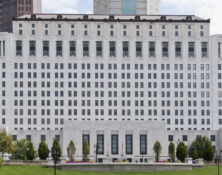


Washington is racing toward yet another deadline — and once again, the clock may win. From a looming Homeland Security funding lapse to a sweeping deportation ruling and fresh turmoil over federal prosecutors, today’s headlines trace the widening fault lines between Congress, the courts and the White House.
DHS Funding Collapses as Senate Democrats Block Bill
A partial government shutdown now appears all but inevitable after Senate Democrats on Thursday blocked a bill to fund the Department of Homeland Security beyond Friday’s deadline.
The measure failed 52–47, short of the 60 votes required to advance.
Democrats say they will not support continued funding without significant new limits on federal immigration enforcement — including warrant requirements, body-worn cameras, officer identification rules and stricter use-of-force standards for agencies such as Immigration and Customs Enforcement and Customs and Border Protection.
“Democrats have been very clear. We will not support an extension of the status quo,” Senate Democratic Leader Chuck Schumer said ahead of the vote, criticizing what he described as unchecked enforcement tactics.
Without congressional action by midnight Friday, funding will lapse for key DHS components including the Transportation Security Administration, the Federal Emergency Management Agency and the United States Coast Guard.
Yet the agencies most central to the political fight — ICE and CBP — are expected to continue operating with minimal disruption, having received tens of billions of dollars under the One Big Beautiful Bill Act signed last year by Donald Trump.
Lawmakers are scheduled to leave Washington for a 10-day recess Thursday evening, adding urgency — and uncertainty — to stalled negotiations.
Federal Judge Orders Return of Venezuelan Deportees
In a separate rebuke to the administration, U.S. District Judge James Boasberg ordered the Trump administration to facilitate the return of 137 Venezuelan men deported last year to El Salvador.
Boasberg ruled that some of the men were removed without adequate due process and directed the government to submit a status report by March 13.
The decision follows the deportation of 252 Venezuelan nationals last March, whom the administration labeled suspected members of the Tren de Aragua gang. The removals were carried out under the Alien Enemies Act of 1798.
Justice Department attorneys indicated they would prefer returning the men to the United States rather than attempting remote hearings from overseas.
The judge cited the earlier return of Kilmar Abrego-Garcia from El Salvador’s high-security Terrorism Confinement Center as precedent — a case that drew diplomatic and legal scrutiny.
The administration has explained the deportations as necessary to combat transnational criminal networks operating across the southern border. Open borders groups, however, argue the men were denied individualized hearings and meaningful opportunities to contest the allegations.
The Justice Department has not yet said whether it will appeal.
Newly Appointed U.S. Attorney Removed Within Hours
The clash between the White House and the judiciary intensified again when the administration removed a newly appointed U.S. attorney in New York’s Northern District just hours after federal judges selected him for the post.
Donald Kinsella had been appointed by district judges following the departure of John A. Sarcone III. But shortly after taking the position, Kinsella received an email from a White House official stating he was being removed.
Deputy Attorney General Todd Blanche later confirmed on social media that Kinsella was “fired,” though Kinsella told reporters he would consult with the judges who appointed him to determine whether the dismissal was legally valid.
The episode is the latest in a string of disputes over U.S. attorney appointments.
In December, Alina Habba — formerly personal attorney to President Trump — was removed from her role as New Jersey’s top federal prosecutor after an appeals court upheld a ruling that she had been unlawfully serving.
Similarly, Lindsey Halligan, selected for the Eastern District of Virginia, was found by a court to have been unlawfully appointed — a ruling that led to the dismissal of charges against former FBI Director James Comey and New York Attorney General Letitia James. Halligan later left the post after a judge criticized what he called her “masquerading” as U.S. attorney in court filings.
READ NEXT: DHS Funding Blocked As Shutdown Deadline Nears




















Hey Dimwits, hold the funding til hell freezes over if you want money for illegal aliens. And to Trump and ICE, ship em out faster and to save money just dump them over the border and let them make their way home.
Guess the dimwits are not counting on the payback during this coming election. This is a sore subject and most of the nation is backing send the illegal aliens HOME. Come here legally or do not come at all.
So to the dimwits, adios pendejos. Means goodbye asses!