




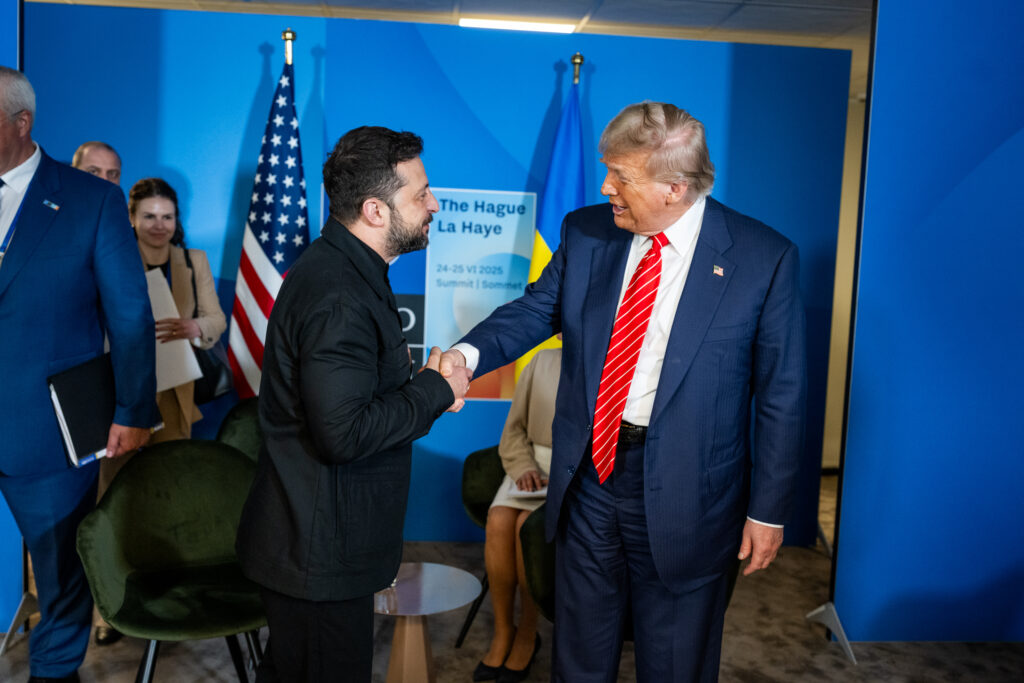
Russian President Vladimir Putin has indicated he may be willing to accept U.S.-backed security guarantees for Ukraine as part of a deal to end the nearly four-year war, senior Ukrainian officials said.
Kyrylo Budanov, chief of staff to Ukrainian President Volodymyr Zelensky, said on Ukrainian television Saturday that Russian representatives raised the possibility during recent talks in Geneva. He cautioned, however, that Moscow has not formally confirmed the position.
If the Kremlin backs the remarks, it would mark the most significant step in ceasefire negotiations since Russia’s full-scale invasion in 2022.
— AF Post (@AFpost) February 28, 2026
A Possible Opening in Geneva
Budanov described the comments as part of ongoing negotiations, not a finalized proposal. Even so, a tentative willingness to discuss U.S.-backed guarantees would mark a dramatic shift.
So far, Russia has resisted frameworks that would anchor Ukraine’s security to Western powers. Publicly, Moscow has demanded limits on Ukraine’s military posture and rejected NATO expansion. A model built on American guarantees, even outside NATO membership, would require the Kremlin to accept a degree of Western involvement it has long opposed.
There has been no official statement from the Kremlin confirming Budanov’s account. Russia has also not agreed to a proposed summit between Zelensky and Putin.
What the Security Guarantees Could Look Like
The framework under discussion would aim to deter future Russian aggression without bringing Ukraine into NATO. That distinction matters. NATO membership would trigger Article 5 collective defense protections. Security guarantees short of that could take other forms.
Western allies have floated options including long-term defense commitments, continued weapons transfers, military training, and even multinational peacekeeping forces stationed in Ukraine after a ceasefire. The details remain unsettled.
Ukraine has made clear it will not trade territory or agree to a lasting ceasefire without enforceable protections. Kyiv’s position has hardened since earlier agreements, including the 2014 and 2015 Minsk accords, failed to prevent renewed fighting.
For Zelensky’s government, vague assurances are not enough. Any deal, Ukrainian officials say, must include clear obligations and consequences for violations.
Fighting Continues as Global Tensions Rise
The diplomatic maneuvering comes amid continued fighting in eastern and southern Ukraine. Neither side has secured a decisive breakthrough on the battlefield.
Four years into Russia’s full-scale invasion, Ukraine’s military casualties are estimated at between 500,000 and 600,000, including up to 140,000 deaths.
Russian forces have suffered nearly 1.2 million casualties, including up to 325,000 troop deaths, in exchange for occupying less than 20% of Ukraine.
Broader geopolitical tensions are also complicating the picture. On Saturday, Russia condemned U.S.-Israeli strikes on Iran as “unprovoked aggression” and called for renewed negotiations in the Middle East.
Why It Matters
If Russia is genuinely open to U.S.-backed security guarantees, it could represent the first concrete diplomatic opening in years. It would signal at least some recognition in Moscow that the war cannot end on Russian terms alone.
But words in closed-door talks are not policy. Any framework would require agreement on enforcement, troop deployments, and long-term funding. It would also require political buy-in in Washington, where public support for sustained aid remains under pressure.
For now, the war of attrition continues. At current rates, combined casualties could reach 2 million by spring. If verified, the weekend’s revelations may influence the next phase of a war that has transformed Europe’s security landscape.
READ NEXT: Senior Trump Aide Reveals Bombshell Spying Accusations














Do not give Putin one inch. And seize Russian assets to pay the damage they’ve done.