





When government criticism triggers a knock at the door…
MIAMI BEACH, Fla. — There’s a line in America that’s not supposed to be crossed: criticizing elected officials should never invite a police visit.
But according to a new federal lawsuit, that’s exactly what happened in Miami Beach.
Raquel Pacheco says two police detectives showed up at her home in January — not because of a crime, but because of a Facebook comment.
That alone should raise eyebrows.
The Miami Beach mayor’s office is now flagging citizen’s Facebook posts and sending police to their doors to intimidate them for criticism of the mayor.
— Mel (@Villgecrazylady) January 19, 2026
This video is absolutely outrageous. pic.twitter.com/L8mEr6hPe2
From Social Media Post to Police Inquiry
The situation began with a post from Miami Beach Mayor Steven Meiner, who described the city as a “safe haven for everyone.”
Pacheco didn’t agree.
In a comment beneath the post, she sharply criticized the mayor, accusing him of hypocrisy and taking aim at his positions on politically sensitive issues, including Palestinians and LGBTQ rights.
It wasn’t polite. It wasn’t flattering.
But in a free country, it doesn’t have to be.
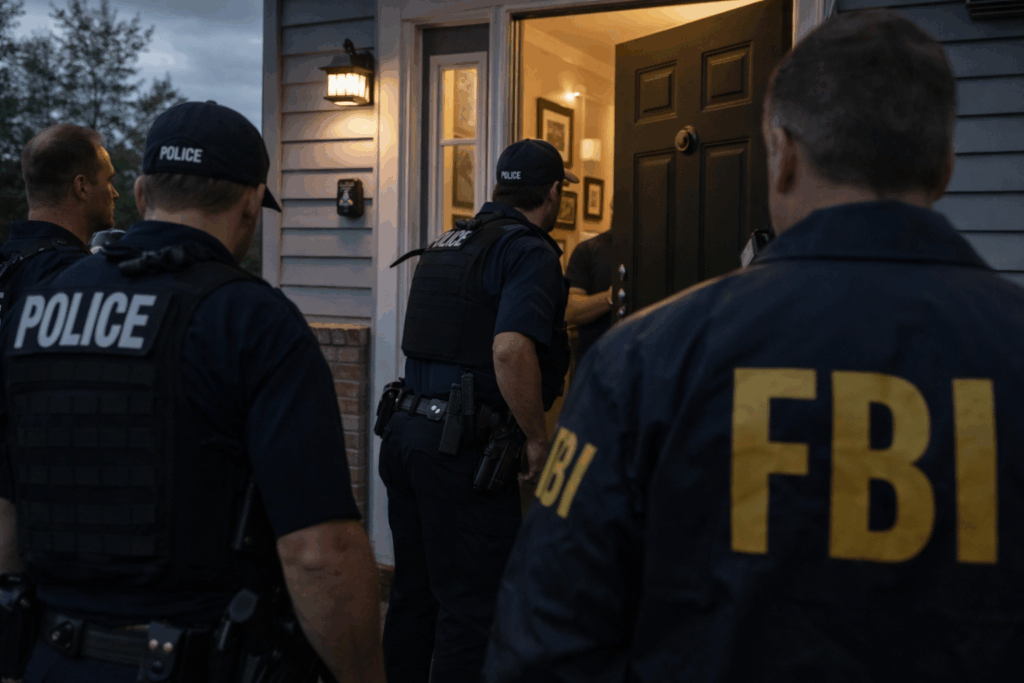
Days later, police detectives arrived at her home asking a simple question: did she write it?
During the exchange — captured on video and later shared online — officers suggested the comment could “incite somebody to do something radical,” though they insisted the conversation was voluntary.
Pacheco declined to speak without an attorney.
That’s where the encounter ended.
But the bigger issue was just beginning, as Reason magazine correctly notes:
Now, those officers, the city of Miami Beach, the mayor, and other city officials are facing a federal lawsuit from the American-Arab Anti-Discrimination Committee (ADC) for violating Pacheco’s First Amendment rights. The lawsuit seeks compensatory damages for the “distress, fear, humiliation and reputational harm she has endured.”
In January, Pacheco commented on Miami Beach Mayor Steven Meiner’s Facebook post, which said Miami Beach was a “safe haven for everyone.” Under the post, Pacheco wrote, “The guy who consistently calls for the death of all Palestinians, tried to shut down a theater for showing a movie that hurt his feelings, and REFUSES to stand up for the LGBTQ community in any way (even leaves the room when they vote on related matters) wants you to know that you’re all welcome here.”
Two Miami Beach Police Department detectives later showed up at Pacheco’s home, asking if she had posted the comment. Pacheco refused to answer the officers’ questions without a lawyer present, Reason’s C.J. Ciaramella reported at the time.
During the visit, one of the officers told Pacheco the post could “probably incite somebody to do something radical.”
A few days later, Miami Beach Police Chief Wayne A. Jones publicly defended the decision to send detectives to Pacheco’s home.
His reasoning was familiar.
Jones pointed to “real, ongoing national and international concerns” over antisemitic attacks and political violence, arguing that heightened tensions justified a closer look at what he described as “inflammatory” rhetoric.
He said he ordered officers to conduct a “brief, voluntary conversation” about what he called “potentially inciteful false remarks,” framing the visit as a precaution to ensure there was no threat to the mayor or the broader community.
That’s the official explanation.
But it raises a deeper question: at what point does “checking in” on speech become policing it?
Because once law enforcement starts interpreting political criticism as a potential threat — rather than protected expression — the line between public safety and government overreach starts to blur.
Fast.
A Lawsuit That Cuts to the Core of Free Speech
Pacheco has now taken the fight to federal court.
Her lawsuit names the City of Miami Beach, Mayor Meiner, Police Chief Wayne Jones, and other officials, accusing them of using law enforcement as a tool to intimidate a political critic.
The complaint argues the visit wasn’t about public safety — it was about sending a message.
And that message, according to the suit, was clear: criticize the wrong people, and you might get a knock at your door.
Pacheco claims the encounter caused “distress, fear, humiliation and reputational harm,” and she’s seeking financial damages, along with a court ruling affirming her constitutional rights and an injunction to prevent similar incidents.
The City’s Defense — and a Familiar Justification
City officials aren’t backing down.
They say the visit was justified, citing concerns about inflammatory rhetoric during a time of heightened political tension, particularly around antisemitism and political violence.
Mayor Meiner has also pushed back, suggesting some of Pacheco’s statements may have crossed into defamation.
That’s the standard defense in cases like this: public safety, risk mitigation, concern over escalation.
But here’s the problem.
Those justifications can quickly become a slippery slope.
Because once “potentially inflammatory” speech becomes grounds for police questioning, the boundaries of free expression start to erode — fast.
The Bigger Issue: A Chilling Effect on Speech
At the heart of the lawsuit is a broader concern that goes beyond one Facebook comment.
Pacheco’s legal team argues this incident reflects a pattern — one where speech critical of local leadership, particularly on controversial global issues, is treated not as protected expression, but as something suspicious.
That’s where the real danger lies.
The First Amendment doesn’t just protect polite, widely accepted opinions. It protects the kind of speech that makes people uncomfortable — especially when it’s aimed at those in power.
Legal experts have long held that political speech is among the most protected forms of expression. It only loses that protection when it crosses a very high legal threshold into direct incitement.
Criticism, even harsh criticism, doesn’t meet that bar.
And it certainly doesn’t justify a police visit — at least not in a system that takes civil liberties seriously.
Bottom Line
This case isn’t really about a Facebook comment.
It’s about whether government officials can use the weight of law enforcement to confront, question, or quietly pressure their critics.
Because if that becomes acceptable — even in limited cases — it won’t stay limited for long.
Today it’s a controversial post.
Tomorrow it could be anything.
And once that line moves, it’s very hard to move it back.
READ NEXT: Middle East Leader Lobbies Trump On US Troop Deployment



















I hope Pacheco wins the lawsuit, our political representatives are starting to use the law enforcement to police free speech.