





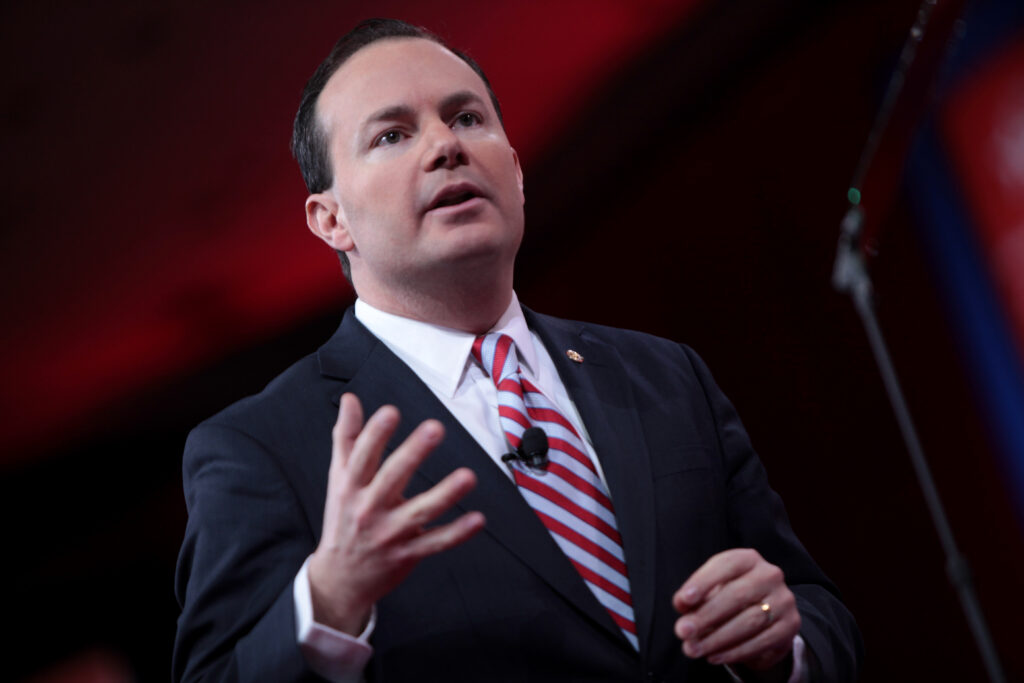
Sen. Mike Lee has introduced new legislation to reshape how the federal government awards contracts, arguing that current diversity-focused policies should be replaced with a merit-based system.
The proposal, titled the “Ending Discrimination in Government Contracting Act,” would prohibit federal agencies from considering race or sex when awarding contracts. The bill targets a range of diversity, equity, and inclusion (DEI) initiatives that have been used to expand opportunities for ethnic minorities and women.
Among the programs affected are those tied to the Minority Business Development Act of 2021, as well as long-standing efforts such as the Disadvantaged Business Enterprise program, which operates in part through agencies like the U.S. Department of Transportation. These initiatives are designed to increase participation by minority- and women-owned businesses in government-funded projects.
In a statement, Lee said the legislation is intended to “restore merit-based partnerships” and argued that federal contracting decisions should focus solely on a company’s qualifications and ability to deliver results. He characterized existing DEI-related policies as inconsistent with constitutional principles and said they can lead to inefficient use of taxpayer funds.
The bill would remove federal requirements and incentives that direct contracts or grants toward businesses based on demographic criteria. However, it explicitly preserves preferences for certain other categories, including rural businesses and those owned by military veterans.
Rep. Glenn Grothman, who is leading the effort in the House, said the issue has had tangible effects in his district. He argued that some companies have been overlooked for contracts despite offering competitive pricing and quality, and he framed the legislation as a way to ensure fairness and cost-effectiveness in federal spending.
Supporters of the bill say it would simplify contracting rules and reinforce equal treatment under the law. Critics of similar proposals in the past have argued that programs targeting disadvantaged groups are necessary to address “disparities” in access to federal opportunities.
The introduction of the legislation comes amid a broader national debate over the role of DEI policies in government and the private sector. As lawmakers continue to weigh competing views on equity and merit, the bill is likely to face significant scrutiny in Congress, where its prospects will depend on both political alignment and ongoing legal debates surrounding affirmative action and equal protection.
READ NEXT: Top Democrat Attempts To Rebrand DEI As An American Value