

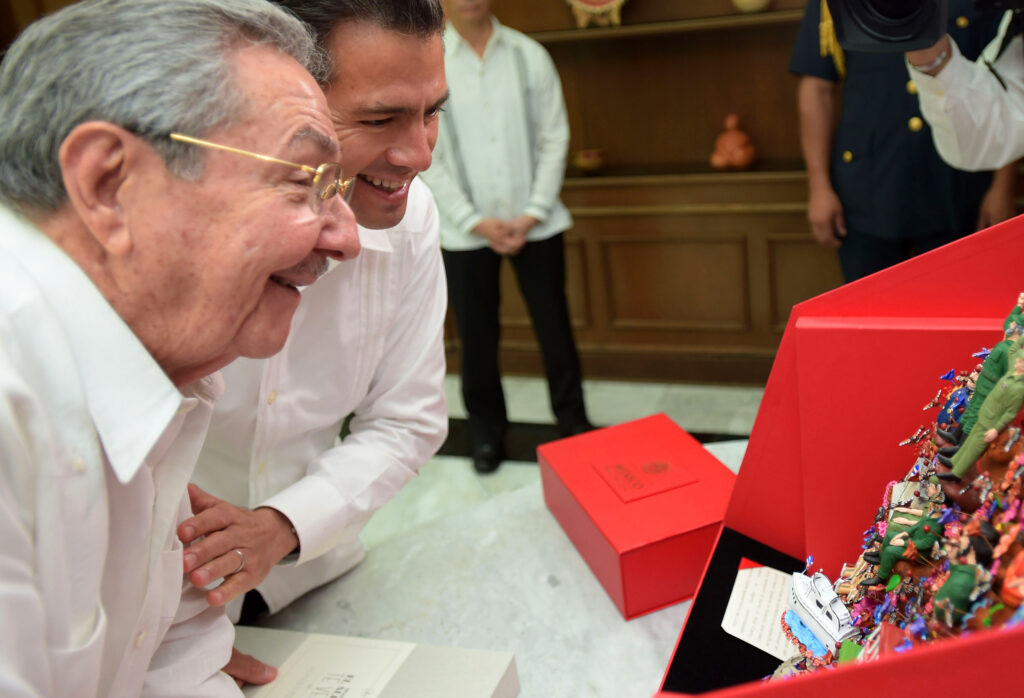
One big step closer to freeing Cuba from the tentacles of the decrepit Castro regime. In a long overdue move, the U.S. Justice Department charged former Cuban dictator Raúl Castro, now 94, brother of revolutionary dictator Fidel Castro, and several former Cuban military officials, for the murder of three American citizens and a legal resident.
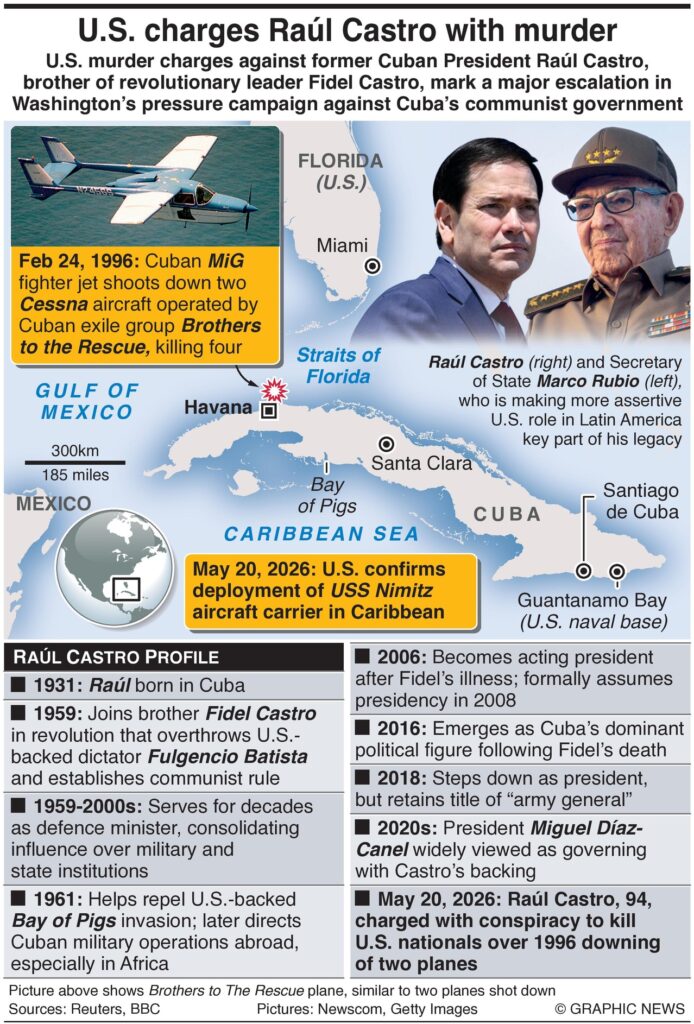
Castro, still the power behind the throne in Cuba, who was defense minister at the time, and his minions, are accused of ordering, or other involvement, in the 1996 premeditated shoot-down of two small, unarmed Cessna civilian aircraft operated by the Miami-based exile humanitarian group Brothers to the Rescue (BTTR), which killed four.
The U.S. reportedly has an intercepted recording of Castro admitting he ordered the criminal aerial ambush.
BTTR helped rescue survivors of attempts to flee Cuba by small boats but also dropped pro-democracy leaflets near the island.
The ambush operation, executed during the presidency of Bill Clinton, included infiltrating Cuban spies into the Cuban American community in Miami to gain intelligence on BTTR, including specific flight plans and passenger manifests. During the aerial assault by Cuban fighters, one BTTR light plane escaped the ambush, and Cuban combat jets reportedly pursued it into U.S. airspace in Florida.
After I left the Marine Corps and Defense Intelligence Agency (DIA) in 1998, I publicly argued for an indictment of Castro and punitive action against the regime for the shameless attack on Americans in international airspace. Sadly, Clinton preferred maintaining his Castro appeasement policy and did virtually nothing.
Criminal charges against a former foreign head of state are highly unusual and reflect the increasingly aggressive approach the Trump administration has taken toward Latin America.
The tougher U.S. stance has become closely associated with Secretary of State Marco Rubio, the son of pre-Castro Cuban immigrants and a potential Republican presidential contender in 2028. Rubio has played a leading role in shaping the administration’s highly effective hardline policy toward Cuba and other leftist governments in the region.
Under President Trump, the U.S. has tightened sanctions on Cuba and threatened penalties against countries supplying the island with fuel.
This indictment marks a major escalation in Washington’s pressure campaign against Cuba’s communist regime and prepares the way for a U.S. military raid similar to the one that captured Venezuelan narco-dictator Nicolás Maduro in January.
The indictments could also be used as leverage to extradite Castro and his cronies to the United States, or perhaps to force them into exile outside of Cuba.
At the same time the indictment was announced, U.S. Southern Command confirmed that the USS Nimitz had entered the Caribbean, a deployment likely to increase the pressure on Havana. This follows news reports of greatly increased military aircraft and drone surveillance flights near the island.
And while the once formidable Cuban military is now a shell of its former self, with obsolete Soviet-era equipment and only 40-45,0000 active troops, the regime has reportedly recently acquired over 300 military attack drones from unknown suppliers, which could be used against the U.S. naval base at Guantanamo Bay, though defense experts note their overall defensive capabilities against U.S. forces are extremely limited.
Meanwhile, the Trump team is pursuing a diplomatic approach as well.
As CBS News reported:
Last week, CIA Director John Ratcliffe traveled to Cuba and met with intelligence officials and Raúl Guillermo “Raulito” Rodríguez Castro, the grandson of former leader Raúl Castro. A CIA official said that Ratcliffe told Cuban officials the Trump administration was offering “a genuine opportunity for collaboration” and a chance to stabilize Cuba’s struggling economy, while cautioning that the opportunity was contingent on Cuba severing its ties with U.S. adversaries Russia, China and Iran. Ratcliffe also said the offer would not remain open indefinitely.
In an executive order earlier this year, Mr. Trump claimed Cuba harbored Russia’s largest overseas listening post. The Biden administration also accused China of opening up spy facilities on the Communist island just 90 miles from U.S. shores.
A U.S. official told CBS News that the Ratcliffe meeting would test whether those within the Cuban regime who recognize that the country needs a new direction can win over the hardliners who believe that their ability to resist U.S. pressure over 67 years means they’ll be able to outlast Mr. Trump.
More recently, Secretary of State Marco Rubio reiterated a U.S. offer of $100 million in humanitarian aid, to be sent to Cuba through faith-based charities that he earlier said had been stalled by Cuban government officials.
Much more to come on this critical story.
READ NEXT: Xi Spoke Of Civilization. Trump Spoke Of Power.











Mr. Crespo,
As Managing Editor, I would expect you to write in complete sentences! Your start off Article #1, (Cuba), with a fragment. There were other issues in the article as well. Please proofread your writing. I can read garbage anywhere, but I would prefer reading articles on this website.
Thank you,
Charlotte