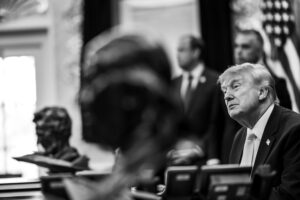
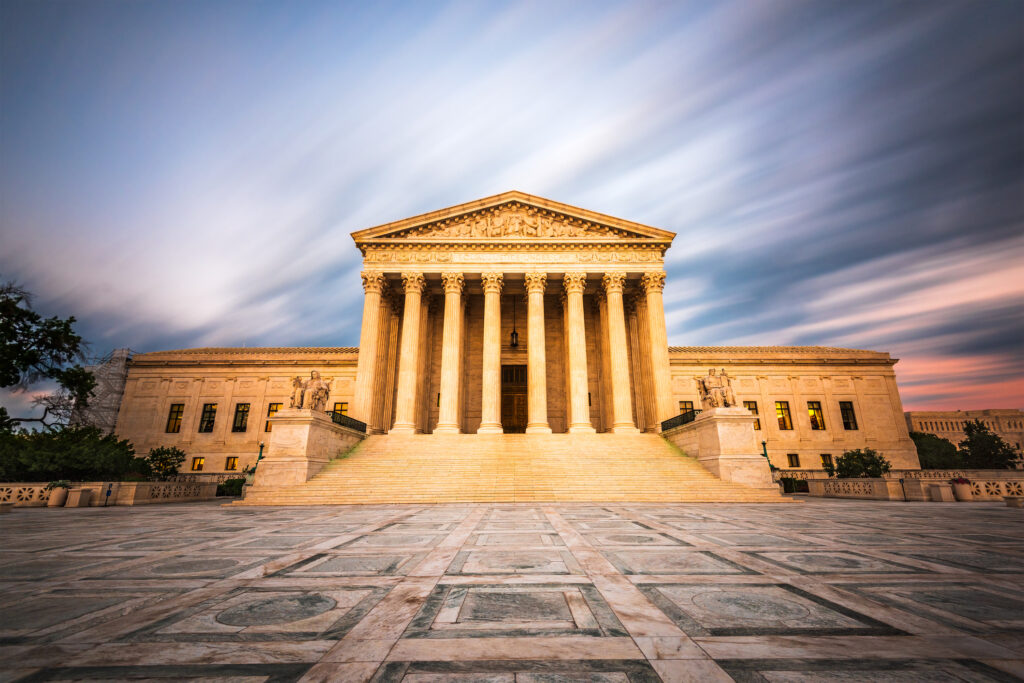
The Supreme Court on Monday refused to revive former Trump campaign adviser Carter Page’s lawsuit against former FBI Director James Comey and several other former FBI officials, effectively ending one of the last major legal challenges stemming from the bureau’s controversial Russia investigation.
The justices declined to hear Page’s appeal after lower federal courts dismissed his claims against Comey, former FBI Deputy Director Andrew McCabe, former FBI attorney Kevin Clinesmith, and other officials involved in the surveillance operation.
The decision leaves intact lower court rulings that found Page waited too long to bring certain claims and failed to properly sue the officials who directly carried out the surveillance.
A Surveillance Scandal That Never Went Away
Page, who briefly served as a foreign policy adviser to Donald Trump’s 2016 presidential campaign, became a central figure in the FBI’s Crossfire Hurricane investigation into alleged ties between the Trump campaign and Russia.
The FBI obtained four Foreign Intelligence Surveillance Act (FISA) warrants allowing investigators to monitor Page beginning in 2016. But years later, a Justice Department inspector general report identified significant errors and omissions in the warrant applications, raising serious questions about how the surveillance authority was obtained.
One of the most damaging revelations involved former FBI attorney Kevin Clinesmith, who pleaded guilty in 2020 to altering an email used in the FISA renewal process. The inspector general’s findings ultimately prompted the FBI to implement dozens of reforms designed to improve the accuracy and completeness of future surveillance applications.
Page has consistently denied any ties to Russian intelligence and was never charged with a crime.
Government Already Paid $1.25 Million Settlement
The Supreme Court’s decision comes just months after the federal government agreed to pay Page $1.25 million to settle related claims arising from the surveillance. The settlement resolved Page’s claims against the government itself but did not cover his separate effort to hold individual FBI officials personally liable.
Page originally sought $75 million in damages when he filed suit in 2020, arguing that government officials violated his constitutional rights through what he described as unlawful surveillance and investigative misconduct.
His lawsuit named Comey, McCabe, Clinesmith, former FBI officials Peter Strzok and Lisa Page, and several others.
Courts Say Litigation Must End
Federal courts repeatedly rejected Page’s claims.
In May 2025, the U.S. Court of Appeals for the D.C. Circuit upheld dismissal of the case, ruling that several claims were barred by statutes of limitation and that others were legally deficient. The court concluded Page had sufficient notice of the surveillance and related issues years before filing suit.
The Supreme Court’s refusal to hear the appeal effectively closes the door on Page’s attempt to obtain damages from individual officials involved in the surveillance process.
Legacy of the Russia Investigation
The ruling marks another chapter in the long-running fallout from the Russia investigation that dominated Washington for years.
Special Counsel Robert Mueller ultimately concluded that Russia interfered in the 2016 election but did not establish that members of the Trump campaign criminally conspired with Moscow. At the same time, subsequent investigations uncovered serious flaws in the FBI’s handling of the Page surveillance applications, fueling ongoing criticism from Trump supporters and civil-liberties advocates.
READ NEXT: Court Challenges Mount Against Trump Administration’s Rules On Foreign Truck Drivers