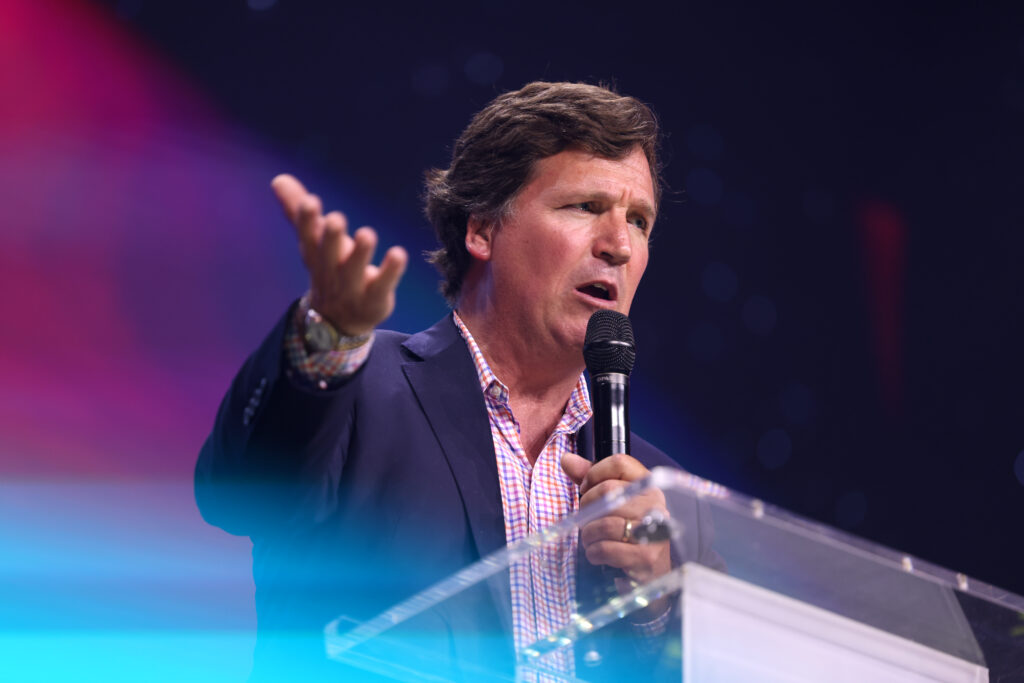
Conservative commentator Tucker Carlson says he plans to help build a third political party, marking his most significant public break yet with the Republican Party and highlighting growing divisions within the conservative movement.
In an interview with Columbia Journalism Review, Carlson said he no longer supports the GOP and intends to help create what he described as an alternative to the nation’s two-party system.
Carlson said he intends to help build a third political party, arguing that the country needs a political movement focused on improving the lives of ordinary Americans rather than preserving the existing two-party system.
Carlson framed his argument around the struggles of working-class families, contending that many Americans earning modest incomes have been left behind by the political establishment.
“If you make $60,000 a year, you’re degraded. Your life expectancy has gone down, and the promise of your children’s lives is likely gone,” Carlson said. “No one seems to care. It’s not even a factor.”
Carlson also faulted Washington for prioritizing international affairs over domestic issues, contending that the federal government’s foremost responsibility should be to the well-being of the American people.
The comments have fueled speculation about whether one of the country’s most influential media figures could play a larger role in organizing an alternative political coalition ahead of future elections.
Foreign policy dispute widens rift
Carlson’s announcement comes after months of increasingly public disagreements with President Donald Trump and other prominent Republicans, particularly over foreign policy.
He has emerged as one of the most outspoken conservative critics of U.S. involvement in overseas conflicts, arguing that many Republican leaders have moved away from the “America First” agenda by supporting a more interventionist foreign policy.
Those disagreements have exposed broader tensions within the Republican coalition, where debates over military engagement abroad, federal spending, and the party’s long-term direction have become increasingly visible.
Building a third party remains difficult
Although Carlson’s remarks generated widespread attention, history suggests that building a competitive national third party would be a formidable challenge.
State ballot access requirements, fundraising demands, and the Electoral College have long made it difficult for third-party candidates and organizations to compete with Republicans and Democrats on a national level.
Even so, Carlson’s large audience and influence among conservative voters, especially younger conservatives, could give any political effort he supports a higher profile than most third-party initiatives.
No formal organization announced
Carlson has not announced the creation of a political party, identified potential candidates, or provided a timeline for launching an organization.
For now, his comments reflect growing frustration among some conservatives who believe neither major party adequately represents their views on foreign policy, government spending, and the size and role of the federal government.
Whether Carlson ultimately launches a formal third party or instead uses his platform to shape the direction of the conservative movement, his remarks underscore the continuing ideological debate within the American right as Republicans look toward the next election cycle.
READ NEXT: Leaked Audio Exposes Mitch McConnell’s Medical Crisis