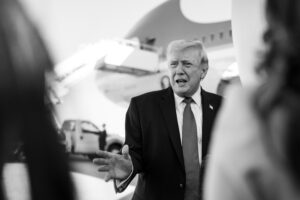
President Donald Trump defended the war with Iran on Wednesday by invoking four U.S. service members killed over the weekend, claiming each had “said very strongly, ‘We can’t let Iran have a nuclear weapon.'”
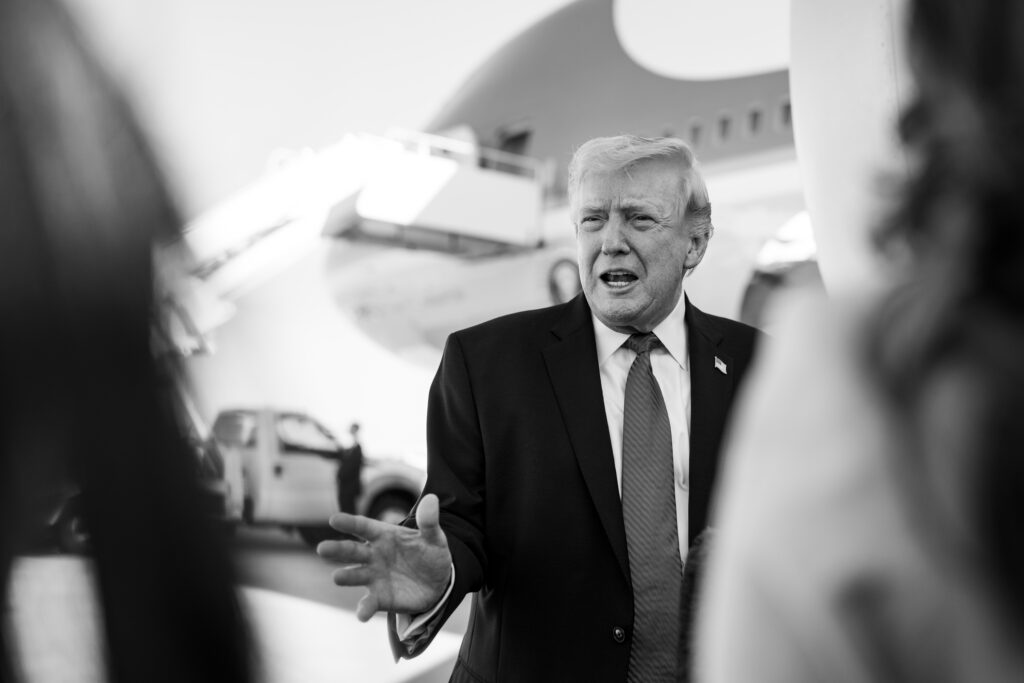
Trump made the remarks before leaving for Dover Air Force Base, where he was scheduled to attend the dignified transfer of the fallen service members.
“We are going to Dover to honor our heroes,” Trump told reporters. “All of them said very strongly we cannot let Iran have a nuclear weapon.”
Trump on fallen US troops: "All of them said very strongly, 'We cannot let Iran have a nuclear weapon.'" pic.twitter.com/q4VklRCFsx
— Aaron Rupar (@atrupar) July 22, 2026
The president acknowledged frustration with rising fuel costs while insisting opposition had not spread to the conflict itself.
“People don’t like the gas prices, but they’re not against the war,” Trump said.
Recent polling, however, has shown broad public opposition to the war, placing the president’s characterization at odds with the available data.
Trump offers no evidence for claim
Trump did not identify when or where the four service members supposedly made the comments, nor did he explain who had personally spoken with them about Iran’s nuclear ambitions.
There is no public record indicating that any of the four soldiers publicly discussed U.S. policy toward Iran’s nuclear program before they were killed.
The president also said he planned to console their families during the dignified transfer ceremony.
“All I’m gonna say to them is we love you. We love your child,” Trump told reporters before boarding Air Force One.
Polls paint a different picture
Trump’s assertion that Americans are not opposed to the war stands in sharp contrast to a series of recent national surveys showing the conflict has become deeply unpopular.
A Washington Post-Ipsos poll conducted this month found that 68% of Americans believe the war is “not worth fighting,” while only 28% said it is.
An earlier Washington Post-ABC News survey found that 61% of Americans considered the conflict a mistake less than two months after it began. That level of opposition emerged far faster than during the Iraq War, which took several years to reach similar public disapproval.
A Quinnipiac University poll also found that 45% of registered voters believe the war has weakened the United States internationally, compared with 33% who believe it has strengthened the country’s global standing.
Gas prices driving dissatisfaction
The conflict’s economic effects appear to be a major source of public frustration.
A Politico/Public First poll found that 63% of Americans blame the Iran war for gasoline prices climbing above $4 per gallon again.
Only 17% of respondents said they are financially better off since the current presidential term began, while 60% expect gas prices to continue rising over the next year because of the conflict.
While Republicans remain more supportive of the military campaign than Democrats or independents, recent polling suggests enthusiasm has softened even among Trump’s core supporters.
According to an Economist/YouGov survey, 77% of self-identified MAGA Republicans still believe launching the war was the right decision. Support falls to 13% among independents and 5% among Democrats.
Four soldiers honored at Dover
Trump traveled to Dover Air Force Base to attend the dignified transfer of four U.S. service members killed in separate attacks tied to the ongoing conflict with Iran.
The fallen troops were identified as Pvt. Isabella Gonzales, 19; First Lt. Tyler James Feehan, 25; Sgt. Angel S. Rampersad, 28; and Sgt. Michael Emmanuel Swinton, 30. Their deaths raised the number of American service members killed since the conflict began earlier this year to 18.
As casualties continue to mount and fuel prices remain elevated, the growing gap between the administration’s public messaging and public opinion highlights the political challenges facing the White House. With no clear path to ending the conflict, questions about the war’s duration and ultimate objectives are likely to remain at the center of the debate.
READ NEXT: Why Is Security Still At McConnell’s Hospital?