President Donald Trump announced Monday that the United States is reimposing its naval blockade of Iran, a major escalation in the administration’s confrontation with Tehran following the collapse of recent diplomatic efforts and the resumption of military operations.
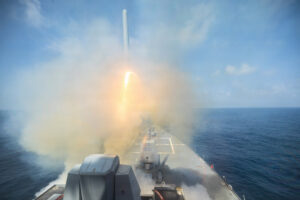
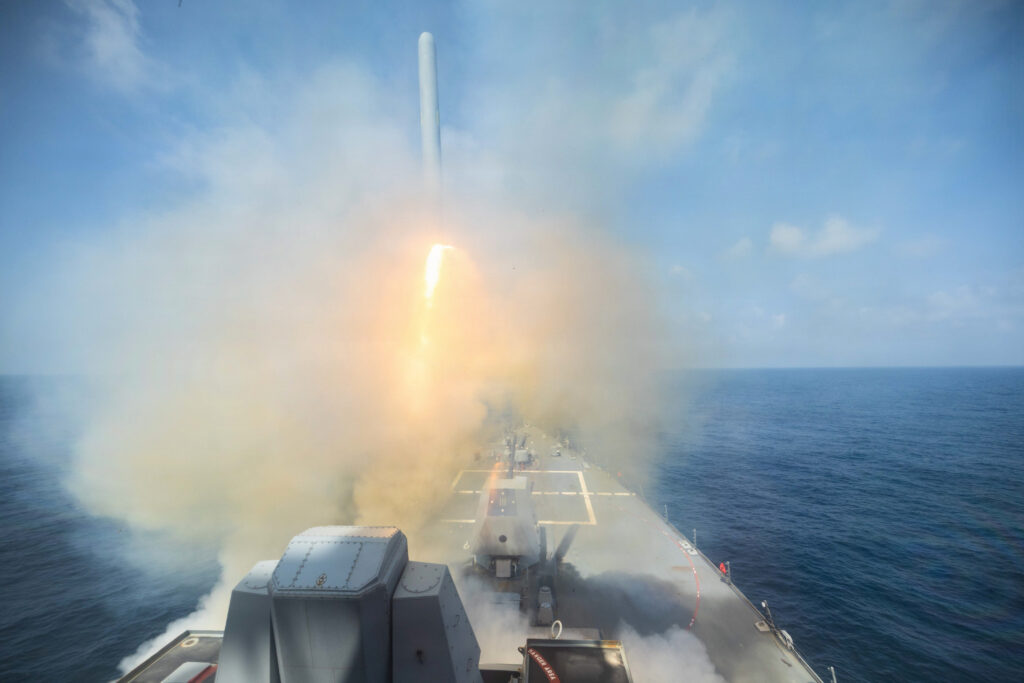
U.S. Central Command (CENTCOM) has released video of what it describes as the first operational use of the Corsair one-way attack surface drone, employed during yesterday's strikes against a ship and submarine maintenance facility at Bandar Abbas, Iran.
— OSINTdefender (@sentdefender) July 13, 2026
According to CENTCOM, the… pic.twitter.com/RqPFTOSnbT
In a statement, Trump said the U.S. military would again enforce the blockade against Iranian shipping and declared that the United States would act as “the Guardian of the Hormuz Strait.”
He also announced a 20% charge on cargo moving through the strategic waterway, saying the revenue would help offset the cost of securing one of the world’s most important maritime trade routes.
Trump: "The U.S.A. will be, from this point forward, known as 'THE GUARDIAN OF THE HORMUZ STRAIT,' but as such, and as a matter of FAIRNESS, will be reimbursed, at the rate of 20% on all cargo shipped, for any and all costs necessary to do the job of providing safety and security… pic.twitter.com/pSDuRqXJnR
— Aaron Rupar (@atrupar) July 13, 2026
The decision follows renewed fighting after Iran rejected U.S. demands to guarantee freedom of navigation through the Strait of Hormuz. In recent days, U.S. forces have launched additional strikes against Iranian military targets, while Iran has carried out attacks on commercial shipping and U.S. partners in the region, further escalating the conflict.
Trump’s announcement also reverses the administration’s decision last month to ease the blockade as part of a failed diplomatic effort with Tehran.
The move represents a notable shift in policy. On June 23, Secretary of State Marco Rubio said no country should impose tolls on international waterways, a position that differs from Trump’s newly announced plan.
Trump: "We're gonna keep the strait, and we'll probably run it. We'll become the guardian of the strait. We should be reimbursed for that. When we do that, we're gonna be reimbursed. We're gonna get paid." pic.twitter.com/O4ckjB2FkK
— Aaron Rupar (@atrupar) July 13, 2026
The Strait of Hormuz is arguably the world’s most critical energy chokepoint, with roughly 21 million barrels of oil passing through the waterway each day under normal conditions. At current prices, that oil is worth an estimated $1.5 billion to $1.7 billion daily. A 20% value-based fee could generate more than $300 million per day — roughly $110 billion to $120 billion annually — if fully enforced.
Foreign policy analysts caution that such a policy could undermine U.S. credibility as a neutral guarantor of freedom of navigation and complicate broader diplomacy in the Middle East. They also warn that Gulf states could deepen security and economic ties with China and Russia.
Major oil importers, including China, India, Japan and European countries, could also view the fee as an attempt to tax international commerce, potentially straining alliances.
READ NEXT: Trump Reveals ‘Wonderful’ Choice To Replace Lindsey Graham