

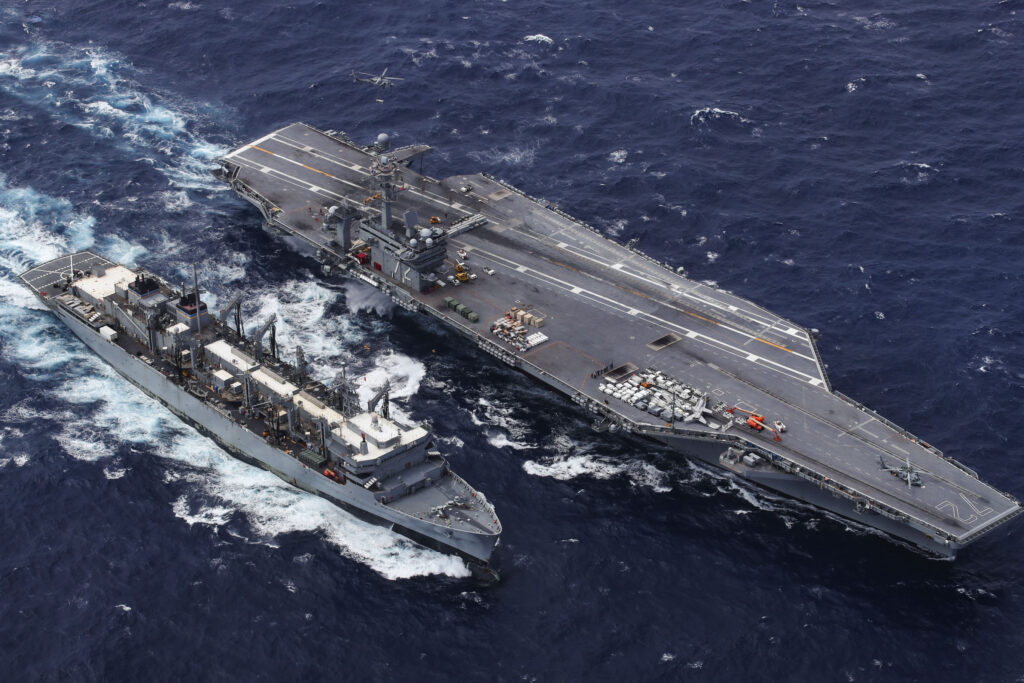
The United States Naval Ship (USNS) Big Horn, a Henry J. Kaiser-class replenishment oiler, “ran aground” off Oman on Tuesday.
While United States Navy (USN) aircraft carriers and submarines are nuclear, their escorts are not.
The shortage of fleet oilers in the U.S. Navy has worsened the situation. There were only five fleet oilers on that side of the world – one in the Mediterranean supporting an amphibious group, one in the Arabian Sea supporting a carrier group (the Big Horn) and three in East Asia supporting another carrier group and two amphibious groups.
The development means the Carrier Strike Group (CSG) 3 is without an at-sea fuel source and is scrambling to find a commercial tanker.
According to reports, the Big Horn suffered substantial damage and is being towed to Dubai.
The United States Naval Institute’s Sam LaGrone provides further information:
There are no reports of injuries or fuel leaks from Big Horn, two Navy officials told USNI News on Tuesday.
Officials did not detail the circumstances of the allision (a nautical term that describes when a moving vessel hits a stationary object), but the incident occurred in a part of the Arabian Sea that can be crowded with small fishing boats and vessels that can make maneuvering a ship as large as the 42,000-ton oiler difficult. It’s unclear if Big Horn ran aground or struck an object underwater.
A report at the maritime news site gCaptain published photos and video of a flooded engineering space and a ruptured rudder post that users said were from Monday’s Big Horn incident. A defense official confirmed the accuracy of the photos to USNI News on Tuesday.
Big Horn was the only dedicated oiler operating in the Middle East to provide the fuel for air wing aboard USS Abraham Lincoln (CVN-72) and the escorts assigned to the strike group, USNI News understands. The service has other options for fuel including U.S. allies and commercial tankers.
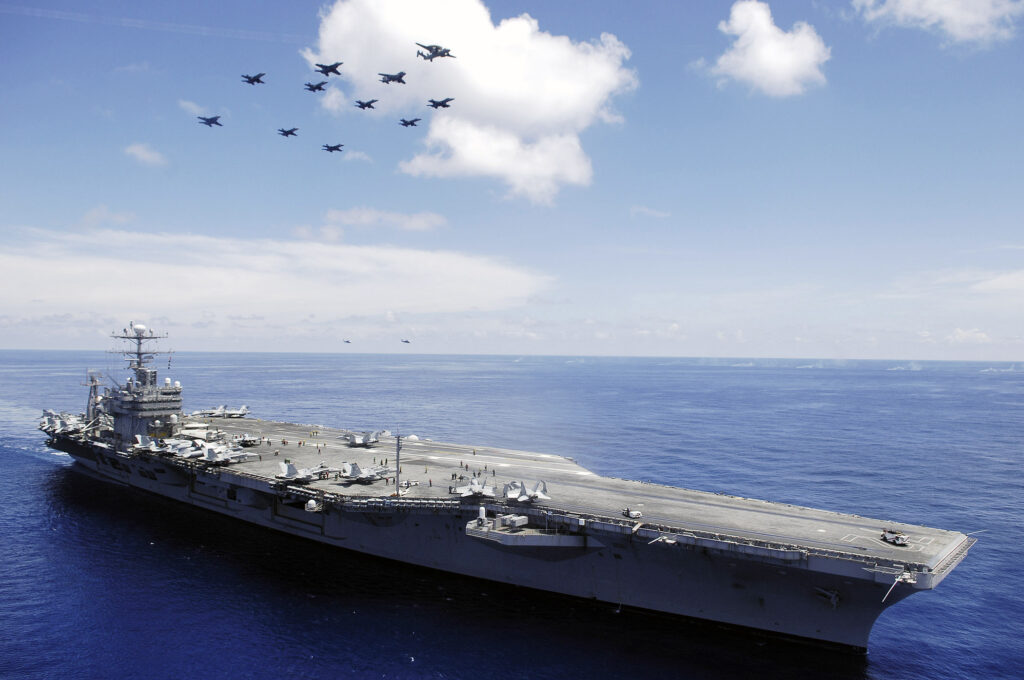
Most USN surface ships, particularly destroyers, cruisers and amphibious ships, run on a combination of gas turbines powered by marine diesel or jet fuel (commonly JP-5 or F-76), not crude oil in its raw form. Like jet aircraft, gas turbine engines provide high-speed performance and are the standard propulsion system for most modern surface combatants. The transition from traditional oil-fired boilers began in the 1970s and 1980s, making gas turbines the dominant propulsion for these vessels.
Oilers, or replenishment oilers, are critical to the U.S. Navy’s ability to operate worldwide. These ships provide underway replenishment (UNREP), meaning they deliver fuel and supplies to ships at sea, allowing fleets to maintain long operational ranges without returning to port. They carry large quantities of fuel for ships and aircraft, along with food, ammunition and other essentials.
READ NEXT: Trump Hit With ANOTHER Questionable Lawsuit Just 40 Days From Election

















This is what you get with a woke Navy.
DEI training again