A Texas ammunition factory built with nearly half a billion dollars in taxpayer funding failed to help produce a single usable artillery shell during its first two years, according to a Department of Defense inspector general report.
The General Dynamics-operated facility in Mesquite officially opened in May 2024 as a central part of the Army’s effort to increase production of 155 mm artillery rounds. By March 2026, however, the plant had not manufactured one projectile body that met the Army’s technical requirements.
The Army spent approximately $469 million establishing the facility, much of it drawn from supplemental funding approved by Congress following Russia’s invasion of Ukraine.
Plant was built to forge steel shell bodies
The Mesquite facility was not designed to fill artillery shells with explosives.
Its role was to manufacture the heavy steel outer casings, known as projectile bodies, that eventually become completed 155 mm rounds. Those hollow metal parts are supposed to be shipped to separate military-run facilities, where they are loaded with explosives, assembled and packaged for delivery.
The production breakdown occurred during the forging and metalworking process, before the projectile bodies could be sent elsewhere for completion.
According to the inspector general, none of the parts produced at Mesquite met the contract’s technical specifications and could therefore be used in finished artillery rounds.
Failure undermined Army production target
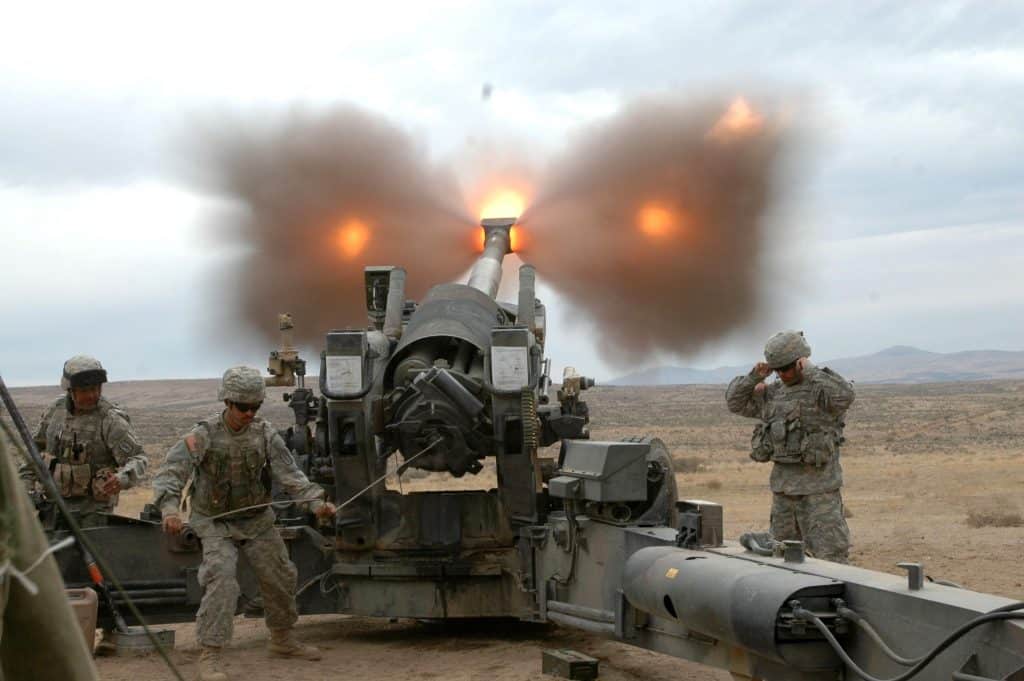
The factory was intended to help the Army reach its goal of producing 100,000 155 mm artillery shells per month, accounting for nearly one-third of that total on its own.
That target became a major Pentagon priority after the war in Ukraine exposed how quickly American ammunition reserves could be depleted during a sustained conventional conflict.
Although the United States has increased artillery production at other facilities, the failure at Mesquite deprived the Army of a major source of the steel projectile bodies needed to expand overall output.
A shell cannot move to the explosive-loading stage until its metal casing passes strict measurements and quality-control standards. Defective projectile bodies therefore create a bottleneck across the entire production chain.
Inspector general faults Army oversight
The watchdog report raised concerns about how the Army managed the project and whether officials adequately addressed technical problems before the factory opened.
“The Army’s expenditure of $469 million to establish the Mesquite facility could have been used to address other Army or [Department of Defense] priorities,” it noted.
Despite the high-profile ribbon-cutting ceremony, the facility was not capable of producing components that met military specifications.
The finding illustrates the difference between opening a factory and establishing a functioning production line. Specialized defense manufacturing requires equipment, materials, and processes to be repeatedly tested and certified before parts can be accepted for military use.
Pentagon faces broader industrial challenge
The Mesquite setback comes as the Pentagon pours billions of dollars into rebuilding an ammunition manufacturing system that had contracted during decades of lower demand.
Many U.S. munitions plants rely on aging infrastructure, limited suppliers and specialized production processes that cannot be expanded quickly.
The Army still expects the Mesquite facility to play a role in future artillery production. For nearly two years after opening, however, the $469 million plant has failed to produce a single 155 mm artillery shell.
READ NEXT: Top Trump Official Out After Fierce Dispute
Sponsored
Stand with President Trump against fraud, waste & abuse – he can’t beat the machine without YOU.