



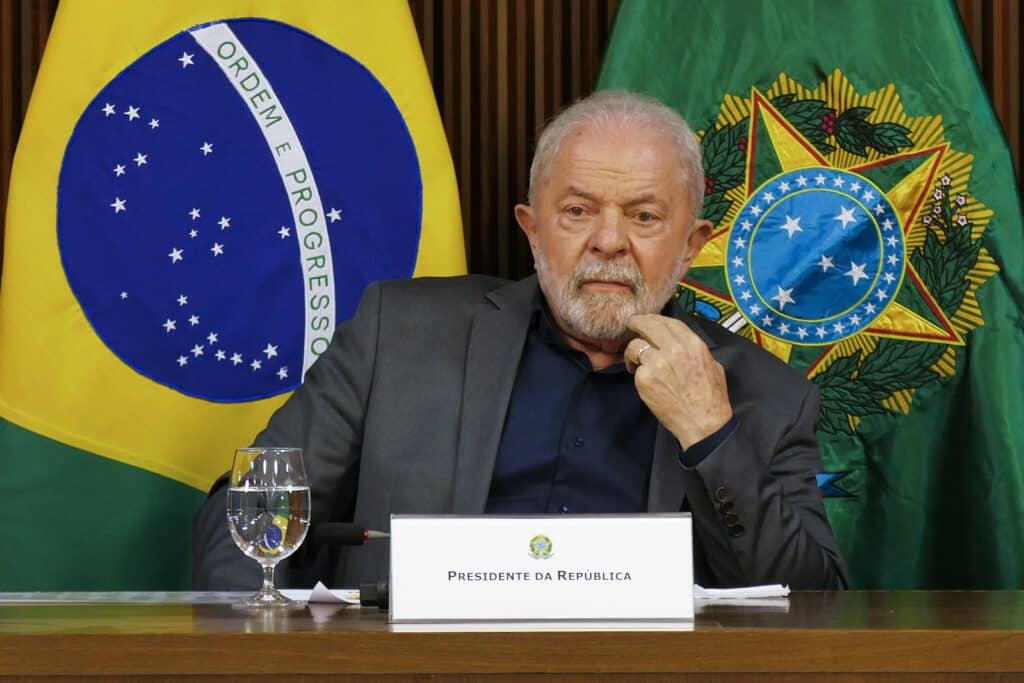
At the G20 Summit in Rio de Janeiro, Brazilian President Luiz Inácio Lula da Silva is set to pitch a global tax on ultra-wealthy individuals. The proposal, which aims to tax the global elite with the stated goal of addressing issues like “inequality” and “climate change,” has become a focal point of debate, with sharp divisions emerging between proponents of the plan and critics who argue it could undermine economic growth and innovation.
Lula’s call comes after the July 2023 meeting of G20 finance ministers, where the world’s wealthiest nations agreed to initiate a “dialogue on fair and progressive taxation,” including the potential taxation of ultra high net worth individuals. The discussion at the time signaled a willingness among major economies to consider global taxation reforms, despite significant opposition from nations like the United States and Germany.
The tax proposal, which has gained support from several countries including France, Spain, and South Africa, was designed by French economist Gabriel Zucman. The idea is simple yet controversial: impose an annual tax of 2% on the total net worth of ultra-wealthy individuals, not just their income. This would include all assets—real estate, corporate shareholdings, and other investments—meaning it would be levied against a person’s entire portfolio, rather than just their yearly earnings.
Zucman, a leading advocate for wealth taxation, has estimated that the top 0.01% of the world’s population currently pays an effective tax rate of 0.3% of their wealth. By implementing a global wealth tax, proponents argue, governments could raise an estimated $250 billion annually. This would come from roughly 2,800 billionaires worldwide, whose combined net worth is around $13.5 trillion, according to Forbes.
Readers should note that when the federal income tax was introduced in the early 20th century, it began with a modest rate—just 1% on the highest earners. Despite initial promises of a nominal percentage that would only affect the wealthiest of the wealthy, today many Americans now pay an income tax rate of 25% or higher, not including the additional layers of taxation they face, such as payroll taxes, property taxes, state and local taxes, and various indirect taxes. The expansion of tax burdens on billionaires highlights a potential risk with any new proposal of this nature: what begins as a tax targeting the wealthy could, over time, broaden to affect a larger portion of the population. Critics of global wealth taxes warn that such measures, once implemented, could evolve in unexpected ways, placing greater tax burdens on middle-class and working-class families around the world.
U.S. Treasury Secretary Janet Yellen has made it clear that the U.S. government will not back the global wealth tax, calling the proposal “something we can’t sign on to.” Given the political climate in the U.S., where wealth taxation remains a highly contentious issue, it seems unlikely that Washington will support the initiative.
Germany has also voiced its concerns, with many of its policymakers fearing that such a tax would discourage investment and innovation, ultimately stifling economic growth. German leaders argue that taxes should be handled at the national level, not through international mandates that could undermine sovereignty and create complicated logistical challenges.
Prominent figures from the financial and business sectors argue that the tax could harm the global economy by discouraging investment and entrepreneurship. By taxing wealth rather than income, critics contend that the proposal could erode incentives for wealth creation and reduce capital available for innovation and job creation.
Moreover, skeptics argue that the funds raised by such a tax may not necessarily be used effectively. There are concerns that the redistribution of wealth to low-income countries or climate-related projects could be mismanaged, particularly in regions with a history of corruption or political instability.



















This makes just as much sense as an estate tax. Something else which needs to be gone forever. Estate tax is a great way to destroy family farms and it certainly works to achieve that goal.
We need to get out of all that crap. Why should other countries tell us what to do??? We are fine on our own
There would be numerous problems with estimating net worth and collecting a worldwide wealth tax, but those problems are less significant than the distribution of taxes raised. I suppose there be an oligarchy, passing out money to corrupt governments and for harebrained climate control projects. That always work out well.
The Instant Rip-off Service was empowered by the Federal Reserve Act of 1913, The Federal Reserve is a privately owned loan institution. It was back during Andrew Jackson’s Administration, that the National Bank of America was trying to gain a foothold, for which was also a privately owned banking institution, for which President Jackson was no fool who was behind it, and vowed to “root them out!” Whenever you have a loan institution, it presupposes that a means of collecting on those loans also needs to be instituted… Enter the IRS, which by the way is owned by the IMF, which is foreign-owned, as is the Federal Reserve, with the exception of the Rockefeller family, who reap billions from the interest collected by the Federal Reserve. In regards to this new “global tax,” it is a “token payment” to become part of the elitists who will be the world leaders. In other words, they are buying access to gain preferential treatment. The New World Order’s last concern is going to be financial for two reasons, 1) When the announcement is made by the United Nations of the new “global government,” the Vatican will be included, along with their billions in gold, collected from donations to all the Catholic Churches around the world. 2) When the digital currency is implemented, no one will escape how much they must pay to have a limited lifestyle provided by the state. Therefore, this new “global government,” will be a combination of both “church and state.” The “state” rules and the one monolithic church will keep the population complicit.
Believe it or not, many of the ultra-wealthy convert/donate much of their “wealth” to causes and actions that benefit society as a whole. They are also an important source of seed money that no one else would willingly take a risk on.
This “simple” 2% tax could greatly reduce the available wealth that otherwise would have gone into beneficial causes and activities. Governments do not have a good record on using such newfound revenue wisely, it is all too readily wasted on worse choices than the ultra-wealthy may make.
I want to know why these “global leaders” think they have a right to take people’s money? No one is a “global citizen” and global government is not something I would swear any type of allegiance to. If I were a wealthy U.S. citizen I would be damned if I would let some Brazilian president lay some sort of claim on the money I have earned. We already have issues in the United States with massive over reach by our federal government. Federal laws that may not work for one part of the country but does in others but has a federal government subjecting everyone to. Now people want a global government laying mandates, laws and rules on you? Are they insane? The E.U. is finding out about this as well. When the E.U. government lays down a law that might be helpful to Denmark but not so helpful and even harmful to people in Luxembourg or any other E.U. country. This is one reason Britain exited the E.U. Now, here in the United States, wealthy or not, you get federal and income tax you must pay on the money YOU worked for. Then when you spend it you pay state and maybe even county or township sales tax. If you buy a house you get taxed again for that which you already paid for in property taxes, same with a car and advelorum taxes for the state and county. If you invest the money that has already been taxed you get to pay more taxes when you benefit from it. Now they want a global tax on the wealthy as well. I can see this backfiring when a country gets the idea that they can provide bank accounts out of reach of the global government for the wealthy and charge fees for those accounts cheaper than the global wealth tax. I could see smart, wealthy people moving all their money to such a nation, well out of the greedy clutches of the global government. If this is not an indicator of the global elite wanting control of the whole world, I don’t know what is. If you are in support of such a thing, you are not very intelligent. Income tax in the United States started as a tax just on the wealthy. My how that has evolved huh? Government over reach will happen at all levels if allowed.
Brazil’s president can get bent!