

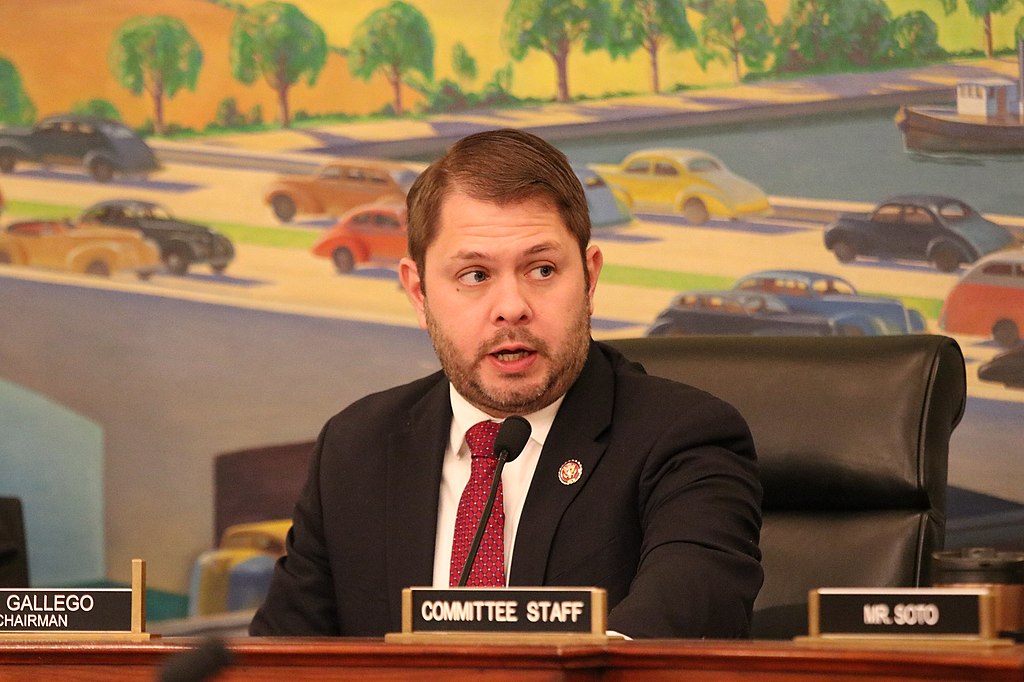
Arizona Democratic Sen. Ruben Gallego is launching an effort to challenge a new Trump Administration immigration policy that could require many green card applicants to leave the United States and complete the process abroad.
According to a report from The Hill, Gallego is not only seeking to overturn the policy itself but is also pursuing a procedural strategy that could make it easier for Congress to reverse the change.
The dispute revolves around a recent U.S. Citizenship and Immigration Services (USCIS) policy affecting how certain immigrants obtain lawful permanent residency.
For decades, many eligible immigrants already living in the United States have relied on a process known as “adjustment of status,” which allows them to apply for a green card without leaving the country. The method has been commonly used by spouses of American citizens, visa holders, and foreign workers who meet federal eligibility requirements.
Under the Trump Administration’s new policy, many of those applicants would instead be required to complete the process through American embassies and consulates overseas; a procedure known as consular processing.
Supporters of the change argue that the policy restores the immigration system to its intended function by reducing opportunities for abuse and strengthening compliance with federal immigration law. They contend that requiring applicants to complete the process abroad creates greater accountability and allows for more thorough vetting.
Gallego’s strategy focuses on how the policy is classified under federal law.
According to The Hill, the Arizona senator wants the policy formally designated as a federal rule rather than simply agency guidance or policy. That distinction matters because rules can be challenged through the Congressional Review Act (CRA), which provides Congress the opportunity to overturn certain executive actions.
Unlike most legislation, CRA resolutions can receive expedited consideration in the Senate and are not subject to the chamber’s usual 60-vote threshold for overcoming a filibuster.
If the policy is ultimately classified as a rule, opponents would gain a more direct path toward repeal. If it remains categorized as agency guidance, congressional efforts to reverse it would face steeper procedural hurdles.
With Republicans controlling Congress and the White House, Democrats have limited options for blocking administration initiatives outright.
Whether Gallego’s effort succeeds remains uncertain. The Hill reported that the challenge faces significant obstacles, particularly given the current political landscape.
Still, the battle over classification could have consequences extending beyond this single immigration policy. A determination that the action qualifies as a federal rule would not only shape the future of the green card process but could also establish a precedent for how Congress reviews similar executive actions in the future.
READ NEXT: Sen. Ruben Gallego Unveils Sweeping Amnesty and Immigration Expansion Plan




















One thing we can absolutely count on, Democrats will always side with the enemy.