



Adversaries of the United States have ramped up partnerships, both in combat and influence operations, in ways that may require the unique intervention abilities of the special operations community to avoid conflict.
Special ops leaders eye alarming levels of adversary collaboration
By Todd South for Military Times
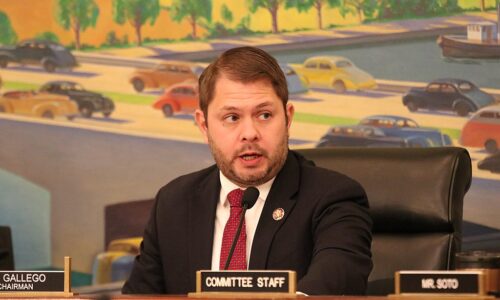
Christopher Maier, the outgoing assistant secretary for Special Operations-Low-Intensity Conflict, said today at a Center for a New American Security event that SOF troops have recently increased work in the competition and crisis phases that often precede an armed conflict.
Christopher Maier, the outgoing assistant secretary for Special Operations-Low-Intensity Conflict, said today at a Center for a New American Security event that SOF troops have recently increased work in the competition and crisis phases that often precede an armed conflict.
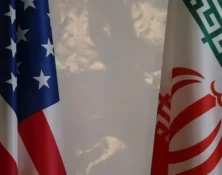
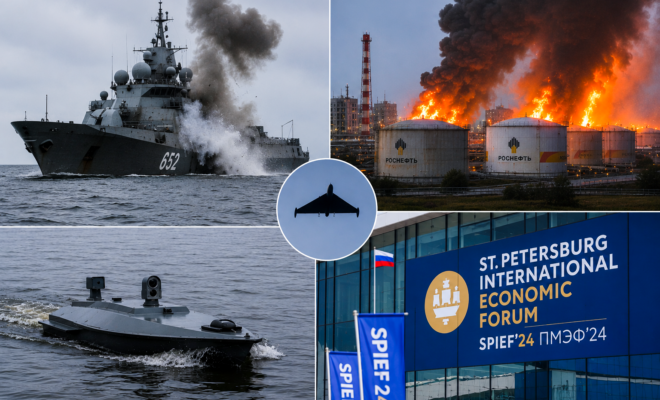
“This is not just Russia fighting Ukraine,” Fenton said. “It’s Russia, backed by Iranian drones, North Korean personnel and indirect Chinese contributions.”
Additionally, nation-state adversaries are teaming with non-state actors to achieve goals. That’s been the case for decades between Iran and militias like Hamas and Hezbollah. It’s also true for the Iranians and the Houthis, who have continued to fire on U.S. and civilian ships in the Red Sea over the past year.
“We’re in a decisive decade,” Fenton said. “The convergence of threats demands a convergence of our own capabilities.”
Military Times reported in 2023 on a West Virginia Army National Guard exercise that brought together personnel from all military branches, local law enforcement, government officials and SOF personnel.
The “Ridge Runner” exercise sought to drop participants into a scenario that would mirror what such forces might face in a European theater now. In some ways, it looked a lot like what forces in Ukraine have encountered since Russia invaded the country in 2022.
The SOF personnel involved in the exercise — mostly Army Green Berets — connected local forces with U.S. military capabilities and other government services as their counterparts in the field assisted those local elements in a simulated fight against an “invading force.”
That exercise is indicative of the larger shift in irregular warfare, a practice that has been given a host of labels in recent decades — “gray zone” conflicts, for example. The Pentagon adopted and redefined the term following a shift in the National Defense Strategy to focus military efforts on countering adversaries rather than counterterrorism and counterinsurgency.
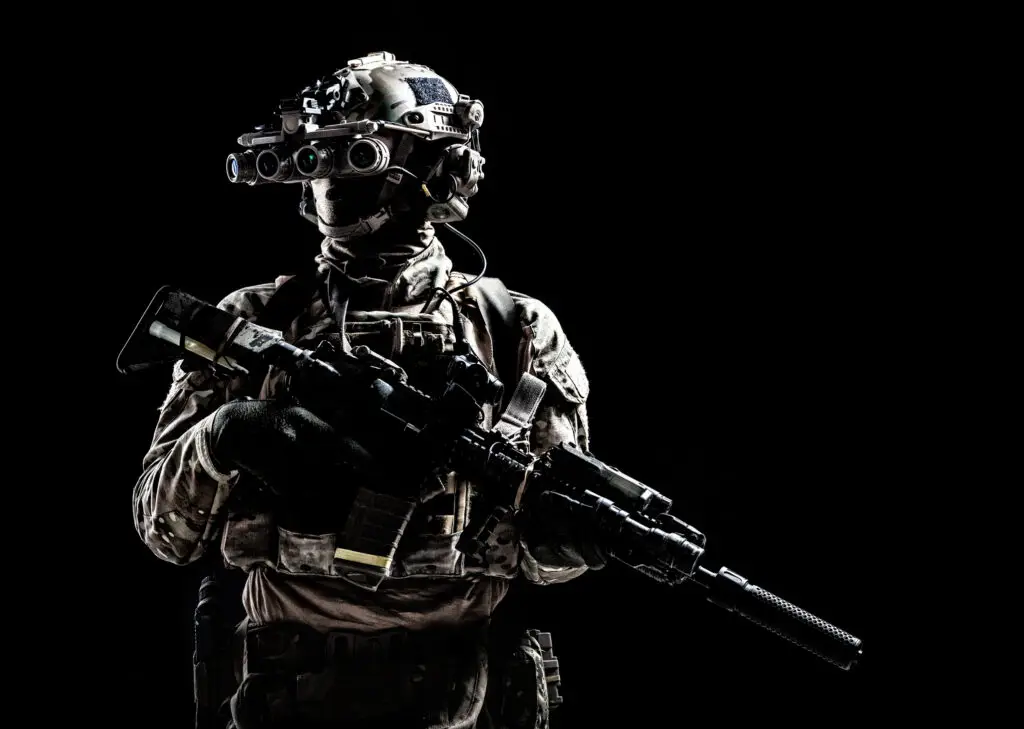
Combinations of psychological operations, civil affairs and special operations personnel now work closely in smaller teams to assist allies in competing with and deterring Russia, China and Iran in their respective areas.
Deterrence is where much of the SOF work will take place in the years ahead, Maier added. And that, he said, will involve SOF “campaigning,” which has not traditionally been the role of the 70,000-strong U.S. special operations community.
A 2023 CNAS report by Becca Waser, a senior fellow in the CNAS Defense program who served as the moderator at the Dec. 18 event, outlined how the think tank’s experts see SOF and conventional forces evolving.
The campaigning approach links civil government resources with military assets and personnel to respond to challenges from Russia or China, or other events that require military action, such as regional conflicts or natural disasters, according to the report.
The CNAS report advises the Pentagon to develop a more tailored campaigning approach specific to the geographical region where forces are operating.
That gives U.S. planners the chance to build military forces in key areas of the Indo-Pacific and Europe. It also lets military forces showcase new capabilities, weapons and tactics to discourage adversaries from initiating conflict.
Lastly, Waser wrote that campaigning in this region-specific way allows U.S. forces to already be in the area when a crisis arises.
About Todd South
Todd South has written about crime, courts, government and the military for multiple publications since 2004 and was named a 2014 Pulitzer finalist for a co-written project on witness intimidation. Todd is a Marine veteran of the Iraq War.
READ NEXT: European Attack Tied To Russia – NATO Country Reacts Fiercely




















“The enemy of my enemy is my friend.” Nothing new about that.
KEEP sticking our NOSE in every counties BUSSINESS , but our own problems !! Not only will the end result be getting it bit off, But also at any moment getting our Behinds BLOWN OFF> WHO ? WHAT ? WHERE ? did USA get the IDEA we are GOD of the World ??? History if openly told . Our closets our full of DEAD SKELITONS LITERALLY !!! EXAMPLE: WWII buying art work, antiques, through CATHOLIC church and SWITSERLAND, from the (GERMAN’s ) which they killed, Stoll, raped , the JEWS for!!! Yet in this HOLLYER than now USA, pay some one to kill somebody YOU are also GUILTY OF MURDER!!!! WE should First get our HOUSE IN ORDER !!! Before calling the POT BLACK. When on top, only place to go ??? Any moment USA is going to get ( CLUSTER FUDGED) and cluster bombs we be the least of our troubles. The three amigos’ ( RUSSIA-CHINA-N. KOREA ) ?? Have all the means too , More soldiers and fighters than CARTER has liver pills. Other than nuclear, We can not fight land base war. We are out numbered : Men-Ships-even minerals to make ammo, If we do not STOP sticking our noses in every ones behinds ? We Will Get the REAL MEANING of BEND OVER KISS YOUR BEHIND Good BY and say YES! another PLEASE !!! Have mercy ! we just pretended to be a DEMO-crat Republic ! we have been just a fellow COMRAD COMIE like you AMEGOS!!!!!!!!!!!!!!!!!!!!!!!!!!!!!!!!!!!!!!!!