





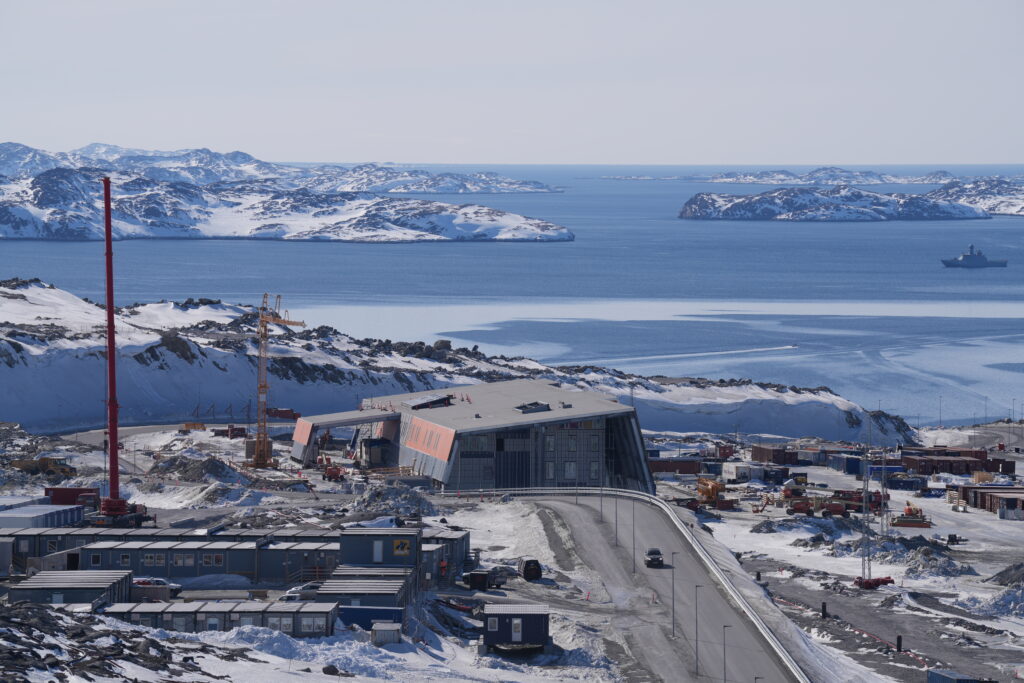
A new poll reveals a surprising development in Greenland’s political sentiment: a majority of its residents reportedly support the idea of joining the United States. Conducted by Patriot Polling, the survey reached 416 participants across the Arctic territory, which is known for its sparse population of 56,000 and its defining mile-thick ice sheet.
As The Hill reports:
According to a poll by Patriot Polling released Sunday, 57.3 percent of respondents approve of Greenland becoming part of the U.S. Just 37.4 percent disapproved of the potential acquisition, and 5.3 percent are undecided about the move.
President-elect Trump has in recent days floated the idea of acquiring Greenland, a Danish territory. He said owning Greenland is an “absolutely necessity.”
While the survey only polled 416 people in Greenland and is the first of its kind, it signals support for Trump’s larger international plans.
Denmark Reacts to U.S. Interest in Greenland
The findings come as Denmark grapples with heightened interest in Greenland from the incoming Trump administration. Danish officials have begun private discussions with President-elect Donald Trump’s team in response to his remarks about potentially acquiring the world’s largest island. While Denmark has firmly stated that Greenland is not for sale, officials have suggested alternative ways to address U.S. security concerns, including the possibility of expanding America’s military presence on the island.
Strategic Significance of Greenland
Greenland’s strategic importance to the U.S. has deep historical roots. During World War II, after Nazi Germany occupied Denmark, the United States swiftly established military bases on Greenland to protect vital shipping routes and check German expansion. The Arctic island played a critical role in weather monitoring during the war. Its value only grew during the Cold War with the establishment of Thule Air Base in 1943, which became a key outpost for missile detection and global security operations under NORAD.
Today, Thule Air Base remains a linchpin of U.S. missile defense and NATO’s Arctic strategy. Greenland’s geographic location has become even more significant amid rising global temperatures and increased interest in the Arctic from powers like China and Russia.
Balancing Sovereignty and Security
Privately, Danish Prime Minister Mette Frederiksen and Greenland Premier Múte B. Egede have sought to avoid public confrontations. They have conveyed to Trump that while Greenland is not for sale, they are open to discussions on strengthening military infrastructure or increasing troop deployments—provided Greenland’s autonomy is respected.
Despite assurances from Denmark, the incoming Trump administration’s interest in Greenland remains a topic of discussion. Outgoing Secretary of State Antony Blinken dismissed the idea of acquiring the territory as impractical, but Trump’s allies in Congress support the president-elect’s stance. Rep. Andy Ogles (R-Tenn.) recently introduced the “Make Greenland Great Again Act,” which would authorize negotiations for Greenland’s acquisition. Ogles framed the proposal as a bold shift from the Biden administration’s foreign policy, emphasizing Trump’s “America First” agenda.
A Strategic Future in the Arctic
Greenland’s critical role in NATO and U.S. defense strategies underscores its importance beyond domestic politics. Regardless of their views on Trump’s Greenland plan, both Danish and Greenlandic authorities recognize the need for close cooperation with the United States. As global powers vie for influence in the Arctic, Greenland’s strategic position continues to attract attention from Washington—and beyond.
Whether Trump’s ambitions to purchase Greenland materialize or not, the island’s role in geopolitical security will remain a focal point in geopolitical affairs for years to come.
READ NEXT: LA’s Lone Responsible Leader Allegedly Framed Before Catastrophic Event
























It seems to be a good deal for all concerned.
Global temperatures are not rising. Actual science vs. “The Science”.