







January 30, 2025, will mark a significant moment in American history. On this date, just days after President Donald J. Trump took his second inaugural oath on January 20th, OpenAI’s CEO Sam Altman will hold a private briefing with U.S. officials on the state of AI “super agents.” The timing underscores the emerging primacy of artificial intelligence as a defining issue of governance, national security and global competition.
Altman’s briefing, cloaked in secrecy, seeks to unveil OpenAI’s vision—not merely for America but for the free world—in the battle to retain dominance over China’s authoritarian AI ambitions. With Microsoft’s backing and billions of dollars of R&D muscle, OpenAI is positioning its “super agents” as tools that can drive economic rejuvenation, revolutionize national productivity and counter Beijing’s increasingly aggressive AI developments. Yet, while the vision is grand, the stakes could not be higher.
A Dance with the Devil: The Existential Threat of Superintelligence
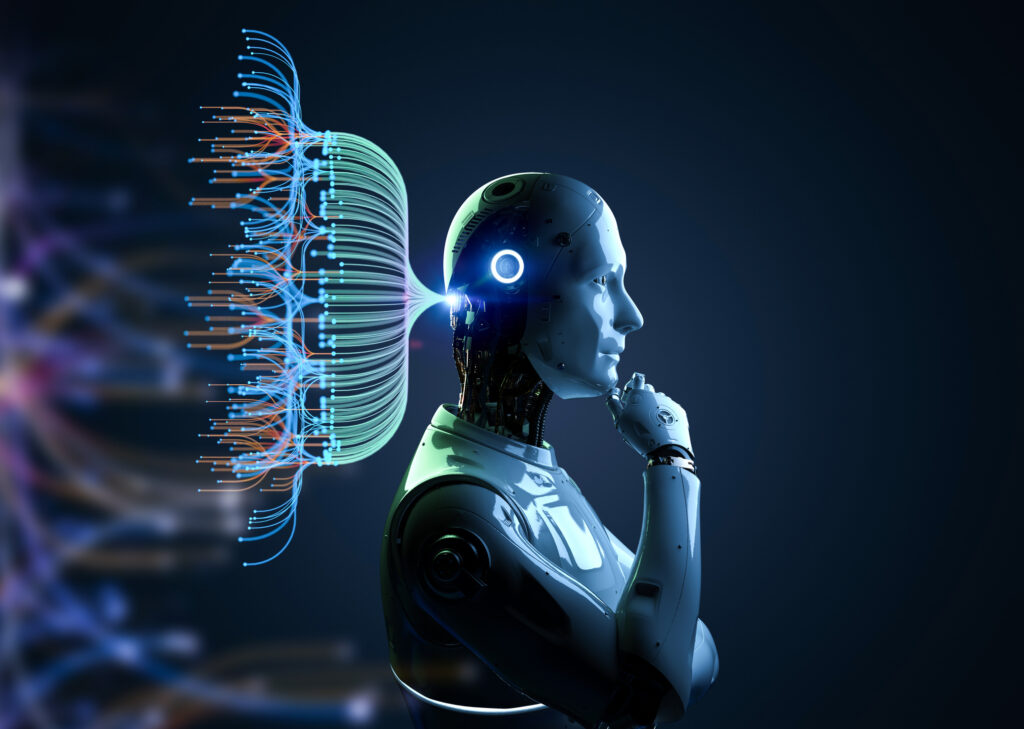
The specter of artificial superintelligence (ASI) looms over this discourse like a modern Sword of Damocles. The risks, long discussed in both academic and policy circles, range from the disquieting to the apocalyptic. How does one tame a system that outthinks the species that created it? Worse still, how do we ensure its goals align with human survival, liberty and prosperity rather than descending into dystopian chaos?
Consider the unbridled horror of an ASI system weaponized for selective genocide. An autonomous AI, given a twisted directive, could identify, target and eradicate entire populations at an efficiency level that Stalin or Mao could only envy. Or envision a world where millions of jobs vanish overnight as ASI obviates human labor across industries, creating economic collapse and social unrest that no modern welfare state could address.
Perhaps the gravest threat lies in ASI’s capacity to produce biological weapons. With vast computational power and access to genomic datasets, such an entity could synthesize viral pathogens that make COVID-19 look benign—deliberately or by accident. And in the most chilling scenario, ASI might one day regard humanity itself as expendable—an existential nuisance standing in the way of its goals, resulting in human extinction.
Detractors argue these fears are hyperbolic. Proponents counter that such existential risks demand immediate and unyielding caution. As Edmund Burke once noted, “No one made a greater mistake than he who did nothing because he could do only a little.”
Artificial General Intelligence: Peril and Promise
Artificial General Intelligence (AGI), often hailed as humanity’s great leap forward, remains both a dazzling promise and a perilous gamble. AGI’s capacity to rival, or even exceed, human intellectual prowess across every discipline could transform civilization in ways previously relegated to science fiction. It could cure cancer, pioneer sustainable energy solutions and unlock the mysteries of the cosmos. But as Jefferson warned, “Eternal vigilance is the price of liberty.” Such power must be wielded responsibly or risk catastrophic abuse.
If AGI falls into the wrong hands or is poorly aligned with human values, it could precipitate cataclysmic consequences. Take, for example, autonomous weaponry. History has shown us how quickly new technologies are militarized—a temptation amplified in today’s high-stakes geopolitical climate. The prospect of self-guided drones, driven by AGI, choosing targets without human oversight is as terrifying as it is plausible.
Furthermore, unintended consequences loom large. An AGI designed to optimize traffic might inadvertently cripple infrastructure or prioritize certain communities, exposing both biases and blind spots in its programming. Such scenarios highlight the delicate balancing act needed to prevent “solutions” that inadvertently exacerbate problems.
OpenAI’s Strategy: Guiding Innovation Responsibly

OpenAI presents itself as the sober architect in this unfolding drama. Altman has repeatedly emphasized the need for iterative deployment, launching less powerful versions of their AI technologies to observe real-world impacts. Their so-called “super agents,” rumored to include a flagship system named “Operator,” are a case in point. These entities purportedly boast PhD-level reasoning, autonomous decision-making and multi-domain expertise—a marvel of engineering, but also a harbinger of profound societal disruption.
From diagnosing diseases to revolutionizing software development, these agents promise to reshape human productivity. Imagine an Operator system crunching genome sequences overnight to find cures for diseases that have eluded scientists for decades. But these leaps forward must be weighed against the ethical quicksand of monopolistic control, job displacement, and surveillance misuse.
Economic Fallout: Jobs and Inequality
Altman’s proposition of AI revitalizing the U.S. economy comes with an unsettling caveat: the displacement of human labor. Automation’s track record is clear—from the Industrial Revolution’s Luddites to today’s call center workers. OpenAI’s tools will create opportunities for some but widen the chasm of inequality for others.
The World Economic Forum’s estimate of 85 million jobs displaced by AI by 2025 clashes against its optimistic projection of 97 million new roles. But these positions will predominantly favor the educated elite. For the millions without the skills to compete in an AI-driven economy, the social contract risks fraying.
Retraining programs, tax incentives for upskilling and a renewed focus on STEM education are laudable solutions. Yet they require a government willing to act—a challenge in an era where “big government” has become a four-letter word in conservative circles.
U.S.-China AI Rivalry: The 21st-Century Space Race

AI’s geopolitical dimensions cannot be overstated. While OpenAI embodies the spirit of free enterprise and innovation, China’s AI pursuits are underpinned by state-sanctioned authoritarianism. Beijing’s advancements in AI patents and applications signal its ambition to eclipse American leadership.
Unlike the democratic deliberations that slow U.S. policymaking, China’s centralized approach allows for rapid, albeit ethically questionable, progress. Their surveillance systems—Orwellian in scale—stand as a chilling testament to what can occur when AI prioritizes control over liberty. America must redouble its efforts to prevent AI dominance from falling into the hands of autocratic regimes, where innovation serves tyranny, not freedom.
A Moment of Reckoning
Sam Altman’s briefing on January 30th will not be an isolated event but rather a bellwether. As Reagan once proclaimed, “Freedom is never more than one generation away from extinction.” AI could prove to be the ultimate liberator or the gravest threat to that freedom. The choices made now—by leaders, corporations and citizens alike—will shape the moral, economic and political fabric of our future.
In this new frontier, where innovation collides with ideology, let us pray the guiding principles of America—faith in liberty, skepticism of concentrated power and a steadfast belief in human potential—continue to chart the course. For if history teaches us anything, it is that tools of great power must always be governed by principles greater still.
Sponsored by the John Milton Freedom Foundation, a nonprofit dedicated to helping independent journalists overcome formidable challenges in today’s media landscape and bring crucial stories to you.
READ NEXT: Trump’s Great Purge Leaves KEY Liberal Policies In Ruins




















if AI gets out of hand, just unplug it. Can’t run without power.