







Why You Need to Be Reading SemiAnalysis
The world is awash in artificial intelligence hype. Every week brings a new chatbot with eerie human mimicry or a fresh generative model capable of conjuring fantastical images. But beneath the digital wizardry lies a hard, immutable reality: AI is not just about code; it’s about silicon, supply chains and infrastructure. Ignore this, and you’re not truly paying attention to the AI revolution at all.
To understand that hidden world—who’s leading, who’s failing and who’s about to get blindsided—there is one indispensable source: SemiAnalysis.
The Essential Intelligence Engine
Dylan Patel’s SemiAnalysis has emerged as the most incisive, unvarnished and technically rigorous examination of the semiconductor and AI industries. It is the go-to resource for engineers, investors, policymakers and executives who actually need to grasp AI’s under-the-hood realities. Unlike the mainstream press or legacy analyst firms, Patel’s research is fearless, data-driven and untethered from corporate PR spin.
If you want to move beyond the breathless headlines and understand AI at the level that shapes trillion-dollar markets, you need to be reading SemiAnalysis.
My Son Reads Every Issue—Here’s Why
This is more than theory for me. My son, a Ph.D. student specializing in AI, is an ardent SemiAnalysis reader. He breathes this world—compute architectures, supply chain dynamics, infrastructure scaling. Every time we talk, he references Patel’s latest work: whether it’s Nvidia’s dominance, AI infrastructure costs or Intel’s strategic missteps.
A subscription isn’t cheap—$500 a year—but as my son insists, it’s worth every cent. Patel’s analysis is not just informing his research; it is shaping the next generation of AI experts. That’s how valuable this insight is.
Exposing the Myths That Distort AI
While most industry analysts regurgitate corporate press releases and financial projections that always lean optimistic, SemiAnalysis takes a different path: it tells the truth. And often, that truth is inconvenient.
Take, for example, the recent claim that Chinese AI firm DeepSeek built an OpenAI-scale model on a mere $6 million budget. Patel and his team didn’t just accept the number at face value; they traced the supply chain, ran the infrastructure costs, and uncovered the real figure: a staggering $1.6 billion in GPU and server investments. That revelation didn’t just correct an error—it sent shockwaves through the industry, forcing investors and policymakers to confront AI’s true costs.
That is the power of SemiAnalysis: it cuts through the fog of hype and delivers quantified, verifiable realities that reshape the AI conversation.
AI’s Bottleneck Isn’t Algorithms—It’s Hardware
The mainstream discussion around AI focuses obsessively on software models—how large, how capable, how “intelligent.” But the real bottlenecks in AI have never been the algorithms; they’ve been hardware, networking and power constraints.
SemiAnalysis specializes in this domain. Patel was among the first to highlight the divide between “GPU-rich” and “GPU-poor” companies, a distinction that has since defined the AI arms race. When OpenAI CEO Sam Altman cites Patel’s analysis on social media, it’s because Patel is delivering insights that industry leaders rely on.
And this isn’t just esoteric knowledge—it shapes billion-dollar decisions. What GPUs should a company buy? Which vendors should they trust? How do they navigate an industry where supply chains are political minefields and a single bad bet can sink an entire company? The most powerful AI executives read SemiAnalysis for a reason.
Independence = Brutal Honesty
Unlike mainstream analysts who massage numbers to please corporate sponsors, SemiAnalysis is independent. There are no advertisers to placate, no big-tech overlords to appease. That means Patel has the freedom to deliver uncompromising, brutally precise evaluations of companies, executives and strategies.
That’s why SemiAnalysis was the first to lay out, in stark detail, exactly how Intel lost its footing in the semiconductor space. While others spoke in vague euphemisms about “execution challenges,” Patel dissected Intel’s supply chain failures, market positioning blunders and the brutal consequences of its missteps. His analysis was prescient, and it’s why investors who listened to him made the right calls.
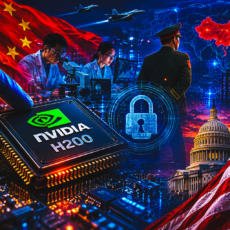
And it’s not just Intel. Whether breaking down Nvidia’s dominance, Amazon’s AI infrastructure play or the latest geopolitical risks in semiconductor supply chains, SemiAnalysis delivers what others won’t: truth.
The Most Important Newsletter in AI and Semiconductor Analysis
For engineers, investors and executives, subscribing to SemiAnalysis isn’t just about staying informed—it’s about staying ahead. In an industry where fortunes are won and lost on the strength of semiconductor supply chains, knowing the truth first is the ultimate competitive advantage.
So if you care about AI—not just as a flashy front-end tool, but as an ecosystem built on silicon, power grids and global strategic maneuvering—you need to be reading Dylan Patel’s SemiAnalysis.
Subscribe now. Read every issue. Stay ahead of the curve.
Because in the AI industry, the people who grasp the truth first are the ones who win.
Follow Dylan Patel
Follow SemiAnalysis
Subscribe:
NOTE: While this reads like a paid post it isn’t; however, I did get a free subscription.
Sponsored by the John Milton Freedom Foundation, a nonprofit dedicated to helping independent journalists overcome formidable challenges in today’s media landscape and bring crucial stories to you.
READ NEXT: China & Russia Target Critical Region – Is The US Falling Behind?






















This article highlights the fact that the higher the technology the more it is going to cost. I always enjoy it when I get so-called “opportunities” for financial gain. My first question is, “How much is it going to cost me?” Everything that is offered comes with a price tag. Anyone who still believes in free lunches are delutioning themselves. AI is promising so much, but once it gets into the hands of government, all bets are off the table. There are two ways to die, 1) by nature or 2) by the government, AI will make it easier to murder people, which will be deemed as “unintended consequences,” which is systemic with anything new and untested as to its toxicity. AI will be touted as the “Savior of civilization,” sorry, every past civilization had their technologies, but none of those technologies could remove human greed, and all those civilizations collapsed, and this last civilization will also collapse but much sooner than past civilizations.