









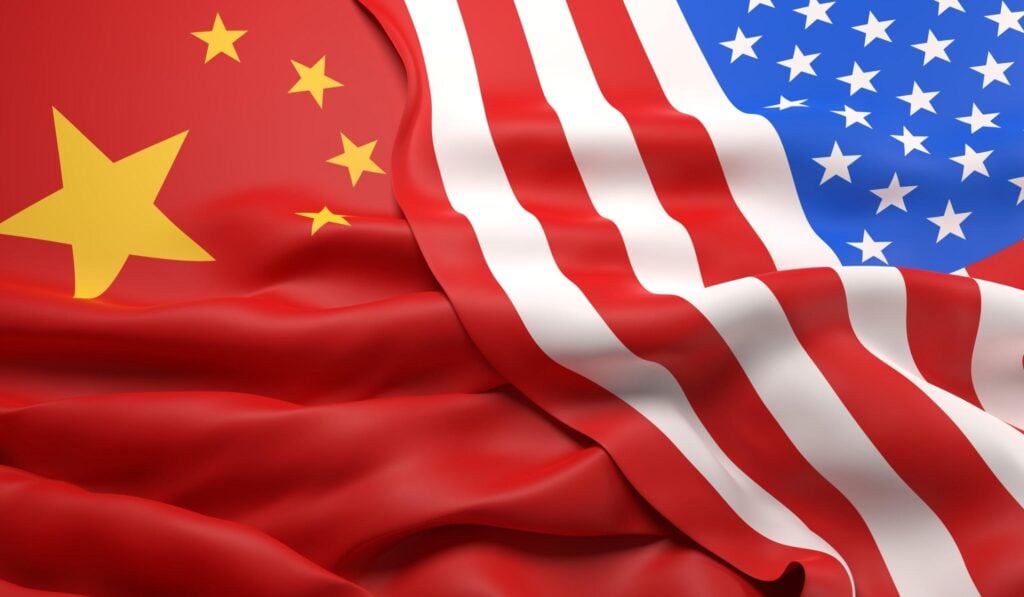
In response to President Donald Trump’s recent blanket tariff on all Chinese imports, China has implemented retaliatory tariffs of its own, targeting key American exports such as coal, liquefied natural gas (LNG), crude oil, agricultural machinery, and large-engine cars. However, experts suggest that these measures will have little to no significant impact on the U.S. economy.
While these tariffs may affect some sectors, U.S. producers are well-positioned to find alternative markets, reducing any potential negative consequences for American consumers or businesses, according to industry insiders.
John Lee, a senior fellow at the Hudson Institute, told the Daily Caller News Foundation (DCNF) that China’s tariffs on U.S. exports are unlikely to have a lasting impact on the American economy. “These are commodities which the U.S. can sell to other markets quite easily,” Lee said. “For example, the U.S. is the world’s largest exporter of LNG and can sell more to the UK and EU.”
The U.S. does not rely heavily on China for natural gas or coal exports, with China accounting for only a small fraction of U.S. exports in these areas. In 2023, the U.S. exported just 2.3% of its total natural gas and 6% of its total coal exports to China, according to U.S. Energy Information Administration (EIA) data.
Trump’s decision to impose tariffs is largely driven by his ongoing campaign against the flow of illegal drugs, particularly fentanyl, from China into the United States. The Chinese Communist Party (CCP) has long been criticized for failing to clamp down on the production and distribution of fentanyl precursors, chemicals that are used to manufacture the drug. These substances often make their way through the southern border, contributing to the opioid crisis in the U.S. that claims thousands of lives every year.
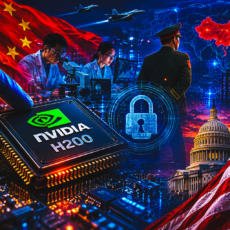
In addition to economic concerns, Trump’s tariffs also serve as a tool for addressing broader geopolitical issues, including intellectual property theft by China. The U.S. loses billions annually due to Chinese piracy of U.S. technology and counterfeiting. In fact, the FBI has estimated that intellectual property theft costs the U.S. between $225 and $600 billion each year.
In response to Trump’s tariffs, China has filed a complaint with the World Trade Organization (WTO), arguing that the U.S. measures are discriminatory and violate international trade rules. According to China’s State Council Tariff Commission, the tariff increases “seriously violate the rules of the World Trade Organization” and harm “normal economic and trade cooperation” between the two nations.
However, the U.S. has been blocking appointments to the WTO’s dispute settlement panel, which could delay or prevent any resolution through the organization. This could limit China’s ability to use the WTO as a venue to resolve the issue, further complicating trade negotiations.
According to Richard Stern, director of the Grover M. Hermann Center for the Federal Budget at the Heritage Foundation, “If there is to be a trade war, the U.S. has a lot more options and weapons than does China.”
READ NEXT: Is Trump 2.0 Going Soft On China?












China has long been the worst trading “partner” in the world. They steal intellectual property and designs. They counterfeit all sorts of products. Won’t allow foreign firms to actually operate freely or to export profits. They don’t buy much of anything from us. If we should have tariffs on anyone China comes first.