



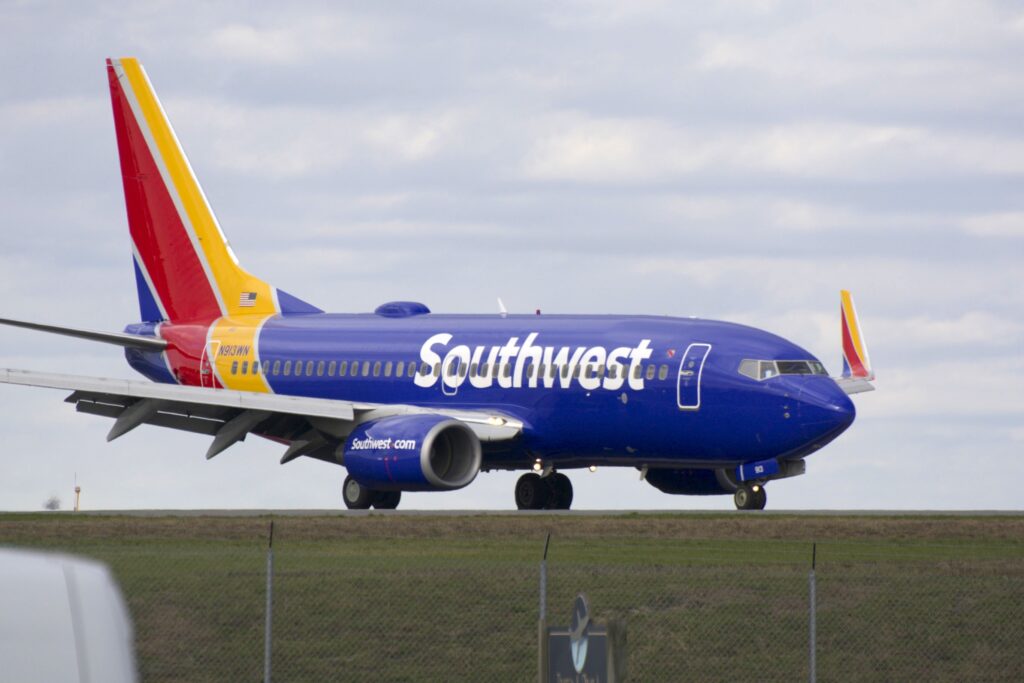
Two planes nearly collided at Midway Airport in Chicago, Illinois, on Tuesday, forcing a Southwest Airlines jet to abruptly abort its landing. The dramatic moment unfolded when a private jet crossed the runway, leaving the Southwest flight with no choice but to execute a touch-and-go maneuver to avoid disaster.
A Pattern of Close Calls?
This incident echoes a similar near-miss at Los Angeles International Airport (LAX) in December, when the Gonzaga men’s basketball team’s charter plane came dangerously close to a Delta jet taking off.
NEW: Planes nearly collide at Midway Airport in Chicago, Illinois, forcing a Southwest plane to abort the landing.
— Collin Rugg (@CollinRugg) February 25, 2025
A small jet could be seen crossing the runway, forcing the Southwest plane to touch and go.
The incident was similar to an incident at LAX in December, where the… pic.twitter.com/P9MzCFgD1l
With aviation safety concerns mounting, the Federal Aviation Administration (FAA) is likely to launch an investigation, as it did with the LAX event. Some worry that recent multiple close calls—and fatal crashes—at U.S. airports signal a troubling trend.
The Internet is Watching
Livestreamed footage from plane-spotting enthusiasts has played an increasing role in documenting these incidents. The real-time evidence captured on social media and livestreams has heightened public scrutiny of airport safety measures.
Recent Aviation Incidents Under Investigation
Several high-profile crashes and collisions remain under investigation by the National Transportation Safety Board (NTSB), including:
-Delta plane crash in Toronto
-American Airlines/Black Hawk collision in Washington, D.C.
-Medevac jet crash in Philadelphia
-Commuter plane crash in Alaska
-Runway collision in Scottsdale
Is Air Travel Becoming More Dangerous?
With so many incidents happening in such a short span, it begs the question:
🔹 Has FAA oversight and airline safety declined?
🔹 Or are we just more aware of close calls now, thanks to social media and real-time reporting?
Despite heightened scrutiny following high-profile aviation disasters, flying remains statistically the safest way to travel. When measuring fatalities per billion passenger miles, air travel consistently ranks at the top due to its low accident rate, strict safety regulations, cutting-edge technology and highly trained crews and air traffic controllers.
Nevertheless, the recent aviation incidents in the United States and Canada have led to increased apprehension about flying among the public.
According to a recent AP-NORC poll, the percentage of Americans who consider flying very or somewhat safe has decreased from 71% in 2024 to 64% in 2025. Additionally, those viewing air travel as very or somewhat unsafe rose from 12% to 20% over the same period.
To manage flight anxiety, specialists recommend understanding the facts about aviation safety, employing relaxation techniques and engaging in distractions during flights.
This is a breaking news story. Please check back for updates.
READ NEXT: Key Trump Ally Pursuing Revolutionary Proposal: ‘Private Army’ Coming Soon?