




In addition to a lax approach to operational security (OPSEC) by using a nongovernment commercial messaging service (Signal app) to debate a sensitive military operation on a chat that inadvertently included a lefty journalist, the embarrassing leak reveals the Trump team’s overall thinking and approach to national security decision-making.
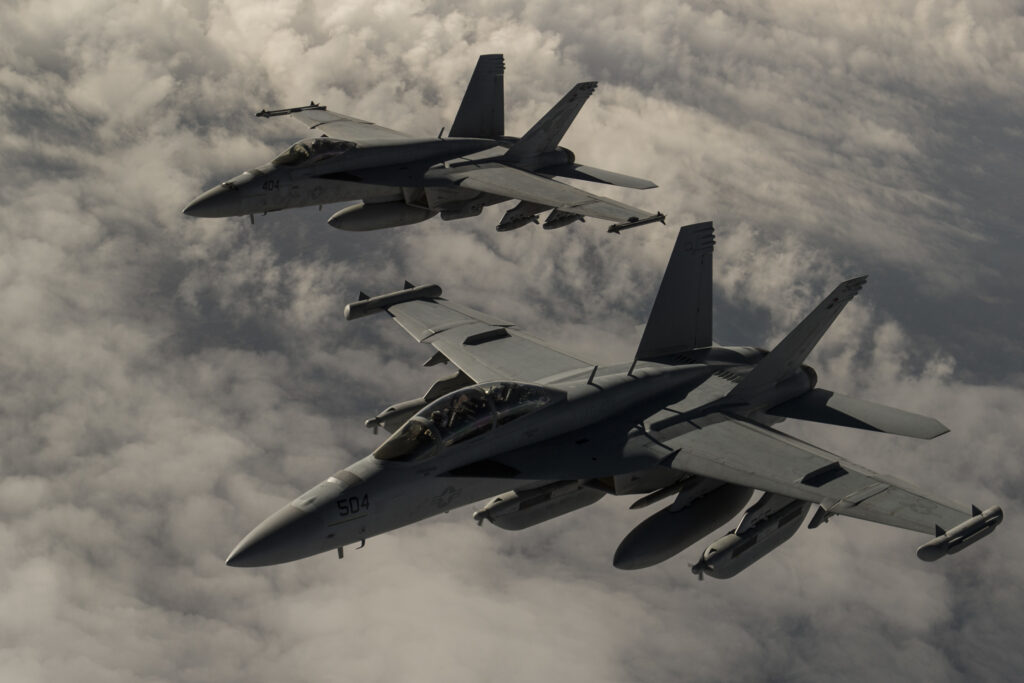
The sensitive chats spanned days and reportedly included specific information about weapons packages, targets and timing to be used in airstrikes against Yemen’s Houthi terrorists. This, according to Atlantic magazine editor Jeffrey Goldberg, who was mistakenly added to the chat by a staffer for Trump’s National Security Advisor Mike Waltz.
And of course, Goldberg sensationalized it.
American war planning usually takes place in highly secure facilities. But the Trump administration planned its strikes on the Houthis using a group chat—and accidentally included The Atlantic’s editor in chief, @JeffreyGoldberg. https://t.co/jvBzeJwEuy
— The Atlantic (@TheAtlantic) March 24, 2025
The chat group listed 18 key Trump advisors, including Waltz, Defense Secretary Pete Hegseth, VP JD Vance, CIA Director John Ratcliffe, Director of National Intelligence Tulsi Gabbard, Treasury Secretary Scott Bessent, special envoy Steve Witkoff and a user identified as “MAR,” likely to be Secretary of State Marco Rubio.
Senior-level, highly classified discussions normally occur in “The Tank,” a secure conference room at the Pentagon, or in the White House Situation Room, or at least in a secure SCIF (Sensitive Compartmented Information Facility), or over secure government channels designed for top-secret and above information.
While many commented on how nutty it was to have added a journalist to the sensitive chat, just as problematic was the use of Signal for allegedly conducting secret discussions about imminent military action, a serious breach of security protocols governing the handling of classified information.
No war plans and no classified information.
However, White House officials defended the Signal chat, with Hegseth claiming on Monday that “nobody was texting war plans.” Trump press secretary Karoline Leavitt also said war plans were not discussed and “no classified material was sent to the thread.”
Director Gabbard says there was no classified material on the group chat. Sen. Warner asks why it can’t be shared with the committee then.
— Kaitlan Collins (@kaitlancollins) March 25, 2025
However, no one on Trump’s NATSEC team has agreed to share the texts publicly or with Congress.
Gabbard claims "there was no classified materials that was shared in that Signal chat." pic.twitter.com/gJP4mX7IlL
— Aaron Rupar (@atrupar) March 25, 2025
Still, the leaked texts can already be partly read as released by The Atlantic. And nothing classified seems to be on the thread.
If that is true, then the entire issue is less damaging than first reported. The situation, Trump said, was “the only glitch in two months, and it turned out not to be a serious one.” (RELATED: Trump Responds To Key Adviser’s Huge Mistake)
Still, according to Goldberg, Hegseth posted a “TEAM UPDATE” which included “operational details of forthcoming strikes on Yemen, including information about targets, weapons the U.S. would be deploying, and attack sequencing,” which Goldberg chose not to share publicly.
Nevertheless, even if classified information wasn’t transmitted, the chats were still highly sensitive. And even though Signal is a secure encrypted messaging app, I don’t know if it is impervious to hacking by sophisticated nation state cyber actors like China, Russia, Iran or North Korea.
And several GOP lawmakers agree. Two of them posted on X.
Rep. Mike Lawler (R-N.Y.) said: “Safeguards must be put in place to ensure this never happens again.”
Rep. Don Bacon (R-Neb.) said that the messages should not have been shared on unclassified systems, adding that our enemies are likely monitoring Hegseth’s personal phone.
Despite the embarrassment, and his own frustration (President Trump reportedly privately asked aides on Monday how Waltz could be so sloppy), Trump publicly stood by Waltz over his error, reported NBC News.
“Michael Waltz has learned a lesson, and he’s a good man,” Trump said Tuesday.
When asked about how Goldberg came to be added to the Signal chat, Trump said, “It was one of Michael’s people on the phone. A staffer had his number on there.”
Trump added that Goldberg’s presence in the chat had “no impact at all” on the execution or security of the strikes.
Meanwhile, the incident opened a window into Team Trump’s national security decision making and discussions, as well as policy differences within the administration.
As The Wall Street Journal reported:
Vice President JD Vance was skeptical of the need to strike the Houthis, who have attacked shipping in the Red Sea for over a year. Little U.S. trade passed through the Suez Canal, connecting the Red Sea to the Mediterranean, whereas “40 percent of European trade does,” he texted.
Attacking the militants, Vance argued, would benefit Europe far more than the U.S. and might lead to a spike in oil prices. “I am not sure the president is aware how inconsistent this is with his message on Europe right now,” he said. While he would support the consensus of the top officials in the chat, Vance said, “I just hate bailing Europe out again.”
Defense Secretary Pete Hegseth and an account belonging to “S.M.,” apparently the initials of senior White House aide Stephen Miller, agreed with Vance’s criticism of Europe.
[“VP: I fully share your loathing of European free-loading.] “It’s PATHETIC,” Hegseth said, though he recommended moving forward with the strikes instead of delaying the attack another month, as Vance suggested. The debate about the attack could leak, making the administration appear “indecisive,” or Israel could strike first, Hegseth said.
Hegseth added:
This [is] not about the Houthis. I see it as two things: 1) Restoring Freedom of Navigation, a core national interest; and 2) Reestablish deterrence, which Biden cratered. But, we can easily pause.
Then a user with the initials SM—likely to be Stephen Miller, Trump’s deputy chief of staff for policy at and a close Trump adviser chimed in by suggesting the U.S. expects some recompense from its allies who benefit the most for carrying out the strikes.
Jewish Insider reported SM stating:
As I heard it, the president was clear: green light, but we soon make clear to Egypt and Europe what we expect in return. We also need to figure out how to enforce such a requirement. EG, if Europe doesn’t remunerate, then what? If the U.S. successfully restores freedom of navigation at great cost there needs to be some further economic gain extracted in return.
As far as we can see the incident has not had any effect on the ongoing U.S. strikes against the Houthis. Expect them to continue unabated. Expect also that the Democrats will shriek about the issue as possible to hurt Trump, but it will eventually fade away.
The opinions expressed in this article are those of the author and do not necessarily reflect the positions of American Liberty News.
READ NEXT: Superstar Athlete Learns Fate After Seeking Vengeance For Son [VIDEO]














So how does the editor in chief of a major publication accidentally get included here? Somebody needs to be fired right away.
Inside Job
Planned
Accident
NOT vetting those on list use
X check users
Hacked
If any of that stuff was classified, it was the most useless text ever. As far as their thinking on Europe, they are correct. There are some European leaders that are both condescending and ungrateful. Ukraine is NOT a NATO member, so this is a European problem, not ours. The US has shouldered the majority of European security for way too long. Time for Europe to pony up!