






If a member of Congress is not present to vote, can we say they are truly representing their district? The notion may sound quaint in the digital age, where everything from board meetings to medical appointments is one Zoom link away. But Congress is not a telehealth clinic. It is not a tech startup. And representation is not a remote job.
This premise is not rhetorical nostalgia; it is constitutional logic. Article I, Section 5 of the U.S. Constitution states that “a majority of each [House] shall constitute a Quorum to do Business.” Historically, and by longstanding interpretation, this has meant physical presence. The Supreme Court in United States v. Ballin (1892) emphasized the limits placed by the Constitution on the rules each House may adopt. The requirement for presence, then, is not a ceremonial relic but a structural feature of representative government.
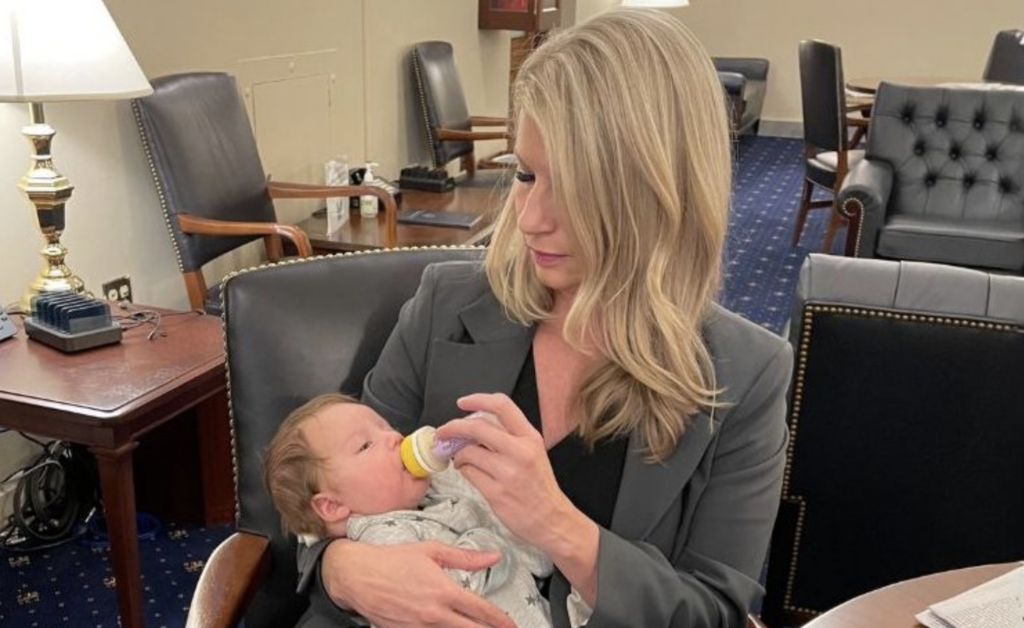
Why, then, the renewed push for proxy voting? The latest effort comes under the euphemistic title of the “Proxy Voting for New Parents Resolution,” co-sponsored by Representatives Pettersen, Luna, Jacobs and Lawler. The proposal aims to allow new parents to vote remotely for up to 12 weeks after the birth of a child. The rhetoric is inclusive, compassionate and, in some circles, politically savvy. Yet its implications stretch far beyond new parenthood. If passed, it will enshrine into House procedure the principle that physical absence is compatible with the exercise of legislative power. It is not.
Serving in Congress is not a right. It is not an entitlement granted to every citizen, irrespective of circumstance. It is a duty undertaken for a term of twenty-four months, under conditions that are known in advance. Those conditions include the requirement to be present in Washington, D.C. This is not an arbitrary expectation. It is the logical outcome of a system in which one citizen is tasked with representing hundreds of thousands of others who cannot themselves be present. Representation is a matter of presence because governance is a matter of deliberation, and deliberation demands engagement—not just in casting votes, but in participating in debates, hearings, amendments, negotiations and hallway conversations that never make the C-SPAN feed but often determine the shape of the law.
The argument from tradition is not a weak one. For over two centuries, every floor vote in the House has required physical attendance. Proxy voting was prohibited in committee work under Speaker Gingrich for good reason: it led to abuses, allowed absenteeism to flourish and weakened the institution’s integrity. When Speaker Pelosi resurrected the practice during the pandemic, the circumstances were indeed exceptional. But to extend that emergency measure into routine governance is to normalize absenteeism. The Constitution, however, does not recognize convenience as an excuse for dilution.
One might object: isn’t technology capable of safeguarding the vote, maintaining security, and ensuring that members can participate fully from afar? Possibly. But capability is not the measure. Integrity is. And integrity is compromised when legislative power is exercised without accountability. In-person voting is public, observable and concrete. Members rise, walk to the well and cast their votes before the House and the nation. This is not symbolism; it is substance. It is how constituents know their representative is doing the job—not merely holding the title.
Proxy voting invites a parade of practical and philosophical complications. If one member can cast another’s vote, can they cast three? Ten? What of the inevitable political pressures? Who decides whose vote is counted when proxy directions conflict with floor debate outcomes? These are not idle hypotheticals; they are structural instabilities. At its worst, proxy voting transforms the House into a ghost legislature, where a few active members wield disproportionate power over the legislative record.
Moreover, proxy voting undermines equality. It assumes that certain circumstances—parenthood, illness, travel—justify absenteeism while others do not. What about members dealing with constituents after a natural disaster? Or those buried in district emergencies? If physical presence becomes optional for some, it becomes inequitable for all. The House becomes not a chamber of equals but a tiered assembly, where rules flex for favored circumstances.
No one disputes the importance of family. No one belittles the challenges of parenthood. But these facts, important though they are, do not redefine the job. Members who choose to expand their families while in office deserve our support, but not at the cost of eroding a constitutional institution. The solution is not to lower the demands of office, but to arrange one’s life around the known demands. Congress is not a lifelong career. It is a term-bound mission. There is a time for everything under the sun—perhaps 12 weeks of new parenthood is not the time to serve in Congress.
There is a deeper reason to insist on presence. It is not merely procedural. It is philosophical. Democracy depends not just on the casting of votes, but on the visible, tangible engagement of its representatives. The House is not a thought experiment. It is a room. A physical room, where presence matters because persons matter. The work of a republic is done not by algorithms, not by video links, but by men and women showing up, standing up and speaking up.
If Congress were merely a place to register opinions, perhaps proxy voting would suffice. But it is not. It is the locus of national will, and the visible commitment of its members is a signal to the people that the system is real—that it demands something of those who wield power. If we dilute that demand, we dilute the republic.
Some will call this view archaic. They will say the future is flexible, the modern workplace is hybrid and the electorate demands compassion. But the question is not whether the institution should be compassionate. It is whether it should remain constitutional. And on that score, the answer is unambiguous. The House must be composed of members who are there. Literally there. Not figuratively. Not virtually. Actually present.
The temptation to adjust constitutional institutions to meet personal convenience is not new. But when indulged, it rarely ends where it begins. Today’s 12 week exception becomes tomorrow’s rolling absenteeism. The House was not designed to accommodate every life circumstance. It was designed to represent the people through those able and willing to be present in the chamber. That design is not broken. It is simply demanding. And so it should be.
Sponsored by the John Milton Freedom Foundation, a nonprofit dedicated to helping independent journalists overcome formidable challenges in today’s media landscape and bring crucial stories to you.
READ NEXT: Russia Caught Sabotaging Trump? Powerful Weapons Seen Moving Through Ukraine
























“ If passed, it will enshrine into House procedure the principle that physical absence is compatible with the exercise of legislative power. It is not.”
We should be able, by now, to recognize the Lefts’ schemes.
This is one, obviously. Such a concession will be expanded in the future…for THEIR benefit only.
Incremental skullduggery!
Leftist incremental skullduggery!
We’ve seen this is how they operate.
PRAISE GOD!
She and other women (regardless on what side of the imaginary aisle they reside) have no business in a civil leadership position of any kind to begin with.
Mothers should have their babies at home and raise them at home, not for just 12 lousy weeks, essentially deserting them thereafter to some surrogate mother to raise them on her behalf.
“Moreover thou shalt provide out of all the people able MEN, such as fear God, MEN of truth, hating covetousness; and place such over them, to be rulers….” (Exodus 18:21)
“As for my people, children are their oppressors, and women rule over them. O my people, they which lead thee cause thee to err, and destroy the way of thy paths.” (Isaiah 3:12)
“But I suffer not a woman to … to usurp authority over the man….” (1 Timothy 2:12)
This is not to say that the men in positions of civil leadership are any more biblically qualified than are today’s women – they’re not.
You can thank Article 6’s Christian test ban (by which mandatory biblical qualifications were likewise eliminated) on both counts.
For more regarding Article 6’s Christian test ban, see Chapter 9 “Article 6: The Supreme Law of the Land” of free online book “Bible Law vs. the United States Constitution: The Christian Perspective” at bible versus constitution dot org. Click on the top entry on our Online Book page and scroll down to Chapter 9s.
Then Chapter 28 “Amendment 19: The Curse of Women’s Suffrage.”
All politicians state federal are to be present when talks votes are being done and anything they want passed must be read by all not pass it then read it No, all must read any bill front to back, they get paid to be there and they better be, miss 3 times must be put on notice they will lose the jobs, we can’t not just show up to work and these people are paid way to much not to attend so No more leave of absence unless in hospital, or a very good excuse so then they have to wait to vote till all are available
If you would sacrifice your national security for convenience you don’t need to vote. Good people died to give you that wight.