






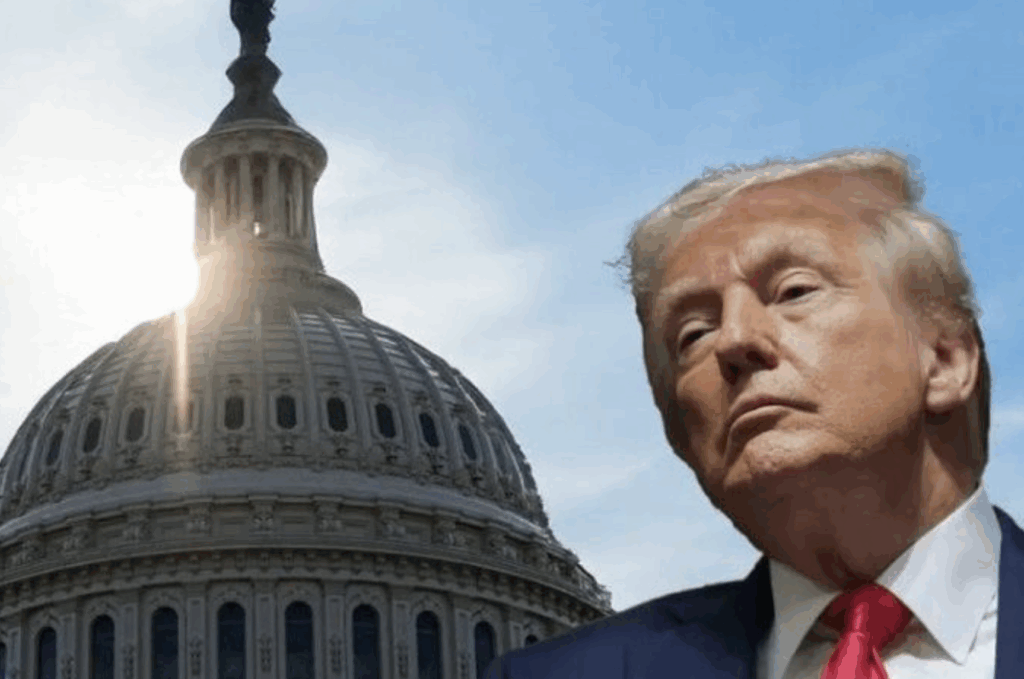
The classical philosopher Hesiod once wrote that “moderation is best in all things,” but in American politics, the lesson is often inverted: moderation is what remains when nothing better can be done. Such is the predicament Republicans face with the Big Beautiful Bill that passed the House Budget Committee on May 18, 2025. The bill is flawed, to be sure. It does not slice the federal budget with the rigor many conservatives rightly demand. But it is nonetheless essential. Refusing to pass this bill on grounds of ideological purity would not advance the cause of limited government, it would merely stall the economic revival President Trump is poised to deliver.
Let us begin with first principles. The central conservative claim, borne out in practice, is that prosperity follows from liberty, and liberty from limited, constitutional government. Since Reagan, and more recently under Trump, this principle has found concrete expression in the form of tax relief, deregulation, and national strength. The Big Beautiful Bill extends the Trump tax cuts of 2017, which were not a mere gesture but a profound structural reform. According to the Council of Economic Advisers, the 2017 cuts led to a $5,000 increase in real median household income and a 4.9 percent rise in wages in the two years after passage. This is not trickle-down rhetoric, but economic evidence.
Moreover, extending these cuts is not simply a nostalgic nod to past success. The Tax Foundation projects that doing so could increase long-run GDP by 0.6 percent, potentially creating over a million jobs. Critics warn that this would add roughly $4 trillion to the deficit over ten years, but such estimates are made “on a conventional basis”, that is, assuming the cuts have no growth effects. This is absurd. When working families keep more of what they earn, when small businesses invest rather than comply, growth follows. It is not merely a possibility. It is historical fact.
Yet fiscal conservatives have another worry: spending. On this front, the bill is less ambitious than some desire, but far from feckless. It proposes over $1.5 trillion in spending cuts across a decade. Medicaid work requirements, long a policy goal of Republicans, are set to save $880 billion alone. These are not symbolic changes. They reflect a movement away from dependency and toward personal responsibility, the moral core of any serious welfare reform.
Some object that the cuts do not go far enough. They are right, in a vacuum. But in politics we do not legislate in vacuums, we legislate in Congress. The House stands at 220 Republicans to 215 Democrats. The Senate, 53 to 47. These numbers are not mandates, they are margins. In such a climate, the choice is not between this bill and a better one. It is between this bill and no bill at all.
Consider the likely alternative. Failure to pass this reconciliation bill would fracture the Republican coalition and open the door to Democratic counterproposals through regular order. Democrats would use the opportunity to derail border security measures, restore green energy handouts, and chip away at the tax relief provisions conservatives champion. Unity is not simply a virtue, it is a necessity. As President Trump learned in his first term and now again in his second, no agenda survives a divided party.
To their credit, Republican leadership has shown flexibility. Speaker Mike Johnson and Majority Leader John Thune have already worked to accommodate divergent factions within the GOP. Fiscal conservatives like Rep. Chip Roy and Rep. Ralph Norman seek deeper Medicaid cuts and quicker implementation of work requirements. Moderates like Rep. Nick LaLota want relief for constituents buried under SALT caps. The leadership has responded. Proposals now include accelerating work requirements to 2027, trimming Diversity, Equity, and Inclusion (DEI) programs from federal agencies, and offering a temporary SALT deduction increase to $30,000 for joint filers, offset elsewhere.
Some will say this amounts to horse-trading. But in a republic, politics is not an abstract exercise in purity. It is a negotiation among free citizens with competing interests. The key is to anchor those negotiations to enduring principles: liberty, responsibility, security. This bill, imperfect though it is, aligns with those principles.
Critics may also balk at its timing. With deficits soaring and debt eclipsing GDP, is now the moment for any bill that does not slash the budget? Yet this objection rests on a category error. Growth is not the enemy of debt reduction, it is its prerequisite. One does not shrink a deficit merely by subtracting. One must also grow the denominator. When the economy expands, revenues rise even without tax hikes. The 1990s boom, the Reagan recovery, the post-2017 uptick under Trump, all demonstrate this.
Still, skepticism is not irrational. The national debt is not a fictional problem. But the correct response to looming debt is not legislative paralysis. It is strategic advance. Pass this bill, reap its economic benefits, then return to the battlefield for deeper reforms. Conservatives should remember their own wisdom: never let the perfect be the enemy of the good.
A final word must be said about political capital. President Trump, having returned to office with a clear mandate, must deliver results quickly. Delay risks not just legislative failure but electoral defeat. If Republicans cannot govern with unity and resolve, the American people may rightly ask why they should trust us with even a razor-thin majority, let alone a broader one. The Biden administration eroded public trust through inflation, porous borders, and administrative overreach. Trump now governs with a promise of restoration. But restoration requires tools. The Big Beautiful Bill is a tool. It may not carve every desired detail into the marble of policy, but it breaks the stone. Passing it gives us a fighting chance to deliver economic revival, border security, and fiscal sanity before the 2026 midterms. Failure, by contrast, would embolden the Democrats and risk ceding control of Congress just as the restoration project begins to take root.
In the end, the argument is simple. Supporting this bill is not a concession to mediocrity. It is a declaration of intent. It says: we will govern, we will grow, we will secure the border, and we will not lose momentum to internal squabbles. Conservatives who understand the stakes should act accordingly.
If you enjoy my work, please consider subscribing: https://x.com/amuse.
Sponsored by the John Milton Freedom Foundation, a nonprofit dedicated to helping independent journalists overcome formidable challenges in today’s media landscape and bring crucial stories to you.
READ NEXT: Movie Director’s Unexpected Claim About Malia Obama Draws Attention
























Trump proved that you have to spend money to make money.
We will have 3 more years to improve on this bill.
If the Republicans stagnate again like the did on his first term, it will same old same old with no good getting done.