

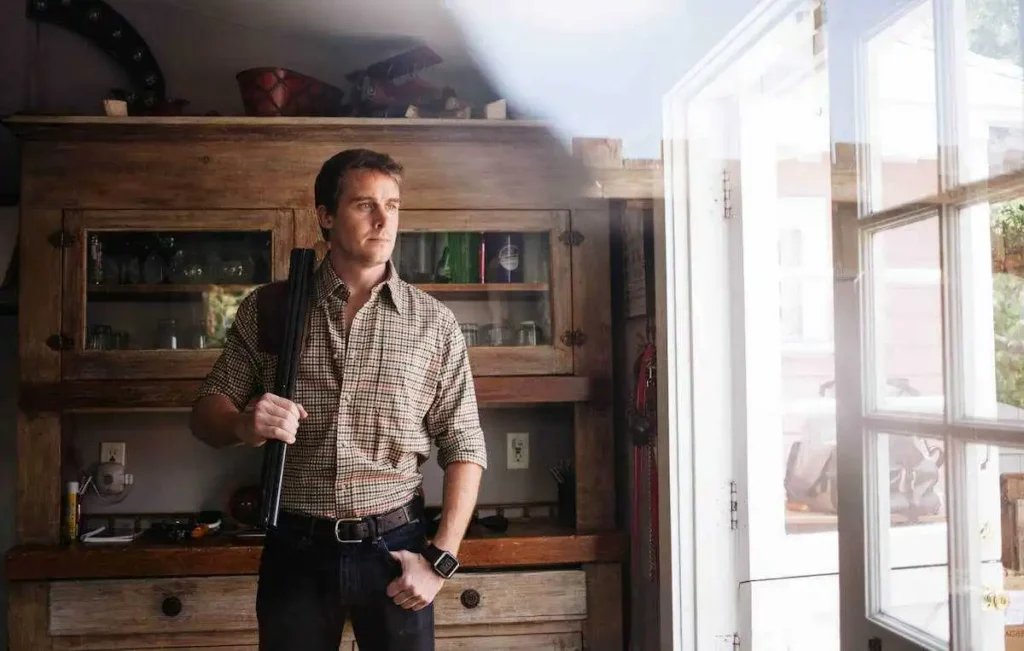
Via Guns America by S.H. Blannelberry
The Supreme Court recently allowed the Trump-era ban on transgender service members to go into effect, reigniting debates about personal freedoms, trust in public institutions, and the role of gun rights advocates in social issues.
This ruling permits the discharge or barring of individuals diagnosed with gender dysphoria from military service, prompting discussions about what this means for LGBTQ Americans and those who defend constitutional freedoms.
Wes Siler (follow on Substack), an outdoorsman, prominent 2A advocate, and Montana Senate candidate known for bridging communities, weighed in on the controversy in an exclusive correspondence with GunsAmerica:
“If a person is dedicated to protecting the freedoms promised to all Americans, and can pass the requirements necessary, why shouldn’t they be allowed to serve their country?” Siler asked pointedly.
Siler’s experiences with marginalized communities, especially LGBTQ youth, have shaped his understanding. Working directly with homeless youth, many of whom were transgender, he emphasized a truth: “Trans people are people, just like everyone else. If there’s anything that makes them different, it’s the challenges they face.”
Many believe those challenges are substantial. Trans individuals face a suicide risk 19 times greater than the general population and government-targeted discrimination can exacerbate this risk dramatically—by as much as 72 percent, according to Siler.
Addressing whether Trump’s transgender military ban erodes trust between LGBTQ Americans and public institutions, Siler remarked:
“It’s a remarkable testament to strength of character that people from a community targeted for hatred and discrimination would dedicate themselves to serve the very people who discriminate against them. That’s exactly the kind of person who has the capacity to lead.”
But should gun-rights organizations speak out more forcefully about such issues, or would that be outside their scope? According to Siler, it aligns squarely with their mission:
“The purpose of the Second Amendment is to give Americans the ability to defend their other rights. Any organization claiming to stand for 2A must also acknowledge the importance of the rights it was written to protect.”
For Siler, there’s no contradiction between robust 2A advocacy and pushing back against policies that marginalize LGBTQ individuals. In fact, he views self-defense as fundamental for those facing the highest risks:
“Trans people are four times more likely to be victims of violent crime, with risks compounded for women and people of color. A Black trans woman faces a greater threat of violence than virtually any other American. If anyone embodies the necessity of the Second Amendment for self-defense, it’s the trans community.”
Reflecting broadly on the issue, Siler highlights a historical pattern that should be considered:
“History’s villains have always risen to power by dividing cultures against themselves, persecuting those least able to defend themselves. The persecutions faced by Christians in ancient Rome or Jews in 1930s Germany are reminders playing out today with trans people and immigrants. History’s lessons are clear; it is our responsibility to learn from them.”
This intersection between LGBTQ rights and Second Amendment advocacy isn’t new, but maybe now, in light of recent developments, it demands renewed focus.
I mean, what do you think? Do you agree with Wes? Or do you support Trump’s transgender military ban?
Also, should pro-2A organizations actively engage in this dialogue, or does it stretch beyond their scope?
Read in its entirety at gunsamerica.com.
READ NEXT: Elon Musk Slams ‘Disgusting’ Trump Win — White House Responds

















The US Military has never been and still is not the place for social experiments. Some might want to actually do a little research in the DSM IV and V, and read peer reviewed articles concerning this condition. The US military is no place for the related comorbidities involved.
Nobody runs around hating this “community”. They are trying to make a statement in their lives and that should be of some credit to some of them. We have always had communities of transvestites, where men (and women) felt more comfortable in the clothing of the opposite gender. But even this wasn’t always done in public life, but in their own private lives. These days, unfortunately, it has become somewhat of a fad as people seek a role for themselves in society. This becomes a major decision, and eliminates certain avenues, as we almost always sacrifice some aspects of our lives in order to reach certain goals that we desire. The basic concept is that we can’t have it all. It’s like being a football player vs. the star quarterback…the piano bar player vs the concert pianist, a dance teacher vs a prima ballerina. You may give up competitive sports if you won’t compete against your genetic gender players, and the military is out if you won’t use any masculine abilities in order to succeed. We make a choice, which we have the right to, but in making that choice, we have to sacrifice some things that we have now closed ourselves off from. Reality sets in here. This is no longer a game, but a game-changer. There are consequences. When we buy a house, we now have a lifetime mortgage to pay; when we have children, we are now committed to a lifetime of responsibility. These things cut off much of what we would like to do in life, but can no longer do, because we made new decisions and have taken on new responsibilities. A trans person takes on a responsibility that will affect the rest of their lives and these decisions eliminate many of the things they might otherwise love to do. The objective is that they must face reality, realize that they are now limited in their lives, and accept it as a result of certain decisions. When the group learns to live by their decisions, they will gain more respect and be less looked at negatively.
I definitely agree with the transgender military ban as being very rational/practical. Not sure I understand the point of this article. Seems a bit of a stretch to tie that to 2A rights. Has anyone proposed denying members of the LGBTQ community their second amendment rights because they are banned from military service?
The issue isn’t over LGBTQ rights, but over members of this group, particularly “trans” individuals, to serve without exceptional expense of surgery followed by continuing medical needs. And this doesn’t even consider the jeopardy they face if captured by certain of our potential enemies. I think that the opponents are misguided in their opposition and show a lack of understanding of the needs and requirements of military service.