The U.S. Air Force has deployed at least 28 aerial refueling tankers across the Atlantic, according to flight tracking data first reported by The War Zone. The movement signals a heightened state of military readiness as fears of a full-scale war between Israel and Iran continue to escalate.
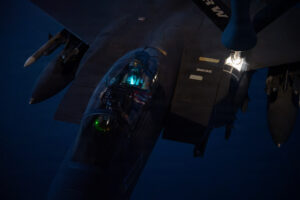
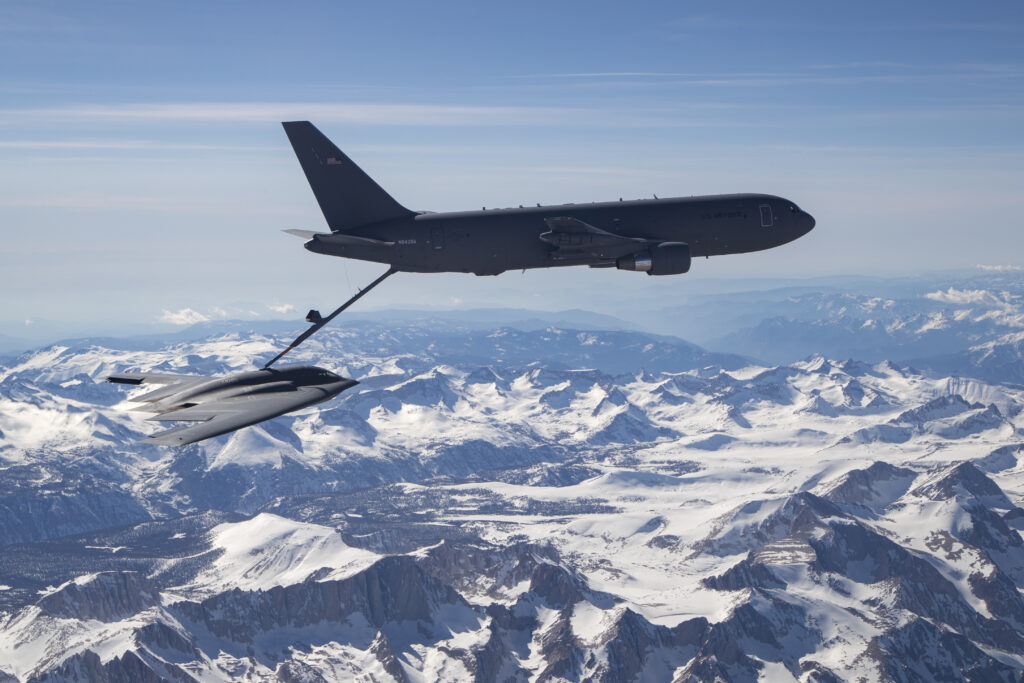
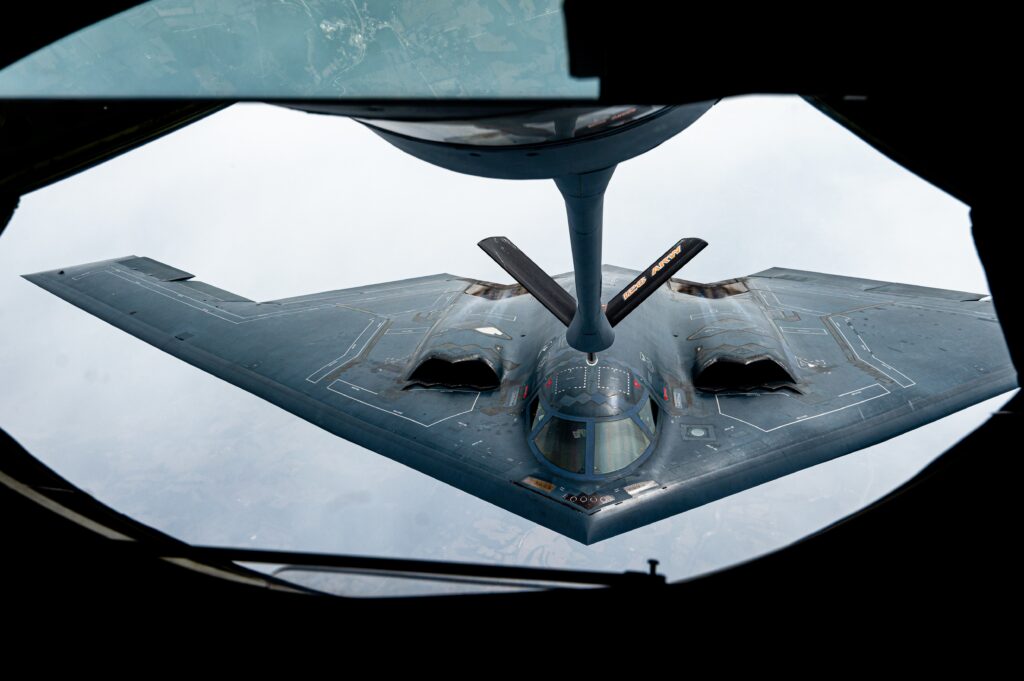
Aerial refueling tankers — including KC-135R Stratotankers and KC-46 Pegasus jets — are critical for sustaining long-range air operations. The revelation of such a large formation crossing the Atlantic on Sunday night suggests the U.S. may be preparing to support extended missions, either directly or in support of Israeli forces.
Pentagon officials have not publicly commented on the tankers’ mission. However, the deployment follows Israel’s recent preemptive strike on Iranian targets and a marked increase in cross-border hostilities between the two nations.
Military analysts caution that the repositioning does not necessarily indicate imminent U.S. combat involvement. However, as The War Zone reports, it represents a significant logistical shift that could enable rapid response or bolster deterrence efforts in the region:
While tanker movements in this direction are far from abnormal, such a large, near-simultaneous migration of the jets was very peculiar, especially at a time of extreme crisis in the Middle East. The exact reason for the mass deployment is unclear, although many of the potential answers would indicate a change, or preparations for a potential change, in the current conflict between Israel and Iran.
Open-source enthusiasts took to social media after all the tankers began popping up on flight tracking software. At its peak, it appeared that at least 28 tankers were all heading east. While there is a multinational exercise in Norway that is about to kick off, that wouldn’t require anything like this level of relocation of refueling assets. There is no other apparent exercise or commitment that would necessitate such an operation. On the other hand, these are precisely the assets that would be needed if the United States were going to change its support of Israel’s Operation Rising Lion, or if there were urgent concerns that the conflict is about to widen significantly.
Outside of some sort of unlikely signalling move, an undisclosed massive exercise, or some other yet-to-be-known long-established commitment, there are four possible explanations for the movements in the context of the Iran-Israel war. Keep in mind that some of these possibilities could be pre-decisional. In other words, the movement of assets could be happening now so that a wide array of contingencies are prepared for and executable options are available very quickly if need be.
As Rogoway explains, one possible reason for the deployment is that the Trump administration may be preparing to support Israel with aerial refueling capabilities — dramatically boosting its ability to conduct sustained air operations over Iran. Israel currently lacks the infrastructure to keep hundreds of fighter jets airborne over long distances. U.S. tanker support would allow Israeli aircraft carrying bunker-busting ordnance to strike targets across Iran with far greater range and effectiveness.
Other possible reasons for the deployment go beyond logistical support and hint at preparations for direct U.S. military involvement. Such a move would almost certainly provoke Iranian retaliation against American military installations. Alternatively, the deployment could serve as a preemptive effort to prevent Iran from closing the Strait of Hormuz. Keeping the vital waterway open and secure would require constant aerial surveillance to track naval assets and eliminate highly mobile, shore-based anti-ship missile launchers.
Throughout both his first and current terms, President Trump has repeatedly made clear that he’s willing to authorize U.S. military action against Iran.
In June 2019, Iran shot down a U.S. surveillance drone over the Strait of Hormuz. President Trump said the military was “cocked and loaded” for a retaliatory strike but called it off at the last minute. He said the expected death toll — about 150 Iranians — was too high for a response to an unmanned aircraft.
Months later, in January 2020, Trump ordered the drone strike that killed Iranian commander Qasem Soleimani. The move sent shockwaves through the region and pushed U.S.-Iran tensions to a dangerous new level.
After the Soleimani strike, Trump warned Iran that any retaliatory move would be met with force “1,000 times greater in magnitude.”
Since returning to office, Trump has issued fresh warnings to Tehran, making it clear that any attack on U.S. personnel or interests would trigger overwhelming retaliation. He has also urged Iran to resume nuclear negotiations to avoid severe consequences. Even now, the White House continues to press for diplomatic off-ramps — but hasn’t ruled out military action.
The situation remains volatile, with the U.S. clearly positioning itself for rapid action if necessary.
READ NEXT: Top US Ally Moves To Seize Control Of Our Tech