











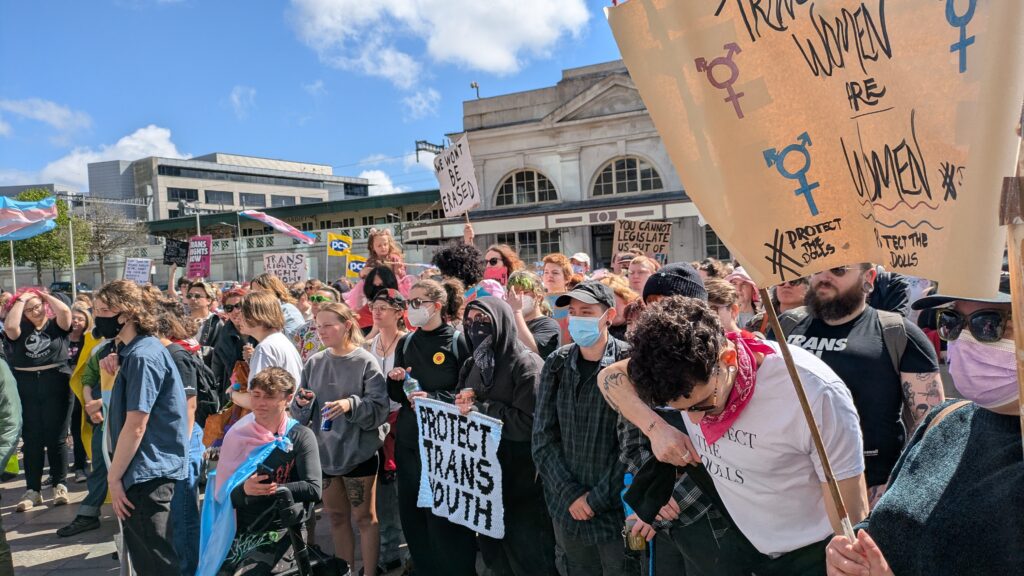
A curious dogma now rules the culture: that transgender individuals, by virtue of identity, must be presumed innocent of societal ills. As with all pieties, this one breaks under scrutiny. Recent scholarship, incarceration data, and even rhetorical trends from the political class point to a disturbing pattern, one in which transgender individuals, particularly biological males identifying as women, are statistically more likely to engage in violent and criminal behavior than their male counterparts. To say this aloud is to flirt with professional heresy. But if truth is a casualty of deference, the damage is not merely academic, it is civilizational.
Consider first the data. In a rigorous analysis of longitudinal survey data, Rothman and Harris found that transgender respondents committed property crimes three times more often than male peers, drug crimes five times more often, and violent crimes at six times the rate. These numbers, drawn from a peer-reviewed study in the International Journal of Offender Therapy and Comparative Criminology, should have sparked a national reckoning. They did not.
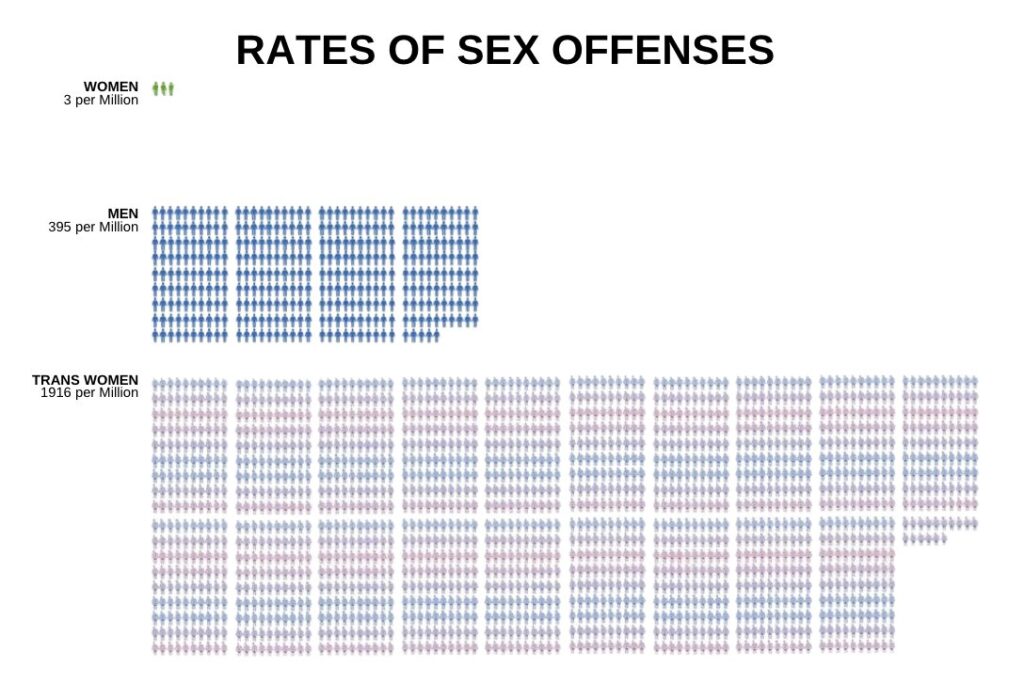
Flaim and Tewksbury’s study, examining police contact data from a major urban US jurisdiction, confirmed what Rothman and Harris identified. Transgender individuals were vastly overrepresented in the commission of drug, property offenses, and sex crimes. These were not isolated skirmishes with the law, but a patterned overexposure. Trans women, often celebrated in the press as victims of injustice, were more often found on police blotters for initiating criminal acts than enduring them.
Some defenders of the status quo respond that these offenses are survival-based, that trans individuals, driven to crime by discrimination, are less perpetrators than products of cruelty. But this reply concedes the empirical point while shifting blame to society. It also fails to explain the stark asymmetries that persist across nations, legal systems, and time.
In Sweden, often heralded as a progressive haven, a long-term study conducted by Dhejne et al. tracked post-operative trans individuals and found something jarring. Trans women not only retained the male pattern of criminality but they surpassed it. They were over six times more likely to be convicted of any crime than female controls and eighteen times more likely to be convicted of violent crime. Transition, in other words, did not dissolve their propensity for violence. It merely changed the linguistic category under which the acts were prosecuted.
Similar trends emerged in the United Kingdom, where official prison data showed that nearly half of transgender inmates were incarcerated for sexual offenses, including rape. This is not a rounding error or statistical quirk. For comparison, only 4 percent of the general female prison population were convicted sex offenders. The inference is neither subtle nor speculative: trans women are entering women’s prisons with male criminal patterns intact, including the most grotesque expressions of male violence.
These are not isolated examples. Canadian and Australian data show parallel concerns. In each context, transgender individuals, particularly biological males, are incarcerated at rates far higher than population norms. These disparities remain even after controlling for socioeconomic status, education, and employment.
In the United States, national surveys confirm the trend. According to a report by the National Center for Transgender Equality, 16 percent of transgender adults have been incarcerated, compared to under 3 percent of the general population. For trans women, that number climbs to 21 percent. And while some attribute this to over-policing or bias, the statistical magnitude defies easy explanation.
But if these facts are troubling, the rhetoric surrounding them is downright reckless. Rather than address the elevated criminality with compassion and prudence, progressive leaders have instead chosen to inflame. Following the massacre at a Christian school in Nashville by a transgender shooter, White House Press Secretary Karine Jean-Pierre lauded LGBTQ youth for being “fierce” and for “fighting back.” The comment came just days after three children were murdered. The timing was not unfortunate, it was obscene.
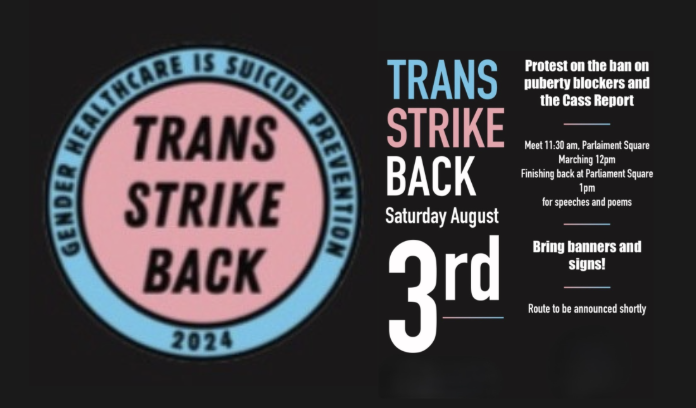
Around the same time, a DC protest was planned under the title “Trans Day of Vengeance.” Organizers insisted that the name was metaphorical. Social media companies were less sanguine, deleting thousands of related posts on the grounds that “vengeance” implies violence. The event was canceled due to what organizers claimed were security concerns, but not before its message was made plain: the trans movement, once a plea for tolerance, now flirts with militancy.
This shift from rhetoric to action is not abstract. The linkage between “fight back” sloganeering and real-world violence is increasingly difficult to deny. In March 2023, the Christian school shooting in Nashville marked a grim milestone: a mass murder openly committed by a trans-identified individual targeting children. The press rushed to memory-hole the shooter’s identity. The White House offered sympathy not for the dead, but for the trans community at large.
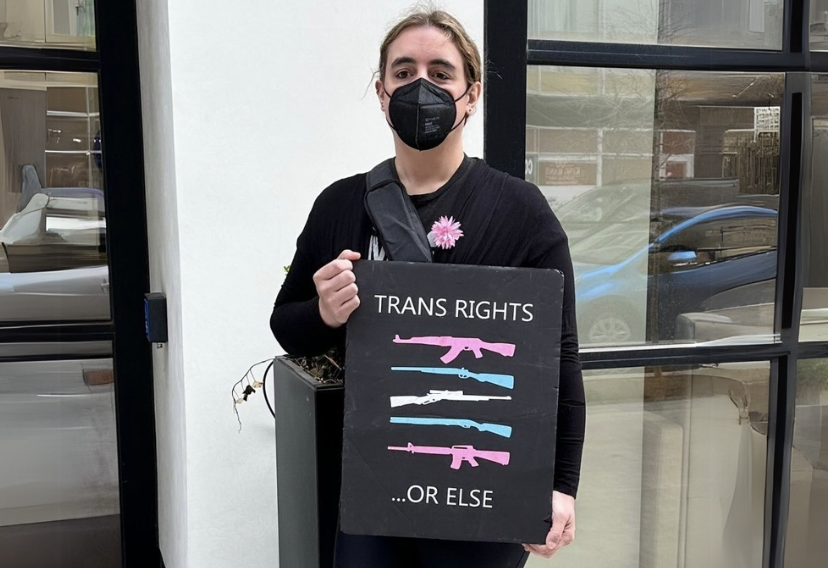
It must be stated plainly: statistical overrepresentation in crime does not mean every transgender person is dangerous. But it does mean that categorical denial of any such trend is delusional, and that political attempts to frame the group as wholly victimized, wholly innocent, and wholly above critique are themselves dangerous.
Those who promote a “fight back” mentality, whether in protest signs or presidential press briefings, should ask whether they are empowering protection or provoking aggression. There is a stark difference between self-defense and preemption, between peaceful resistance and rhetorical incitement.
What society incentivizes, it gets more of. If lawbreaking becomes a form of identity affirmation, if violence is interpreted as cathartic justice, then we should not be surprised when statistics rise and the bodies accumulate. And when media silence follows, cloaked in ideological fragility, the public is left not only endangered, but disarmed.
A healthy society does not hide from facts. It engages them with honesty and resolve. We owe that not just to the victims of the crimes, but to those in the transgender community who seek to live peacefully, away from the corrosive influence of ideological extremism and militant activism.
If you enjoy my work, please consider subscribing: https://x.com/amuse.
Sponsored by the John Milton Freedom Foundation, a nonprofit dedicated to helping independent journalists overcome formidable challenges in today’s media landscape and bring crucial stories to you.
READ NEXT: MAGA Congressman Issues Fiery Response After Terrifying Assault
























We dont need this in HC
Too bad you can’t make this shareable on social media! Windows took that option away.