





However, it has now come to an abrupt stop.
The U.S. House of Representatives narrowly approved a procedural vote, 219–213, to advance President Donald Trump’s “One Big Beautiful Bill Act,” a massive budget reconciliation bill essential to the president’s domestic agenda. The Thursday morning vote overcame significant internal Republican opposition after a dramatic all-night session of Congress, with only moderate Rep. Brian Fitzpatrick of Pennsylvania siding with Democrats against the measure.
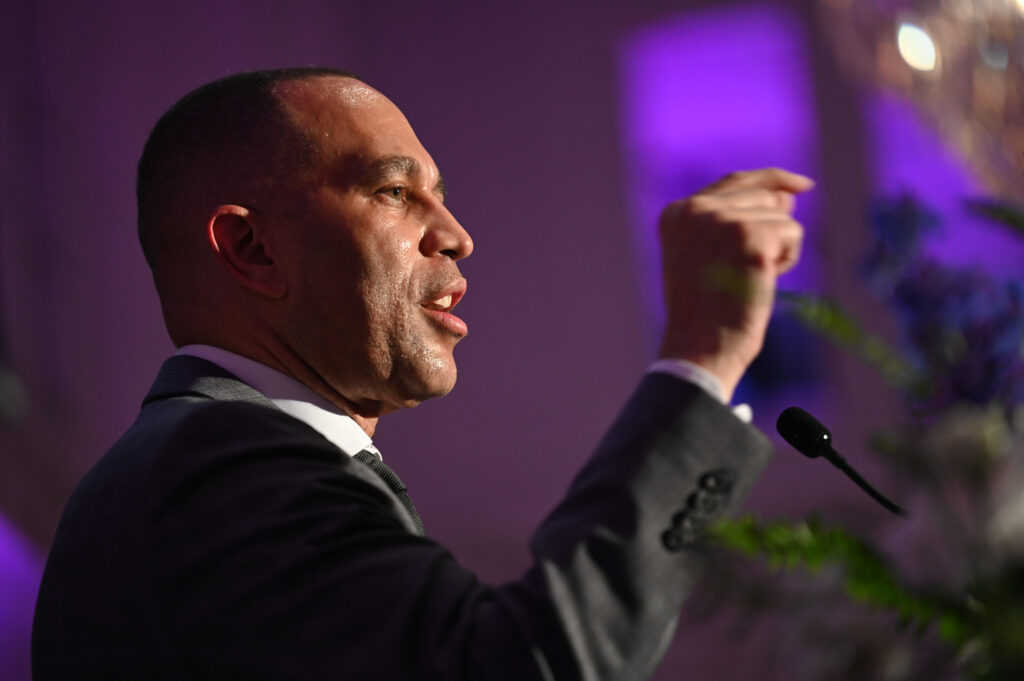
Fox News confirms the final vote on the measure will take place after House Minority Leader Hakeem Jeffries (D-N.Y.) concludes his remarks — thanks to a procedural loophole allowing House leadership to hold the floor as long as they can. Jeffries began speaking at 4:55 a.m. and appears poised to continue for hours:
He’s able to command the House floor via a “magic minute,” a privilege for party leaders in the chamber that allows them to speak for however long they want.
It’s a significant victory for House Speaker Mike Johnson, R-La., though the fight is not over yet.
Next comes a vote on the actual measure, likely sometime on Thursday.
But the timing is largely contingent on when Jeffries finishes speaking.
Initially, five Republican lawmakers opposed the procedural rule, and eight others withheld their votes, citing concerns over the bill’s projected $3.3 trillion addition to the national debt, state and local tax deductions to get reluctant Republicans on board, and major changes to Medicaid. Trump personally lobbied dissenters, including Reps. Victoria Spartz (R-Ind.), Tim Burchett (R-Tenn.), and Thomas Massie (R-Ky.), urging them to support the bill. Massie reportedly agreed to back the bill after Trump ceased personal attacks against him.
Speaker Johnson facilitate the reconciliation by leading a prayer with the former conservative holdouts and capturing a group selfie just before the vote.
Bill Provisions and Implications
The “One Big Beautiful Bill Act” aims to:
- Extend the 2017 tax cuts.
- Introduce tax exemptions for tipped wages.
- Increase the child tax credit.
- Allocate approximately $1 trillion in cuts to Medicaid and the Supplemental Nutrition Assistance Program (SNAP).
- Boost funding for defense and border security, including the “Golden Dome” missile defense system.
Next Steps
With the procedural hurdle cleared a final vote expected as early as Thursday morning.
Democrats, led by Jeffries, remain unified in opposition, criticizing the bill’s impact on health care and social welfare programs.
If the House passes the Senate version without amendments, the bill will proceed to Trump’s desk for signing. However, any changes would necessitate another Senate vote, potentially delaying final approval beyond the July 4 deadline.
READ NEXT: Southern State Introduces Major Immigration Crackdown





















Pass the BBB. Then work in its deficiencies. MAGA.
“Allocate approximately $1 trillion in cuts to Medicaid and the Supplemental Nutrition Assistance Program (SNAP).”
Statements like this lead people to the wrong conclusions about what is in this bill. There are NO cuts to Medicaid benefits—NONE. What there is are three significant changes to reduce fraud and abuse.
1. Illegal immigrants are to be removed from the program. They were never eligible, yet it was recently discovered millions of them are receiving benefits.
2. Eliminating freeloaders. Able-bodied recipients must be willing to work or volunteer at least 80 hours a month. A long list of exceptions to cover those who can’t because of circumstances such as health, disabilities, or care for family members.
3. Reducing fraud and abuse by getting the states to have a little skin in the game. Up to now, the states have administered Medicaid while bearing none of the costs. It’s easy to approve people who aren’t eligible or overlooked fraud when it isn’t costing you anything. This bill requires the states to bear 10% of the cost.