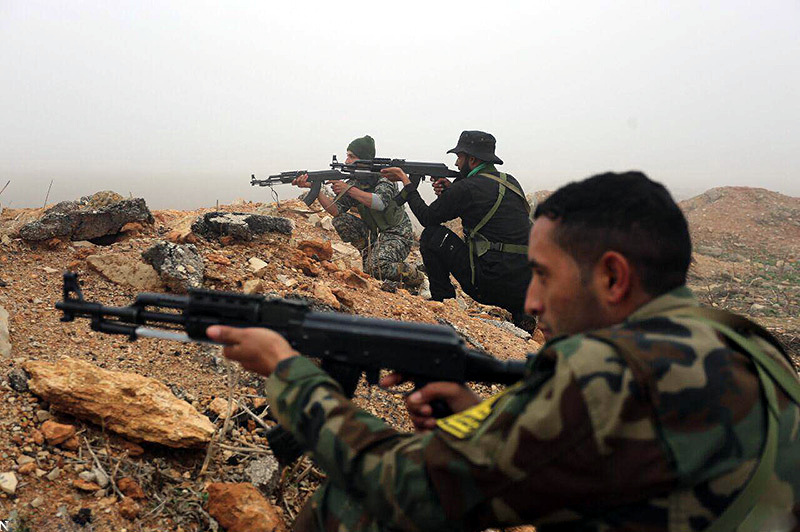
President Donald Trump signed an executive order this week lifting most U.S. sanctions on Syria — marking a dramatic shift in American foreign policy following the blitzkrieg-style collapse of Bashar al-Assad’s regime last December at the hands of the former Islamist insurgent group Hay’at Tahrir al-Sham (HTS). The move is intended to facilitate Syria’s reconstruction and reintegration into the global economy under its new Islamist-led government.
Ahmad al-Sharaa — a former al-Qaeda in Iraq jihadist and ex-leader of HTS turned Syrian president — signed an interim constitution in March establishing a five-year transition period. He also announced the formation of a transitional government following talks with leaders of the coalition that toppled Assad.
Key Points of Trump’s Executive Order
Termination of National Emergency: The order ends the national emergency declared in 2004, which had imposed sweeping sanctions on Syria, including restrictions on the central bank and state-run institutions.
Sanctions Relief: While the executive order lifts many sanctions, it maintains restrictions on:
- Former President Bashar al-Assad, now in exile in Russia.
- Individuals and entities involved in human rights abuses, drug trafficking, chemical weapons activities, ISIS, and Iranian proxies.
Review of Terrorist Designations: The order directs Secretary of State Marco Rubio to review the designation of HTS, the Islamist group that played a role in Assad’s ousting, as a foreign terrorist organization.
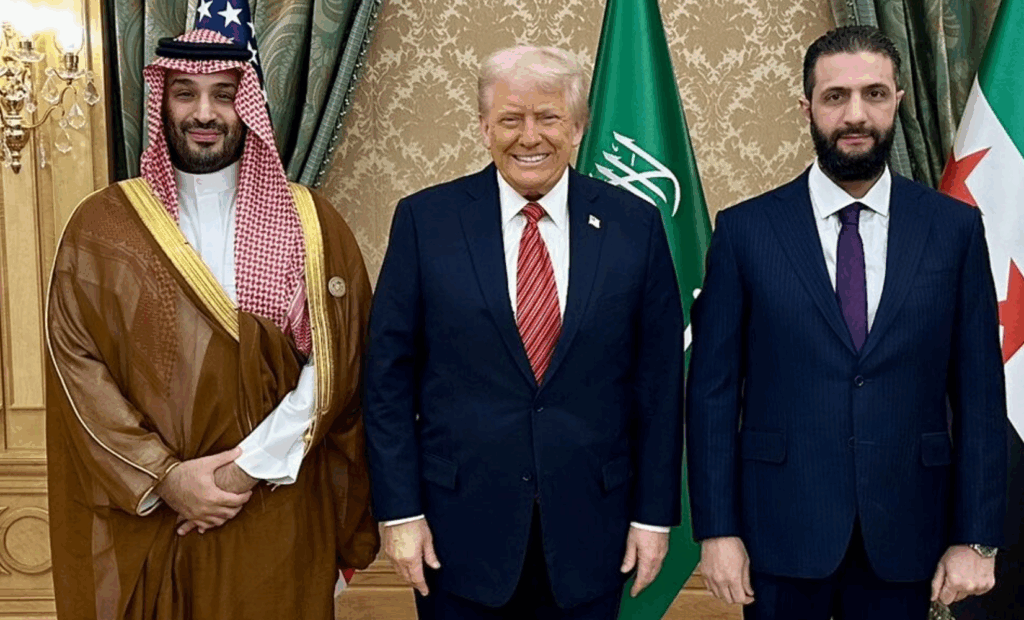
The lifting of sanctions follows Trump’s meeting with al-Sharaa during a May 2025 visit to Saudi Arabia. Al-Sharaa — once held in U.S. custody for five years before rising to lead al-Qaeda’s Syrian affiliate — has since renounced his extremist ties and pledged to govern with relative inclusivity.
The British national newspaper, The Times, reports:
With his executive order, Trump will be able to terminate most sanctions — but repealing the rest will take an act of Congress.
Sharaa, who is now president of Syria, met Trump while he was in the Saudi capital, when the US president called him an “attractive, tough guy” with a “very strong past”.
Asaad al-Shaibani, the Syrian foreign minister, said Trump’s decision would “open the door of long-awaited reconstruction and development”. He posted on X that the move would “lift the obstacle” against economic recovery and open the country to the international community.
Before the executive order was passed, Karoline Leavitt, the White House press secretary, said: “This is in an effort to promote and support the country’s path to stability and peace.”
The Trump administration views the move as a step toward stabilizing Syria and promoting broader regional peace. It also complements ongoing efforts to expand the Abraham Accords, with hopes of normalizing relations between Israel and additional regional players, including Syria.
Still, challenges remain. Sectarian tensions and religious violence persist under the new government. A recent church bombing in Damascus that killed 22 people underscores the fragile security environment.
Even so, the international community — like Trump — has largely welcomed the shift. Both the European Union and the United Kingdom have responded positively, with several countries following Washington’s lead in easing sanctions. The hope is that these collective efforts will accelerate Syria’s recovery after more than a decade of brutal civil war.
READ NEXT: Trump Scores Crucial Win: Patriots Rejoice, Swamp Retaliates