
A new report from the Federation for American Immigration Reform (FAIR) reveals that legal and illegal immigrants are sending approximately $200 billion out of the U.S. annually in remittances to their home countries — a sum that critics argue drains American wealth and indirectly fuels global instability.
The study, which analyzed remittance patterns from 2021, found that funds were transferred from the U.S. to 134 foreign nations, with the largest recipients being Mexico, India, Guatemala, the Philippines, and China. FAIR categorizes the trend an economic liability for the United States and a long unaddressed blind spot that demands urgent reform.
“Remittances effectively represent a transfer payment of hundreds of billions of dollars from American workplaces and communities to people abroad,” said Dale Wilcox, FAIR’s Executive Director. “To compound the problem, many migrants who send remittances out of the U.S. earn so little that they qualify for public benefits. The result is that American citizens subsidize social services for aliens who send much of what they earn out of the country.”
Remittances Driving Foreign Economies
According to the FAIR report, U.S. remittances are so substantial that they account for nearly 20% of the GDP in multiple Central American countries. In Mexico’s case, U.S. remittances represent over one-quarter of all money sent out of the U.S., with Mexican nationals reportedly sending nearly 20% of their monthly incomes back home on average.
Critics argue this practice incentivizes illegal immigration and off-the-books employment — with many foreign workers not paying income or payroll taxes — all while leveraging U.S. public services.
Growing Support for a Remittance Tax
To address what many conservatives view as a significant loss of domestic capital, several Republican lawmakers have proposed remittance taxes to recoup lost revenue and disrupt financial flows to foreign criminal enterprises, including drug cartels.
“Placing a fee on remittances is crucial because the more money that is smuggled back into Mexico, the stronger the cartels become,” said FAIR Media Director Ira Mehlman. “Many illegal aliens are working off-the-books. Taxing the money as it leaves the country would be a way to recoup some of that revenue loss.”
A 1% federal tax on remittances was included in the Trump administration’s landmark immigration legislation — known as the Big Beautiful Bill — set to take effect in January 2026. However, some lawmakers, like Senator Eric Schmitt (R-MO), argue the tax should be even higher.
Schmitt has introduced the REMIT Act, which would impose a 15% tax on remittances, targeting what he describes as “siphoning” of wealth from the American economy.
“Each year, the U.S. sees tens of billions of dollars leave our country as foreign nationals wire money back to their nations of origin,” Schmitt said. “Remittances have also been a major driver of the mass migration crisis we have seen at our southern border.”
Backlash from Foreign Governments
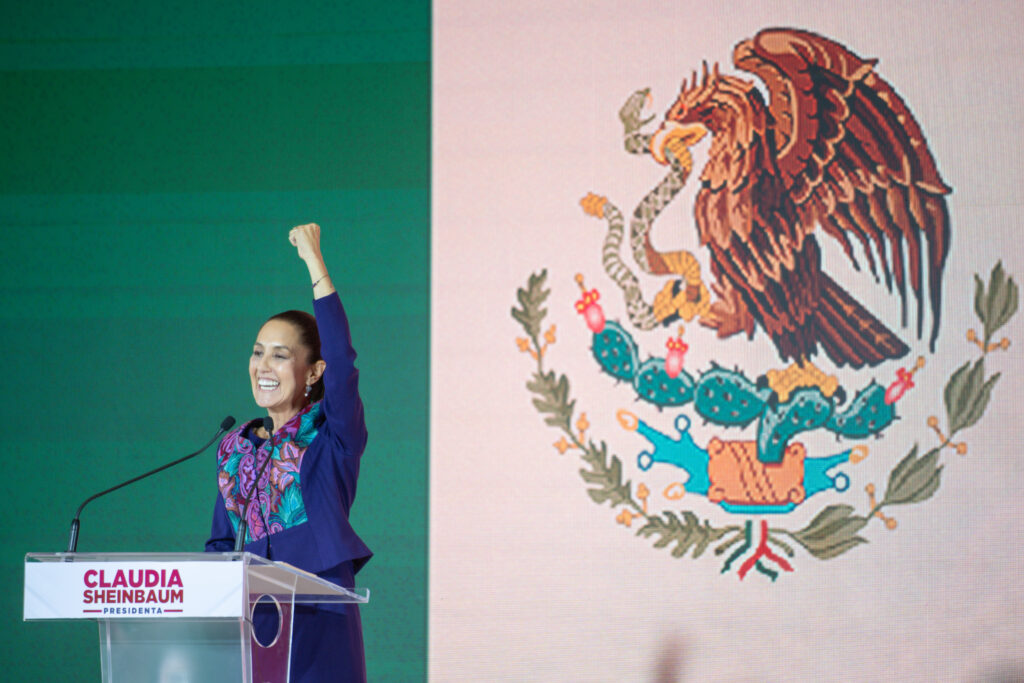
The proposed tax has drawn criticism from foreign leaders — particularly Mexican President Claudia Sheinbaum, who publicly condemned the policy and hinted at retaliation.
“If necessary, we’ll mobilize,” Sheinbaum warned. “We don’t want taxes on remittances from our fellow countrymen. From the U.S. to Mexico.”
Senator Schmitt responded bluntly: “America is not the world’s piggy bank. And we don’t take kindly to threats.”
In a controversial move, Sheinbaum later promoted workarounds for Mexicans in the U.S. to avoid the new tax, a move that American lawmakers have criticized as an attempt to interfere in U.S. fiscal policy.
Looking Ahead
With immigration surging and the U.S. foreign-born population at record highs, the debate over remittances is intensifying. Supporters of a remittance tax see it as a necessary step to restore fiscal responsibility, reduce incentives for illegal immigration, and regain control over economic outflows.
Opponents — including some Democrats and immigration advocacy groups — argue that such taxes unfairly punish working-class immigrants and may harm diplomatic relations with allied nations.
As the 2026 election cycle approaches, the future of the REMIT Act and other fiscal immigration reforms will likely remain at the forefront of national debate.
For many Americans, the idea that hundreds of billions of dollars can leave the country untaxed — while everyday citizens are taxed on everything from wages and sales to savings and inheritances — strikes a nerve. The sheer scale of remittances, now rivaling or surpassing the GDP of small nations, has led some to question why this economic pipeline remains largely untouched by tax policy. The perception that American taxpayers are constantly footing the bill while massive outflows of untaxed income benefit foreign governments and criminal enterprises is fueling growing calls for reform.
READ NEXT: Mexico’s Sheinbaum Threatens To Activate Opposition Within US Borders
A ticking time-bomb set by Joe Biden and Kamala Harris to Hurt ElectionsThey Must Be Stopped! |